What you'll learn
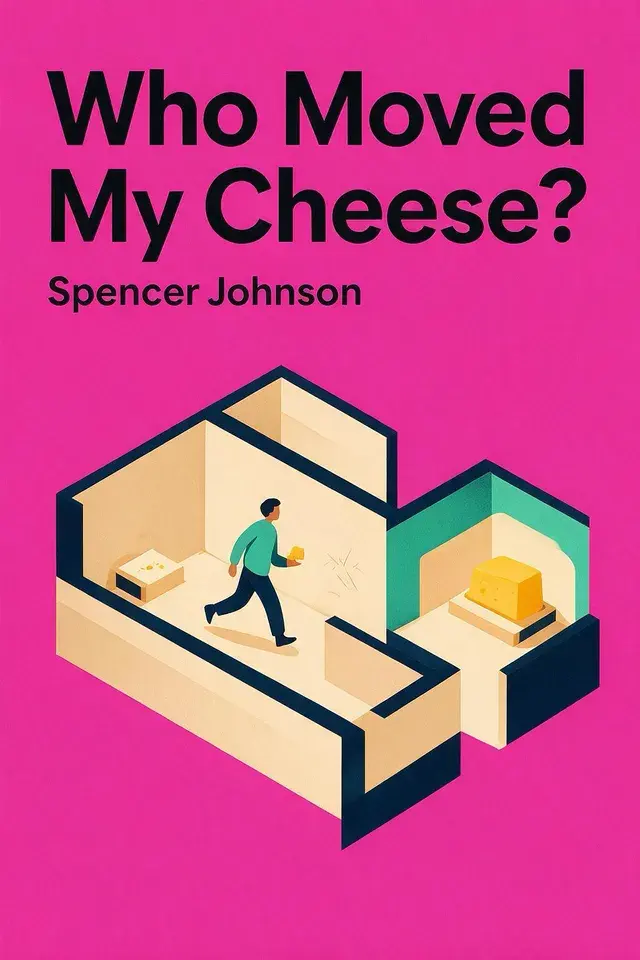
Key ideas from Who Moved My Cheese?
These ideas compress the book's argument without treating the author's view as settled fact. Use them as an orientation before reading the full work or listening in Wiseley.
Sniff, Scurry, Hem, and Haw represent recurring tendencies to detect, act, resist, or adapt to change.
Comfort turns Hem and Haw’s earlier success into entitlement, identity, and confidence that blocks attention to gradual change.
Useful caution recognizes real danger, but paralyzing fear prevents action after circumstances have changed.
Small changes can signal larger shifts, making early awareness and flexible movement central to adaptation.
Visualization, reflection, humor, and quick action form Haw’s compact method for learning from change.
Adaptation can change harmful behavior or work practices while preserving core values, relationships, and jobs.
How Who Moved My Cheese? builds its case
Follow how the book develops its argument. Each note is a brief orientation, not a replacement for the chapter.
A Map of Change
Before following the plot, it helps to understand the map this fable provides. Spencer Johnson frames the book as an accessible parable about change, using a simple story to make broad lessons visible.
When the Cheese Disappears
At Cheese Station C, all four characters initially appear to have found what they were seeking. Yet the same success creates two very different habits.
Leaving Fear Behind
After the cheese is gone, Haw remains caught between what has happened and what he wishes would happen. Station C is empty, yet familiar; the Maze is unknown, and the unknown gathers his fears.
Finding New Cheese
Once Haw has learned to keep moving through unfamiliar parts of the Maze, the story gives his exploration a concrete result. He reaches Station N and finds the greatest supply of Cheese he has seen, including varieties he does not recognize.
Living the Lessons
The story becomes most useful when its vocabulary leaves the Maze and enters conversations about actual change. At a reunion, former classmates identify with its four characters and use Cheese and the Maze to discuss jobs, companies, families, and relationships.