What you'll learn
Key ideas from Kaput
These ideas compress the book's argument without treating the author's view as settled fact. Use them as an orientation before reading the full work or listening in Wiseley.
A cyclical recession may pass with the business cycle, while a structural slump persists until the underlying model changes.
Digital readiness depends on infrastructure, actual use, and technical skills; access figures alone cannot measure it.
Electric vehicles shift competitive value toward batteries, software, connected systems, and production capabilities built around them.
Research strength and patents do not automatically create growing industries; commercial links, risk capital, and workable institutions help ideas reach markets.
The economic cost of ending imports and the geopolitical risk of dependence were separate questions, even when business arguments blurred them.
China’s industrial advance changed a supplier relationship into direct competition and concentrated dependencies.
Ordoliberal rules and the debt brake constrain fiscal policy without a general protection for public investment.
The 2021 coalition did not create the structural crisis; its divisions, austerity and contested transitions weakened its modernization effort.
Inside Kaput
Read the first chapter in full here. The other 9 continue in the Wiseley app.
Chapter 1 of 10 · 6 min · Audio & text
The Success That Became Fragile
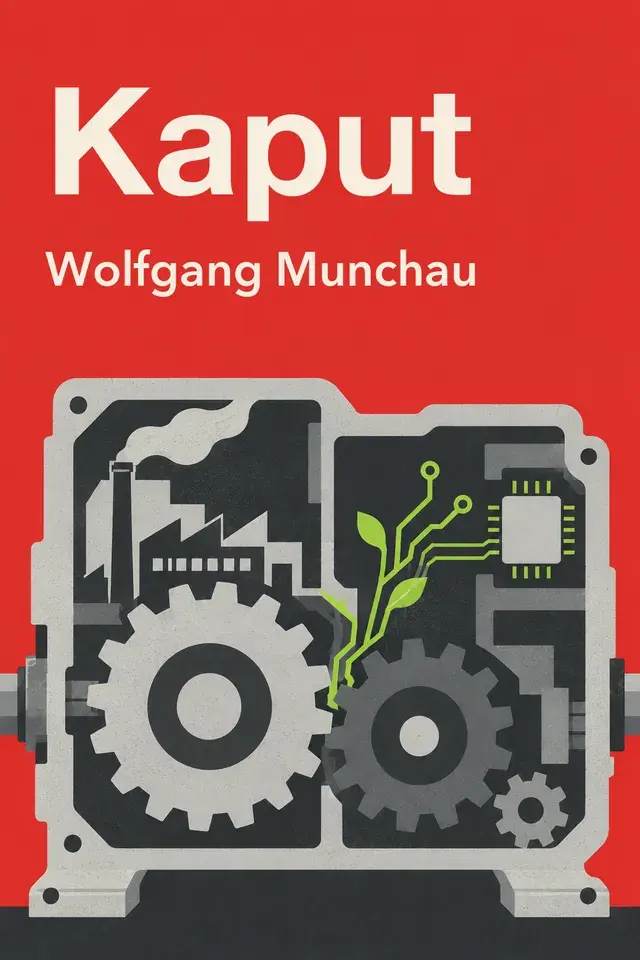
Kaput, by Wolfgang Munchau.
Germany’s postwar economic success had two faces. In Wolfgang Munchau’s hometown of Mülheim, heavy industry made the pipes used in large energy and infrastructure projects. At the same time, the Albrecht brothers built Aldi from an entrepreneurial idea in discount retail. One story centered on industrial production; the other showed how a business could grow by finding a new way to serve customers. Together, they represent distinct roots of the postwar economic miracle.
The difference in their paths matters. The Albrecht family kept its distance from political life. Karl Albrecht became Germany’s richest man without meeting a German chancellor. Munchau contrasts that independence with a later period when established corporate leaders had close access to government. His point is not that every successful business should stand apart from politics. It is that German prosperity once included entrepreneurial energy beyond the large industrial firms that later came to dominate the national story.
Over time, the country’s economic identity became more closely tied to cars, machinery, chemicals, and other established export industries. That expertise was real, and many medium-sized family firms became leaders in specialized markets. But Munchau says the entrepreneurial spirit represented by Aldi had faded, while the country grew more reliant on mature sectors. The distinction matters: Germany’s problem is not that industrial success was imaginary, or that every established firm failed. It is that a successful model can become less adaptable as the world around it changes.
That leads to the book’s central question: is Germany facing a cyclical downturn, or a structural slump? A cyclical recession is a temporary phase in the business cycle. If demand and activity recover, the economy can return to growth without changing its foundations. A structural slump has a deeper source: the existing economic model no longer fits the conditions it faces. A recovery may end the recession while leaving that underlying weakness in place.
Munchau recognizes that Germany has rebounded before. He points to recoveries in the 1950s and early 1960s, from the mid-1980s to the mid-1990s, and in the first half of the 2010s. Those episodes are a reason to resist predictions of inevitable decline. But past rebounds alone cannot show that the current model is still sound. They show that Germany has recovered from earlier downturns, not that every later weakness has the same cause.
In Munchau’s account, the improvement from 2005 to 2015 mixed policy changes with favorable economic conditions. Those forces strengthened the competitiveness of established industry and extended its success. Yet that period also prolonged reliance on the old structure while Germany underinvested in digital technology. Success, then, could conceal vulnerability. Strong exports and renewed growth said something about how well the existing model performed under those conditions; they did not settle whether it would thrive as technology and markets shifted.
The distinction becomes clearer when a business faces a product problem. If its goods have become obsolete, lowering costs may not restore its prospects. Munchau argues that the weakness emerging around 2017 differs from earlier downturns for this reason: competition and changing products challenged Germany’s traditional advantages. An economic rebound can lift demand, but it cannot by itself make an outdated product relevant again.
The book briefly points to two kinds of misjudgment that illustrate this broader risk. German leaders underestimated the importance of digital technologies, and carmakers treated their expertise in traditional vehicles as if it guaranteed lasting advantage. The details belong to later parts of the diagnosis. Here, they show how yesterday’s strengths can become a source of exposure when firms and policymakers mistake past success for proof that conditions will stay the same.
Munchau’s larger explanation is that political and economic choices reinforced established export sectors instead of encouraging broader adaptation. He describes an export-first outlook that treated large surpluses as a national achievement and industrial competitiveness as a defining goal. Close ties between government and leading firms could amplify errors: when political leaders shared an incumbent industry’s assumptions, a company’s poor bet could become a national one. That is a critique of how Germany pursued industrial policy, not a claim that industrial policy must always fail. Munchau allows that it can succeed; his concern is that Germany’s approach came at the expense of diversification.
Nor does this diagnosis mean every German business is in decline or that decline is inevitable. Many specialized firms remain successful, and sectoral change is a normal feature of advanced economies. Losing one industry does not by itself prove that an entire economy has failed. The question is whether a country can adapt when its mature sectors face new conditions, or whether policy keeps extending a model whose advantages are weakening.
This opening chapter establishes the book’s frame: Germany’s earlier success was broad, but choices later concentrated it around established industries. The task is to understand how that model formed and why it became vulnerable, rather than to mistake a temporary recovery for a structural repair. The book is primarily a diagnosis of that history, not a comprehensive policy blueprint.
Chapter 2 of 10 · 7 min · Audio & textIn the app
Credit Inside the Corporate State
Germany’s industrial finance rested on three broad banking pillars: private banks, state banks and mutual banks, including cooperatives. The system grew out of older institutions, among them savings banks and regional public banks.
Chapter 3 of 10 · 6 min · Audio & textIn the app
Digital Capacity Left Unbuilt
Germany’s digital lag is not just a story about broadband coverage. A network creates potential, but people, schools, and businesses also need the skills and habits to use it.
Chapter 4 of 10 · 9 min · Audio & textIn the app
The Car Bet Meets Electrification
Germany’s car industry shows how a strength can become a concentrated bet. Cars and components made up 19 percent of German exports in 2016 and about 16 percent in later figures cited by Munchau.
Chapter 5 of 10 · 9 min · Audio & textIn the app
From Research to New Industries
Munchau locates Germany’s innovation problem in the distance between producing ideas and building businesses that can develop, finance, and sell them at scale. A strong research base and trained specialists matter, but they do not complete that journey.
Chapter 6 of 10 · 9 min · Audio & textIn the app
How Russian Gas Became Strategic
Russian gas became strategic through choices that joined energy, industry, and foreign policy. German leaders saw gas as a reliable input for manufacturing and as part of a wider wager: that trade would make Russia more cooperative.
Chapter 7 of 10 · 10 min · Audio & textIn the app
China as Partner and Competitor
Germany’s China relationship grew through a deliberate fusion of diplomacy and commercial promotion. The author’s concern is not that trade took place.
Chapter 8 of 10 · 10 min · Audio & textIn the app
Surpluses, Rules, and Lost Investment
Germany’s export surplus is often treated as proof of national success. Munchau sees it as a macroeconomic anomaly at the heart of the country’s economic model.
Chapter 9 of 10 · 8 min · Audio & textIn the app
The Talent Germany Cannot Attract
Industrial renewal needs more than investment and new ideas. It also needs people with the skills to do unfamiliar work, and institutions that let them move, work, and settle.
Chapter 10 of 10 · 9 min · Audio & textIn the app
The Politics That Block Renewal
In Munchau’s account, decline first appears in smaller private choices, not only in headline indicators. Households spend and travel less, and postpone replacing cars; governments, too, begin to save.
Chapter 1 of 10 · 6 min · Audio & text: The Success That Became Fragile
Wiseley supports reading and listening to summaries in the app.
Continue in WiseleyAbout Wolfgang Munchau
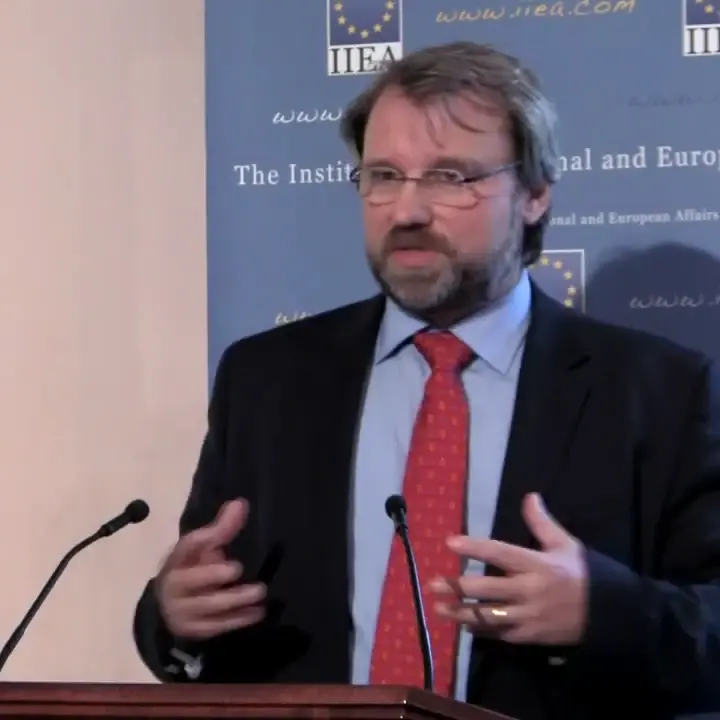
Wolfgang Munchau is a German journalist and commentator on European economics. “Kaput” explores how Germany’s export-led industrial success hardened into structural fragility.
Explore more books by Wolfgang Munchau