What you'll learn
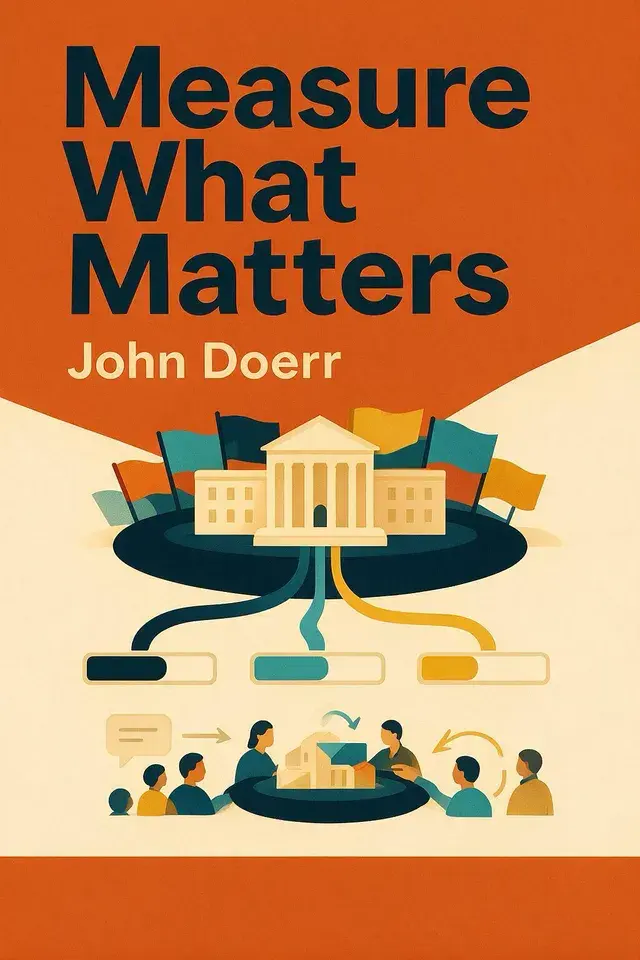
Key ideas from Measure What Matters
These ideas compress the book's argument without treating the author's view as settled fact. Use them as an orientation before reading the full work or listening in Wiseley.
OKRs remain collaborative when priorities are limited, key results are negotiable and revisable, stretch is distinguished from commitment, and compensation stays separate.
Focus is established by selecting a few consequential priorities for a defined period and making the necessary tradeoffs visible.
Useful alignment combines shared direction with bottom-up judgment; rigidly cascading every objective can reduce agility and suppress frontline insight.
Regular check-ins support four mid-cycle choices: continue, update, start, or stop objectives as circumstances change.
Committed goals anchor reliable execution, while aspirational goals create room for experimentation and substantial failure.
OKRs provide direction and measurable progress, while CFRs add recurring context, coaching, feedback, recognition, and motivation.
How Measure What Matters builds its case
Follow how the book develops its argument. Each note is a brief orientation, not a replacement for the chapter.
From MBOs to Living Goals
Goals can bring clarity, but they can also distort behavior. Measure What Matters presents OKRs as a way to make goals useful for collective execution without turning them into orders.
Focus Through Deliberate Commitment
Focus is the first discipline of an effective goal system: decide what matters most for a defined period, then commit enough attention and resources to make that priority real. The point is not to capture every responsibility.
Alignment Without Bureaucracy
After an organization has chosen its important priorities, a second problem appears: how can people act together without turning every decision into an instruction from above? In Measure What Matters, the answer is alignment through visibility.
Track, Learn, and Recalibrate
Setting an OKR is only the beginning. Its value depends on what happens afterward: whether people can see current progress, discuss it before the deadline, change course when reality changes, and carry the learning into the next cycle.
Stretch Goals With Guardrails
Stretch goals begin with a paradox. They ask people to pursue results they cannot yet guarantee, yet their value lies partly in exposing capabilities that ordinary plans leave hidden.
Ambition Tested in Practice
Chrome and YouTube show what stretch looks like inside products. In each case, a large measurable target created direction, but not a fixed tactic.
Make Performance Continuous
An OKR can make priorities visible, but visibility alone does not tell a person how to improve. It shows what matters and how progress is measured, yet it cannot explain why a result is late, what support is missing, whether the target is still sensible, or how someone is growing.
Culture Makes Goals Human
Measure What Matters ends with a warning against treating OKRs as machinery. A goal system can make work visible, but visibility is not trust.