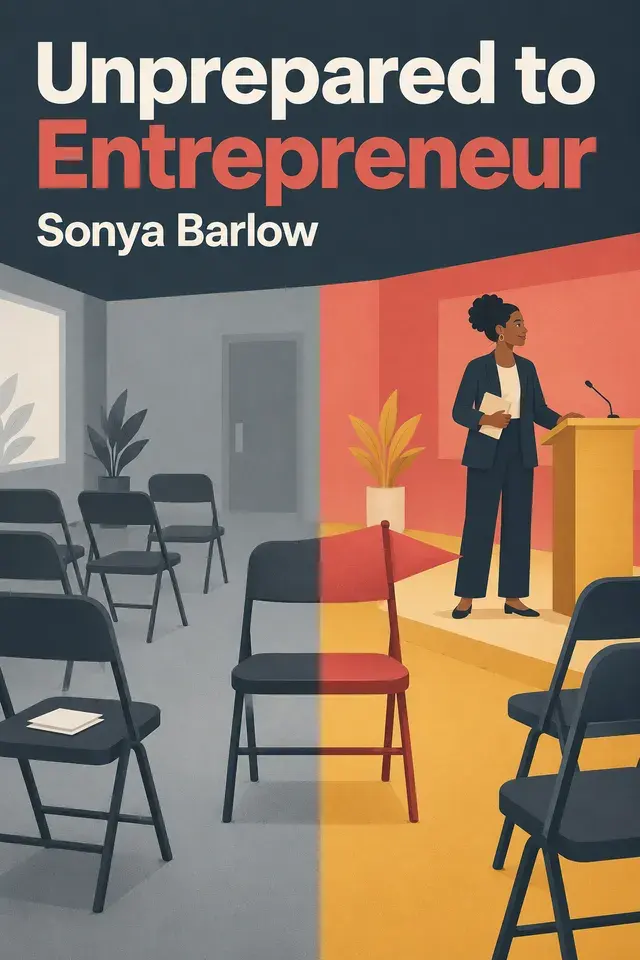
What you'll learn
Key ideas from Unprepared to Entrepreneur
These ideas compress the book's argument without treating the author's view as settled fact. Use them as an orientation before reading the full work or listening in Wiseley.
Barlow describes failure as a temporary disruption that may call for reflection and a changed route toward a similar goal.
Entrepreneurial ability develops through practised creativity, reflection, and problem-solving rather than a fixed personality.
The Lean Canvas links nine business questions and makes assumptions about customers, value, delivery, and finances visible for testing.
Quantitative research shows patterns, while qualitative inquiry explores reasons; each method has limits and benefits from relevant, representative evidence.
Reciprocal relationships and trusted communities can support feedback, referrals, iteration, and partnerships.
Growth calls for targeted help, clear delegation, and staffing choices that fit the venture’s needs and available income.
Budgets become useful working tools when founders compare projections with actuals and revise assumptions as conditions change.
Small milestones and backward planning connect a larger vision to deliberate steps while leaving room to adapt.
Inside Unprepared to Entrepreneur
Read the first chapter in full here. The other 9 continue in the Wiseley app.
Chapter 1 of 10 · 6 min · Audio & text
Start Before Feeling Ready
Unprepared to Entrepreneur, by Sonya Barlow.
Sonya Barlow’s first planned community event came after three weeks of preparation. Twelve people had reserved by email, but on the day, not one of them showed up. Barlow describes the disappointment plainly, then makes a consequential choice about how to understand it. She calls the event her first business, community, and brand launch, and says it changed her life. The event did not draw its intended audience, and calling it a launch does not make that outcome painless. But she had moved an idea out of her head and into the world. That distinction begins the book’s argument: a difficult first result can mark the beginning of a venture, rather than prove its founder has no place in business.
For a new founder, beginning carries more than logistical uncertainty. Barlow compares it to starting secondary school: everything is unfamiliar, and other people can seem more experienced. Some people draw a blank when asked to put their idea into words. Entrepreneurship involves risking both an idea and oneself, so rejection can hurt. Barlow also says that never trying can feel worse, and that setting aside reservations and starting may be the hardest part. Her account makes room for these feelings without treating them as a test of character. Feeling unsure is part of a new undertaking, not evidence on its own that someone cannot learn to do it.
Barlow’s own business idea began with a problem in her working life, not a polished plan to become an entrepreneur. Before starting, she felt lonely and stressed in corporate technology work. She lacked a supportive community and people to talk with about progress, pay, and difficult situations. She calls unresolved dissatisfaction a grey area: frustration without a ready solution. Many people may begin this way, noticing an issue that affects their life before they have a business idea or an entrepreneurial identity. Frustration can point toward a possible purpose, though it does not prove that a business can or should solve the problem. A useful starting question is simply: what problem matters enough that you are willing to try one step?
Barlow argues that there is no perfect plan or best time to start, and that waiting for the right moment can mean never beginning. In her view, insisting on a detailed, foolproof plan before acting can lock a founder into a script and deter them from trying. She recommends basic steps to create, test, and launch an idea, then adapting as the world responds. This is not a claim that preparation is useless or that a first attempt will work. It is permission to begin without knowing every answer. A manageable first test lets a person move forward while leaving room to learn and change direction.
Purpose can help provide that direction. Barlow suggests considering what a business does, how it differs, and why it exists. The why can clarify its ethos and objective, but it cannot excuse a business from adapting to people’s needs. She illustrates this with Apple. Barlow describes Apple’s original aim as changing how people viewed computers and widening access to them. She says an early Apple Watch prototype included fitness, health, and wireless communication features, but not period tracking; she reports that the feature was added in 2019. She presents the omission as a possible non-inclusive oversight, not a definitive account of the company’s intent. The example shows how a stated purpose can coexist with an overlooked need. Keeping the purpose in view means being willing to notice where the work falls short and reconsider the approach.
Setbacks, then, call for reflection as well as persistence. Barlow describes failure personally as being temporarily disrupted and needing a new route to the same or a similar goal. That framing does not make a setback harmless or guarantee that a different route will succeed. It gives the founder a way to distinguish a painful outcome from a final judgment about their ability. After an attempt falls short, a person can ask what happened, what they learned, and what they might change while keeping the underlying problem in view. Adaptation matters because a business faces changing needs and disruption; a supposedly bulletproof plan cannot prevent either.
Barlow cites DC Incubator research from 2019 estimating that sixty per cent of businesses fail within their first three years. For the COVID-19 period, she reports survey claims attributed to Rosling (2020) and Carrick (2020): sixty-four per cent of UK residents wanted to start a business, and three in four women wanted to. Separately, Barlow cites IW Capital (2019) for an estimate that small, new businesses and entrepreneurs could generate around one point nine trillion pounds annually. These are source-specific claims and estimates tied to their reported periods. The supplied material does not establish their methods or continuing relevance; none guarantees an individual venture’s outcome.
A reader can apply Barlow’s opening argument without trying to solve every business question at once. Name the problem you care about, choose one first step you can manage, and notice what the attempt teaches you. If it disappoints, reflect before deciding what the result means. Keep the purpose that drew you to the problem, but allow the way you pursue it to change. Barlow’s empty event remains a failure to bring the reserved guests into the room. It also became her first launch. Starting before feeling fully prepared does not remove risk or promise success; it makes learning possible in the first place.
Chapter 2 of 10 · 9 min · Audio & textIn the app
Make Entrepreneurship Learnable
A useful question is not whether someone is born entrepreneurial, but how entrepreneurial ability can be practised. Barlow points to the creativity children use when they make something from what is available.
Chapter 3 of 10 · 9 min · Audio & textIn the app
Turn Ideas into Evidence
An idea becomes testable when its main assumptions are clear enough to investigate. The Lean Canvas is a way to put those assumptions on paper.
Chapter 4 of 10 · 12 min · Audio & textIn the app
Market, Connect, Build Community
Once an offer is clear, the next question is how the people who need it will recognize it, encounter it, and trust it. Marketing starts with the offer, but it becomes more effective when founders listen to how an audience responds and adjust their choices accordingly.
Chapter 5 of 10 · 11 min · Audio & textIn the app
Build Teams That Belong
As a business grows, one person’s time and skills can become a limit. Barlow says founders may be carrying many roles, while a mission-driven venture may not have steady income or donations to pay staff.
Chapter 6 of 10 · 7 min · Audio & textIn the app
Lead with Purpose and Trust
Leadership is not a title reserved for people with direct reports. A founder leads by representing the business, moving its work forward, and giving others a shared direction as the venture grows.
Chapter 7 of 10 · 7 min · Audio & textIn the app
Protect the Founder’s Capacity
Entrepreneurship can give a founder more control over work, but it does not remove pressure. Barlow describes the hidden effort of building a business alongside employment and the temptation to overwork to preserve an appearance of progress.
Chapter 8 of 10 · 10 min · Audio & textIn the app
Make Money Support the Mission
A mission gives a business direction, but its finances determine whether it can keep doing the work. A venture can have a valuable purpose and still struggle if costs arrive before income, customers pay late, or expected funding does not appear.
Chapter 9 of 10 · 8 min · Audio & textIn the app
Influence and Earn Client Trust
Influence, in this chapter, means persuading someone to change a behavior, perspective, or decision. For an entrepreneur, it is not a single impressive pitch.
Chapter 10 of 10 · 11 min · Audio & textIn the app
Keep Evolving on Your Terms
Entrepreneurship does not end at launch, or settle into one fixed version of a business or its founder. Sonya Barlow describes it as an evolving process: personal growth and business development continue as new problems appear.
Chapter 1 of 10 · 6 min · Audio & text: Start Before Feeling Ready
Wiseley supports reading and listening to summaries in the app.
Continue in WiseleyAbout Sonya Barlow
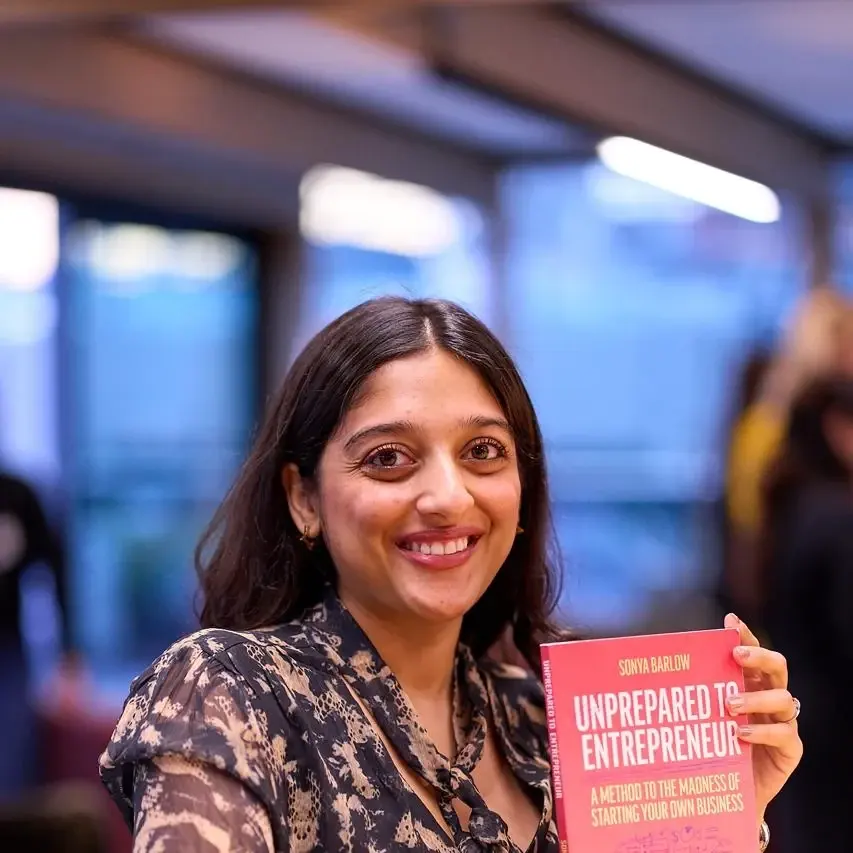
Sonya Barlow is a Pakistani-British entrepreneur. “Unprepared to Entrepreneur” explores how to start a business before feeling prepared and keep it viable as customers, teams, and circumstances change.
Explore more books by Sonya Barlow