
What you'll learn
Key ideas from The Law of Success
These ideas compress the book's argument without treating the author's view as settled fact. Use them as an orientation before reading the full work or listening in Wiseley.
Hill defines success as achieving one's definite chief aim without violating other people's rights, so power remains ethically bounded.
A definite chief aim turns desire into an attainable outcome by naming what is wanted, when, why, and how.
Initiative is purposeful action taken before instruction, while leadership turns that action into willing cooperation.
Accurate judgment separates verified facts from untested information, then selects facts relevant to a definite aim without suppressing unwelcome evidence.
Self-control directs enthusiasm and thought toward a chosen aim, preventing emotion from selecting an automatic retaliatory response.
Extra useful service can make ability visible, deepen reliance, and create demand beyond the original exchange.
A useful defeat review separates causes, examines criticism, preserves learning, replaces plans, and tests changed action.
Self-review turns the framework into a cycle of aim, weakest quality, repeated action, candid feedback, and revision.
Inside The Law of Success
Read the first chapter in full here. The other 13 continue in the Wiseley app.
Chapter 1 of 14 · 9 min · Audio & text
Organizing Knowledge Through Shared Purpose
The Law of Success, by Napoleon Hill.
Napoleon Hill begins with a definition that places an ethical limit around achievement. Success, he says, means attaining one's Definite Chief Aim without violating other people's rights. The aim matters, but so does the method. This opening discussion assumes that a purpose exists and asks a different question: how can a person turn knowledge, effort, and cooperation into organized power?
To answer it, the edition's commentary distinguishes information from knowledge. Information may be a pile of facts, contacts, or advice. It can be abundant, contradictory, and still practically useless. It becomes knowledge only when its significance is understood and the relevant parts are selected for the task. Hill's principle then adds that even knowledge is only potential power. It becomes usable power when it is organized, matched to the problem, and expressed through intelligent effort. An encyclopedia may contain more information than anyone can use. The practical advantage belongs to the person who can locate the needed fact, judge its relevance, and apply it.
That is why Hill's idea of education is practical rather than merely academic. He describes an educated person as someone who can obtain what is needed when it is needed, without violating other people's rights. The test is not how much a person carries in memory. It is whether the person can secure and use the knowledge required by a purpose.
Hill illustrates this through Henry Ford's reliance on specialists. In a courtroom episode, Ford was reportedly challenged with general-knowledge questions. He treated the demand for instant recall as less important than knowing where the answer could be obtained, and indicated that he could summon people who could supply the needed facts. The passage says the wording was recalled from memory, so this is an illustration, not a verified transcript. Its main point is that an organizer does not need to perform every specialized task personally. Ford's practical education lay in combining people, resources, and knowledge to produce a result.
A complex undertaking can therefore be divided among specialists. The person who assembles the alliance remains responsible for coordinating it, but need not possess every ability inside it. This is a distinct competence: recognizing what is missing, finding the right contributor, and fitting each contribution into the larger plan. The goal is not to collect impressive people. It is to make their abilities usable together.
That social arrangement is the foundation of Hill's Master Mind. In its practical definition, a Master Mind is a friendly alliance of two or more minds united by harmony of purpose. Its value lies in combining specialized knowledge and directing it toward one end. The organizer's power comes through the alliance, not through solitary omniscience. Hill treats the alliance as a deliberate source of power, not merely as a convenient social circle.
The law-firm example makes the requirement sharper. A firm made up of only one type of mind may be pleasant and intelligent, yet strategically incomplete. Legal work can require different abilities for preparing a case, coordinating its elements, and trying it. Corporate-law expertise does not automatically prepare someone for criminal procedure. Hill's better partnership would recruit specialists across every branch it intends to serve. An unguided partnership might choose associates because they are familiar, agreeable, or personally attractive. That may create comfort, but it does not fill a missing function.
The same logic appears in a commercial alliance. Buyers understand supply, salespeople create demand, and financial specialists protect the organization from careless risk. Their temperaments may differ. The salesperson may be optimistic and outward-facing, while the financial specialist is cautious and deliberate. Hill's point is that the difference can be useful. Each role checks and completes the others. A group of people with the same strength can be less capable than a smaller group whose abilities fit together.
Hill also distinguishes ordinary cooperation from the stronger Master Mind ideal. Boards and married couples may work effectively without personal harmony, and cooperation based on necessity can produce practical results. Hill reserves Master Mind for a more demanding condition: a definite common end, complete harmony, and a willingness to subordinate immediate personal interests to the group or an ideal. Ordinary cooperation may get a job done. Master Mind, in Hill's vocabulary, adds a special collective power. The distinction matters because it prevents the term from becoming a synonym for any teamwork.
At the theoretical level, Hill gives that collective power an ambitious explanation. He says that minds in perfect harmony blend into a third mental entity, available to the participants while the alliance lasts. Elsewhere, he connects this idea with mind chemistry, energy, and thought vibrations, and says that knowing the cause of mental reactions is unnecessary. The associated mechanism remains speculative in the review's assessment, while the editors' scientific commentary warns that Hill's physics contains errors, including his treatment of electron charge, and notes that some detailed passages were removed or should be read as outdated. The practical lesson can survive that warning. A group's third power may be understood as the new capacity created by coordinated attention, trust, knowledge, and timing. That is a practical interpretation, not confirmation of thought transmission.
The edition itself has layers that should not be confused. The editors modernized grammar and obscure wording, added historical context and later examples, and repeated selected commentary across lessons. Some explanatory framing therefore belongs to the later edition, while the central claims about organized knowledge and Master Mind come from Hill's course. Keeping those voices distinct matters because added examples and context are not Hill's original wording.
Taken as a working method, Hill's alliance principle can be made concrete. Start by naming one shared objective, keeping the rights-respecting definition of success in view. Then break the objective into functions: what must be known, decided, built, sold, financed, or maintained? Mark which abilities are present and which are missing. Choose contributors for those gaps rather than merely choosing people who agree with one another. A useful contributor may not resemble the organizer; the point is to supply a capability the group lacks and to fit it to the common purpose.
Next, make the exchange explicit. Each participant should know what they contribute and what reciprocal benefit makes continued cooperation worthwhile. Hill's alliance is not passive association. It depends on useful contributions being connected to a shared result. Finally, establish a review rhythm. Ask whether the objective is still clear, whether a needed ability is missing, whether roles fit the work, and whether the methods need adjustment.
Hill's automobile-sales example supplies an operating pattern for that review. He describes pairing salespeople, giving them a common prospecting plan, using focused weekly messages and daily calls, and bringing them together to exchange ideas. He reports increased interviews and sales, but those outcomes remain his reported results, not a guarantee. The transferable point is the loop: coordinate action, compare progress, surface missing knowledge, revise the arrangement, and continue.
That is Hill's social architecture. Information becomes knowledge when its relevance is understood. Knowledge becomes power when it is organized and used. Cooperation expands capacity, complementarity gives it structure, and harmony determines whether Hill would call the result a Master Mind. The practical core remains intelligible even where his physics does not: individual ability becomes more effective when relevant knowledge and complementary people are organized around a shared purpose bounded by other people's rights.
Chapter 2 of 14 · 7 min · Audio & textIn the app
Turning Desire Into Definite Plans
Desire is the beginning of a purpose, but it is not yet a plan. Hill’s lesson distinguishes a general wish from a definite chief aim.
Chapter 3 of 14 · 7 min · Audio & textIn the app
Building Confidence Through Deliberate Practice
Once a person has chosen a definite aim, fear can still keep that aim from becoming conduct. Napoleon Hill treats self-confidence as the bridge between intention and action.
Chapter 4 of 14 · 7 min · Audio & textIn the app
Saving as Freedom to Act
Saving, in Hill’s framework, is more than accumulating money. It converts income into room to choose.
Chapter 5 of 14 · 8 min · Audio & textIn the app
Initiative That Earns Willing Cooperation
Initiative begins when a person sees what ought to be done and acts without waiting for instructions. Hill treats it as the foundation of leadership.
Chapter 6 of 14 · 8 min · Audio & textIn the app
Imagination as Practical Problem Solving
Imagination, in Hill’s practical sense, is not a blank power that creates value from nothing. It is the mind’s workshop, where observations, established facts, materials, and experiences are examined and recombined into new uses.
Chapter 7 of 14 · 6 min · Audio & textIn the app
Separating Evidence From Conviction
The lesson’s first discipline is separation. Hill asks the reader to distinguish facts from information that merely sounds factual, then to divide the facts into those relevant to a definite aim and those that are not.
Chapter 8 of 14 · 9 min · Audio & textIn the app
Enthusiasm and the Ethics of Persuasion
Enthusiasm becomes useful when it leaves the private mind and enters a relationship. In Hill’s account, it is a force that turns intention into action, strengthens speech, and can pass from one person to another.
Chapter 9 of 14 · 7 min · Audio & textIn the app
Directing Emotion Without Suppressing It
Self-control is the regulating force that keeps enthusiasm constructive. The edition's commentary defines it as directing thoughts and actions toward a definite chief aim and says that a balanced person equalizes enthusiasm with self-control.
Chapter 10 of 14 · 9 min · Audio & textIn the app
Service That Develops Future Opportunity
The chapter’s central proposition is that service can create value that is not visible in the first paycheck. Hill says doing only what one’s formal role requires may produce no distinctive evidence of ability.
Chapter 11 of 14 · 6 min · Audio & textIn the app
Training Attention Through Environment and Repetition
Concentration, in Hill's practical sense, is not the same as feeling a strong desire. It is the sustained direction of attention toward that desire until the ways and means of realizing it have been worked out and put into operation.
Chapter 12 of 14 · 8 min · Audio & textIn the app
Learning From Defeat Without Glorifying It
One of Hill’s most useful distinctions is between a defeat and a final failure. A position can disappear, a business can be lost, or a plan can collapse without becoming a verdict on the person who attempted it.
Chapter 13 of 14 · 11 min · Audio & textIn the app
Tolerance and Reciprocity Beyond Self Interest
Earlier parts of Hill’s program focus on acquiring abilities, organizing effort, and pursuing an aim. This chapter shifts the test of success from what a person can gain to how that gain is pursued.
Chapter 14 of 14 · 7 min · Audio & textIn the app
Making the Principles a Practiced System
In this revised edition, near the end of the course, the editors incorporate Cosmic Habitforce, drawing on Hill’s later writings; it is a seventeenth principle absent from the original editions. It is Hill’s attempt to make the preceding lessons function as one system.
Chapter 1 of 14 · 9 min · Audio & text: Organizing Knowledge Through Shared Purpose
Wiseley supports reading and listening to summaries in the app.
Continue in WiseleyWhat The Law of Success is about
How can ambition become sustained, useful achievement? Napoleon Hill connects definite purpose with disciplined habits, imaginative planning, cooperation, and ethical service. This summary explains his practical exercises and business examples while distinguishing actionable methods from speculative claims about thought, influence, and success.
About Napoleon Hill
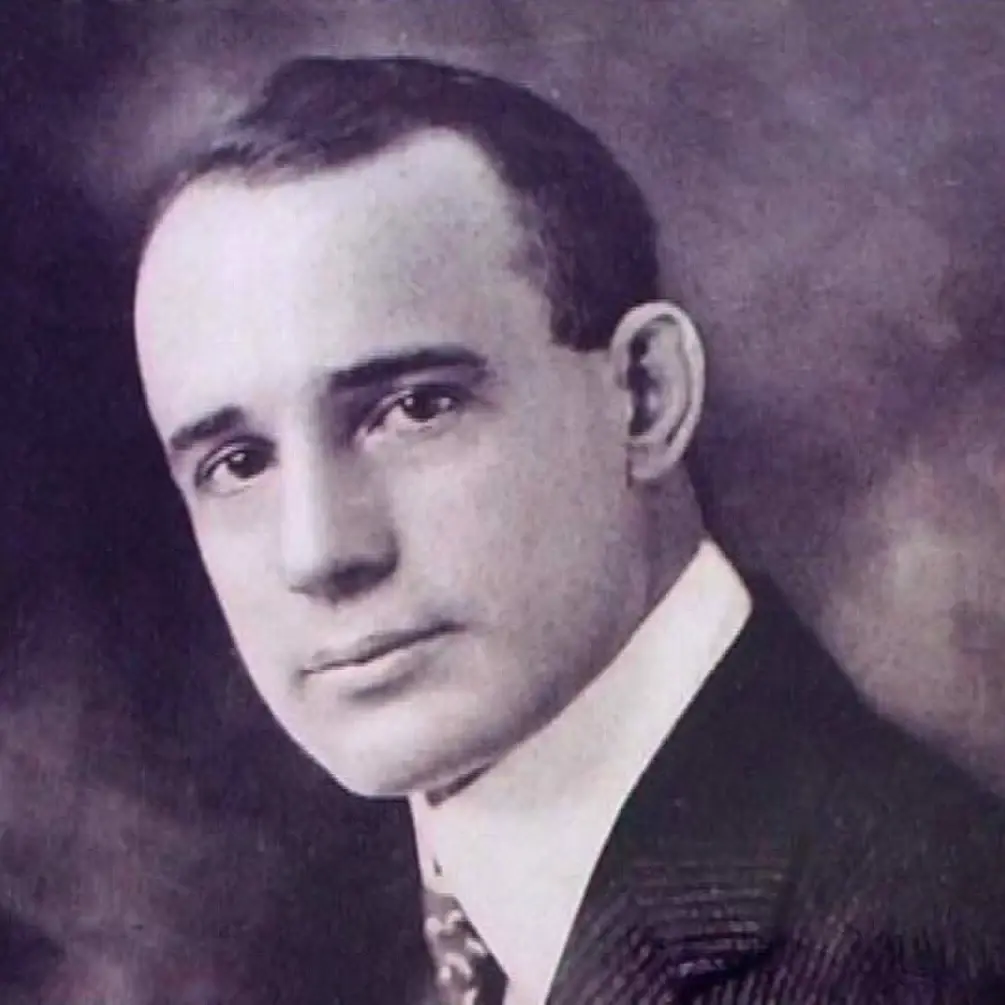
Napoleon Hill was an American author. “Think and Grow Rich” explores the author's philosophy of ambition, persistence, and the pursuit of financial success.
Explore more books by Napoleon Hill