
What you'll learn
Key ideas from Smart Leadership
These ideas compress the book's argument without treating the author's view as settled fact. Use them as an orientation before reading the full work or listening in Wiseley.
Data, challenging questions, direct observation, and candid advisers provide complementary evidence; data alone cannot tell the whole story.
A useful development plan is written, individualized, focused on a few specific goals, tracked over time, and supported by others.
Team design starts with complementary expertise and perspectives aligned around a shared purpose and goals.
Capacity expands when leaders clarify their role and return work to the people responsible for it.
Protected reflection gives leaders room to learn from experience, consider the future, and plan beyond immediate demands.
Questions, conversations, inexpensive tests, wide reading, and revisited notes make curiosity a continuing practice.
A vivid picture of a better future gives change direction, helps focus decisions, and sets boundaries around what to pursue.
Accountability, relevant measures, clear values, workable plans, steady communication, and tailored recognition can support execution.
Inside Smart Leadership
Read the first chapter in full here. The other 11 continue in the Wiseley app.
Chapter 1 of 12 · 6 min · Audio & text
Choices in the Quicksand
Smart Leadership, by Mark Miller.
Mark Miller treats impact as the aim of leadership. Effectiveness is the way a leader adds value; impact is the goal. He argues that leaders can increase their contribution by making four connected choices: confront reality, grow capacity, fuel curiosity, and create change. The choices begin with an honest view of the conditions a leader actually faces.
A leader can be capable and committed yet feel trapped by the demands around the role. Miller illustrates this with a successful individual contributor who earns raises and is then promoted to lead a new team or turn around a struggling one. The promotion brings more emails, meetings, people to serve, projects, and deadlines. At the same time, the leader may miss family or social events and find that work still occupies the mind at home. The question becomes whether this way of living is sustainable for another five years. It is a scenario, not a claim that every promotion follows this path. Its point is that greater responsibility does not automatically make a leader more effective or leave room for the rest of life.
Miller calls the pressures that blunt a leader’s impact personal quicksand. They may come from interruptions, complex demands, fear, fatigue, inertia, or even past success that makes change seem unnecessary. A leader’s particular obstacles will differ, and some circumstances lie outside their control. Feeling stuck does not prove that someone is weak or unsuited to lead. But simply working harder may not free them; struggle without a deliberate direction can make the feeling of being trapped worse.
Miller contrasts three responses to quicksand. A leader can keep swimming through it, which may get them through a difficult season but drains energy over time. They can give up, letting their influence fade. Or they can try to escape toward higher ground. The third response requires intentional, thoughtful movement. It shifts attention from coping with every demand to choosing a path that can increase the leader’s contribution.
The Indiana Jones cup scene makes a related point about how choices are judged. A villain selects a beautiful, jeweled cup, while Indiana Jones takes a plain one; the knight’s response frames Indy’s selection as wise. Appearance alone was a poor decision criterion. In leadership, too, the most visible or urgent option may not be the one with the greatest value. Some choices have consequences that ripple into later decisions, while others deserve little attention. Miller calls the high-impact, far-reaching choices Smart Choices because they warrant sustained focus and energy.
Choosing well is not always a simple matter of calm reasoning. Emotions, values, past experience, urgency, overload, and fatigue can shape what seems like the obvious response. A leader may give a familiar approach more weight than changing conditions justify, or let the pressure of the moment set the agenda. The framework invites leaders to pay attention to the choices with wider consequences and to the conditions influencing them. It does not suggest that every decision can be controlled or made with equal care.
The four choices form a connected framework. Confront Reality means finding a truthful picture of the starting point. Grow Capacity means expanding what the leader and organization can take on. Fuel Curiosity means continuing to learn and grow as conditions change. Create Change means acting toward a better future rather than accepting current conditions as permanent. Reality comes first because a leader needs to know where they are before deciding how to move. Capacity and curiosity help make a response possible and keep it relevant; change turns that preparation toward a preferred future. Together, the choices reinforce one another, though they are foundational choices rather than a complete list of every decision a leader faces.
The practical starting point is to name the three obstacles that most limit your impact, success, plans, or progress. Write them down and return to them as you work through the choices. The purpose is to form a credible plan for moving toward higher ground, not to pretend the obstacles are imaginary or to solve everything at once. Deliberate choices give the plan direction; revisiting it keeps the original obstacles in view.
Miller’s emphasis on choice does not mean all leaders have the same options. Access to choices differs with people’s circumstances, including poverty, food insecurity, geography, and historical injustice. Nor does choosing wisely guarantee the desired result; poor calls are inevitable, and outcomes are not wholly under a leader’s control. The book also assumes that readers have basic leadership character and skills. It focuses on the choices that help capable leaders become more effective, rather than treating choices as a substitute for those foundations.
These choices are simple to name, but difficult to use consistently. They require focus, diligence, and action, especially when urgent demands keep pulling attention away. The opening task is to see the situation clearly, recognize which obstacles matter most, and make a deliberate next choice. That is how Miller’s framework begins its work toward greater leadership impact.
Chapter 2 of 12 · 6 min · Audio & textIn the app
Face the Facts
A leader’s picture of work and life can feel settled and still be incomplete. Miller calls the choice to seek an accurate view “Confront Reality,” and stresses that it must be renewed.
Chapter 3 of 12 · 7 min · Audio & textIn the app
The Leadership Mirror
After a leader has looked at the reality around them, the next place to look is the mirror. This is not an exercise in self-criticism.
Chapter 4 of 12 · 6 min · Audio & textIn the app
Build the Crew
An extraordinary team performance can make a team’s potential visible. Mark Miller points to the U.S.
Chapter 5 of 12 · 6 min · Audio & textIn the app
Create More Capacity
Capacity grows when leaders deliberately arrange time, people, and work to support a larger contribution. It is not simply a matter of extending the workday.
Chapter 6 of 12 · 7 min · Audio & textIn the app
Protect Margin and Energy
Leaders need room to think and enough energy to act with judgment and care. Miller treats protected margin and personal energy as complementary conditions for leadership.
Chapter 7 of 12 · 6 min · Audio & textIn the app
Keep Curiosity Alive
Leaders can become so familiar with what has worked that they stop looking for what might work next. In Smart Leadership, Mark Miller presents curiosity as a choice: keep learning and exploring instead of relying only on settled routines.
Chapter 8 of 12 · 6 min · Audio & textIn the app
Questions That Open Thinking
A leader who relies only on personal experience will miss things other people know. Asking and listening can bring new information into view, and even an answer of “I don’t know” gives the conversation somewhere to go.
Chapter 9 of 12 · 5 min · Audio & textIn the app
Learn Beyond Your Circle
An intentional conversation with someone outside your usual circle can expose you to experiences and assumptions you do not meet in routine work. Miller treats these conversations as a way to feed curiosity and potentially extend a leader’s impact.
Chapter 10 of 12 · 6 min · Audio & textIn the app
Choose Change and Grow
In Mark Miller’s account, a central test of leadership is whether people and organizations move toward positive change. Being busy can feel like progress, yet activity that leaves everything as it was may mean a leader is stuck in the status quo.
Chapter 11 of 12 · 6 min · Audio & textIn the app
Make the Future Visible
A choice to change needs a destination. Miller describes vision as seeing what does not yet exist but ought to, then describing it so others can help create it.
Chapter 12 of 12 · 8 min · Audio & textIn the app
Turn Vision into Change
Making a preferred future visible gives change direction, but it does not implement it. The leader’s execution work is helping people move from the present toward that future, using familiar tools with judgment and adapting them as conditions become clearer.
Chapter 1 of 12 · 6 min · Audio & text: Choices in the Quicksand
Wiseley supports reading and listening to summaries in the app.
Continue in WiseleyAbout Mark Miller
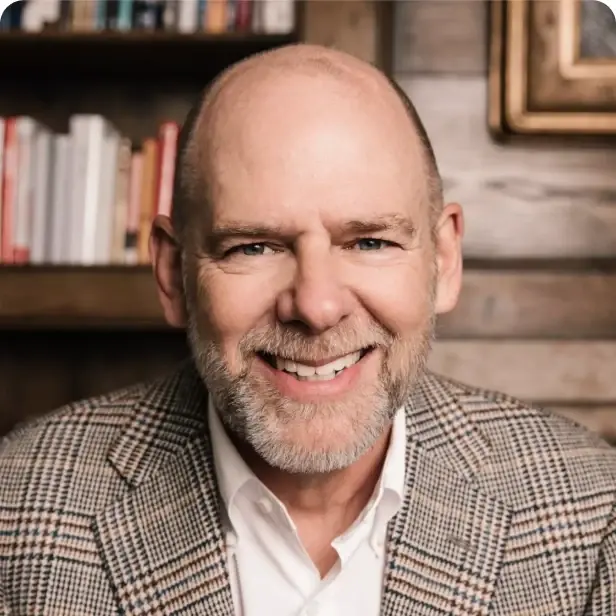
Mark Miller is the author of “Smart Leadership”. The book explores how leaders can increase their impact amid pressure, limited capacity, and uncertainty.
Explore more books by Mark Miller