What you'll learn
Key ideas from Picasso's War
These ideas compress the book's argument without treating the author's view as settled fact. Use them as an orientation before reading the full work or listening in Wiseley.
Kahnweiler made experimentation viable through contracts, guaranteed purchases, specialist clients, and exhibitions crossing national borders.
World War I turned nationality, borders, and enemy-property law into direct threats to the galleries and relationships that sustained avant-garde art.
Quinn’s conditional preservation hopes could not overcome a will ordering liquidation, weak documentation, unfunded plans, and unsuitable executors.
MoMA translated Barr’s European study and the founders’ concern over lost collections into a public institution with an explicit teaching mission.
Its political intention and artistic ambition did not overcome audience confusion, official hostility, press silence, or weak immediate persuasion.
The 1939 retrospective succeeded by joining dealer cooperation, MoMA’s enlarged galleries, international loans, wartime transport, and a chronological account of Picasso’s career.
Touring, education, publicity, and acquisitions transformed a temporary exhibition into durable American authority, with Guernica remaining on loan for decades.
Inside Picasso's War
Read the first chapter in full here. The other 12 continue in the Wiseley app.
Chapter 1 of 13 · 9 min · Audio & text
Who Makes New Art Matter
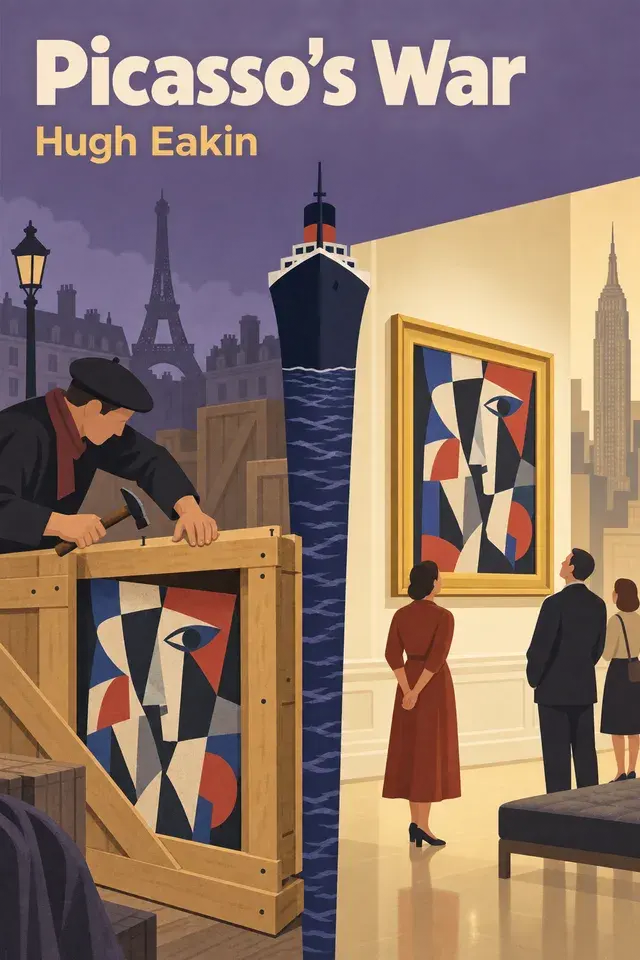
Picasso's War, by Hugh Eakin.
Who makes new art matter? Picasso’s first American exhibition offered a stark answer: not necessarily the artist, the museum, or the market. In nineteen eleven, Alfred Stieglitz presented eighty-three recent Picasso drawings at his tiny Two Ninety-One gallery. The exhibition was extended, but only one drawing sold, and it was the least challenging work in the group. Stieglitz then offered the remaining set to the Metropolitan Museum for two thousand dollars. The curator reportedly treated the proposal with amusement and argued that such pictures could never mean anything to America.
That outcome is easy to misread. Poor sales did not mean an absence of interest. Marius de Zayas believed the exhibition had generated attention, and Stieglitz himself acquired an important drawing. The failure showed that American institutions and buyers lacked a dependable way to recognize or support this kind of innovation. John Quinn, who attended the exhibition, did not buy any drawings, even though prices were low. His reaction exposed a gap between his enthusiasm for cultural disruption and his ability to understand Picasso’s new language. Even Edward Steichen found the work difficult to understand.
The resistance reflected more than personal taste. The United States projected industrial and imperial modernity while preserving conservative, moralizing, xenophobic, and racially oppressive institutions. Censorship campaigns targeted foreign literature, suggestive images, suffragist material, and radical performances. American elites eagerly acquired European art as property and social distinction, but usually preferred the authority of earlier centuries. The Old Master market rewarded pedigree and imitation. Quinn saw it as a system that encouraged stale repetition, though that was his judgment rather than a neutral description. Against this background, contemporary European painting looked not like the natural art of a modern country, but like a threat to established standards.
Cubism made the problem especially severe because it changed what a painting asked viewers to do. Picasso and Georges Braque did not merely distort a familiar scene. Analytical Cubism tried to break the visible world into underlying forms and structures. A useful way to describe it aloud is this: instead of treating the canvas as a window seen from one fixed position, the artist lets several viewpoints and structural fragments coexist. The viewer must reconstruct the subject rather than simply recognize it. To people trained to expect stable perspective and recognizable likeness, simplified heads and overlapping planes could look grotesque, primitive, or disordered. The difficulty was conceptual before it was commercial.
Some of this formal innovation drew on African and other non-Western objects that European artists encountered as alternatives to prevailing conventions. That influence needs a serious qualification. These objects entered European art through colonial extraction and were framed by Western claims of cultural superiority. Their importance to Picasso’s experiments can be acknowledged without treating the borrowing as neutral or allowing the avant-garde to erase the cultures that produced the source material.
Quinn was energetic enough to become an advocate, but he was still learning what he was advocating. He had supported experimental writers, controversial theatre, new poetry, and artistic debate, and his legal and literary networks made him an effective cultural intermediary. Yet his international confidence exceeded his direct knowledge of French painting and the Paris avant-garde. He could recognize Picasso’s audacity before he possessed the vocabulary to explain it. That distinction matters: advocacy can begin with conviction, but durable interpretation requires practice, comparison, and a receptive public.
Daniel-Henry Kahnweiler built a different answer to the problem. He opened a gallery in nineteen oh seven to sell art that the public had not yet accepted. When he first saw Picasso’s Les Demoiselles d’Avignon, he was repelled, but he also sensed that Picasso was challenging the premises of painting itself and needed financial support. Kahnweiler earned Picasso’s trust through sustained interest and purchases, then secured an exclusive contract. He deliberately avoided publicity and Paris exhibitions when he believed premature attention could work against the artists.
The contract was not merely a claim over future sales. Kahnweiler guaranteed purchases, offered advances, and paid artists low fixed prices while stockpiling much of the work. Those arrangements reduced the artists’ need to think about sales or exhibitions and gave them unusual freedom to follow their work. Kahnweiler also cultivated a specialist market rather than seeking immediate popularity. The nineteen fourteen Drouot auction tested whether his artists had lasting value. German bidding drove many works to five or six times their earlier prices, while Picasso’s Family of Saltimbanques reached about twelve times its former price. Strong bidding did not prove that the wider public understood Cubism; Kahnweiler believed only a few hundred people worldwide did. But it showed that a small, knowledgeable network could sustain experimentation.
Russia and Germany were central to that network. Sergei Shchukin initially disliked some of the art, yet deliberately tried to understand it. His purchases created a durable Paris–Moscow connection, and his house-museum exposed visitors to radical Picassos and Matisses. Private collecting therefore became public cultural infrastructure. Kahnweiler judged Germany more receptive than France because of its industrial development, educated urban population, universities, museums, and prior interest in post-Impressionism. Exhibitions in Munich, Stuttgart, Berlin, Dresden, Vienna, Zurich, and Basel expanded the audience and created buyers across German-speaking Central Europe. Pairing Picasso with non-Western sculpture also helped explain Cubism comparatively, though it carried the same colonial assumptions. The international success eventually encouraged French nationalist claims that Cubism was a German plot, with suspicion directed at Kahnweiler’s identity and connections.
Paul Rosenberg offered a contrasting dealer model. He had substantial capital, a large fashionable gallery, strong marketing instincts, and the patience to hold paintings until a market developed. Rather than expecting connoisseurs to seek out an austere specialist, he treated the gallery as a public performance. His Lautrec exhibition placed provocative modern art in a refined townhouse with contemporary design objects, presenting difficult painting alongside bourgeois elegance. Rosenberg also showed newer artists beside established Monet and Renoir works. That combination protected the business and connected modernism to Western tradition instead of presenting it as an absolute break. In America, where modern art lacked context, such hospitality could make unfamiliar work approachable. It could also make the avant-garde look like a fashionable style and conceal the radical ideas behind it. Continuing to sell nineteenth-century art was partly an aesthetic choice, but also a business necessity while the market for new artists remained unproven.
These models answer the opening question. Artistic innovation becomes culturally consequential through systems that finance it, interpret it, and connect it with people prepared to encounter it. Kahnweiler protected concentrated experimentation through contracts and specialist networks. Shchukin cultivated taste through repeated private exposure. Rosenberg cultivated it through context, elegance, and a welcoming public setting. Quinn supplied energy and advocacy, but his own learning curve showed that enthusiasm alone could not bridge the distance between invention and understanding. The Two Ninety-One exhibition was therefore not simply a commercial failure. It revealed the work required to make new art matter.
Chapter 2 of 13 · 10 min · Audio & textIn the app
Attention Is Only the Beginning
The Armory Show is often remembered as the event that made modern art an American fact. Eakin gives that memory a narrower meaning.
Chapter 3 of 13 · 9 min · Audio & textIn the app
War Breaks the Art Network
Before World War I, modern art depended on an international operating network. Kahnweiler linked a German Jewish dealer, a Spanish artist, Russian industrialists, and Central European connoisseurs.
Chapter 4 of 13 · 12 min · Audio & textIn the app
Collecting Through Trust and Distance
John Quinn’s collecting changed when he stopped treating distance from Paris as an unavoidable weakness and turned it into a problem of organization. He wanted museum-quality works, but his legal practice, health, and limited travel made constant studio visits impossible.
Chapter 5 of 13 · 9 min · Audio & textIn the app
A Collection Without a Future
Quinn’s purchase of The Sleeping Gypsy was a triumph of trust under pressure, but it also exposed the limits of private judgment. In February nineteen twenty-four, Roché visited Picasso intending to discuss illustrations.
Chapter 6 of 13 · 8 min · Audio & textIn the app
Building a Museum That Teaches
MoMA began with a problem that was both cultural and material. New York’s major museums had resisted modern art, while John Quinn’s collection had been dispersed and Arthur Davies’s collection was liquidated after his death.
Chapter 7 of 13 · 9 min · Audio & textIn the app
Why the Picasso Plans Failed
Alfred Barr’s proposed Picasso retrospective was an argument, not a parade of famous paintings. He divided Picasso’s career into thirteen ranked phases and wanted visitors to follow the artistic problems each phase addressed.
Chapter 8 of 13 · 8 min · Audio & textIn the app
Modernism Under Political Pressure
Modernism’s political vulnerability became unmistakable to Alfred and Marga Barr in Stuttgart. At first, modernist culture itself seemed to offer refuge.
Chapter 9 of 13 · 9 min · Audio & textIn the app
Making Difficult Art Legible
By the mid-1930s, Alfred Barr faced a problem that was both artistic and civic. The Museum of Modern Art had introduced difficult European work, yet Hartford suggested it was not speaking effectively to ordinary Americans.
Chapter 10 of 13 · 9 min · Audio & textIn the app
Guernica and the Problem of Persuasion
Guernica begins with a mismatch between intention and readiness. Before the bombing of Gernika, Picasso was not consistently politically engaged.
Chapter 11 of 13 · 7 min · Audio & textIn the app
Acquiring a Public Cultural Memory
MoMA needed more than a building and a sequence of successful temporary exhibitions. Exhibitions could make a difficult artist intelligible for a season, but permanent works gave the museum a recurring, physical argument about what mattered.
Chapter 12 of 13 · 10 min · Audio & textIn the app
The Exhibition That Changed Reception
The 1939 Picasso retrospective at the Museum of Modern Art, or MoMA, mattered because it made several fragile arrangements work together. Alfred Barr had a new, enlarged museum, negotiated cooperation from Picasso’s dealer, international loans, and enough space to present a long career as an intelligible sequence.
Chapter 13 of 13 · 10 min · Audio & textIn the app
Rescue, Exile, and Lasting Authority
At the moment Picasso’s paintings were drawing large American audiences, Picasso himself was trying to make his work disappear. In Paris, he and Jaime Sabartés searched the rue La Boétie apartment, the rue des Grands-Augustins studio, Boisgeloup, and Le Tremblay.
Chapter 1 of 13 · 9 min · Audio & text: Who Makes New Art Matter
Wiseley supports reading and listening to summaries in the app.
Continue in WiseleyWhat Picasso's War is about
How did Picasso’s repeatedly rejected art become central to American culture? Hugh Eakin follows the collectors, dealers, and museum builders whose campaigns—and Europe’s wars—changed its reception. Their successes and failures reveal how markets, public education, political freedom, and personal relationships shape what societies recognize as important art.
About Hugh Eakin
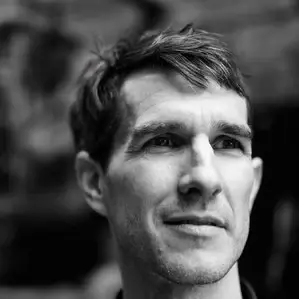
Hugh Eakin is the author of “Picasso's War”. The book explores how Picasso’s repeatedly rejected art became central to American culture.
Explore more books by Hugh Eakin