
What you'll learn
Key ideas from Rich Dad’s Guide to Investing
These ideas compress the book's argument without treating the author's view as settled fact. Use them as an orientation before reading the full work or listening in Wiseley.
Financial strength becomes clearer when each inflow is traced into recurring expenses, debt payments, and income-producing assets.
The reinvestment loop turns earned surplus into asset income, then into greater coverage of living expenses.
Financial intelligence combines accounting, investing, market understanding, and law into one framework for judging opportunities.
Work can serve as training when it adds complementary capabilities to technical expertise.
A sound decision names the concern, fills the knowledge gap, consults relevant expertise, and limits exposure to affordable loss.
The source presents opportunity assessment as repeated observation, deal comparison, practitioner learning, and direct negotiation.
Inside Rich Dad’s Guide to Investing
Read the first chapter in full here. The other 8 continue in the Wiseley app.
Chapter 1 of 9 · 7 min · Audio & text
Why Higher Pay Is Insufficient
Rich Dad’s Guide to Investing, by Robert T. Kiyosaki.
Rich dad starts with a distinction that frames the chapter: earning a living is not the same as becoming financially independent. A job can provide money for ordinary responsibilities, but when income depends entirely on selling time and labor, stopping work also stops the paycheck. In Kiyosaki’s account, independence begins when a person learns to make money work through an income-producing activity. The point is not that wages have no value. It is that higher pay cannot create freedom if fear directs the work and desire directs the spending.
The book presents this issue through two fathers. Robert’s highly educated father, whom the narrative calls poor dad, favors good grades, college, secure corporate work, and employee benefits. Mike’s father, called rich dad, emphasizes ownership, financial education, and learning to direct capable people so money can work for the owner. Both fathers value education and hard work, but they teach different financial perspectives: one stresses qualifications and employment, while the other asks what a person understands about money and how that knowledge changes the person’s options. Kiyosaki does not make this a case against school or jobs. School prepares people for professions and useful work, and employment can be sensible. His objection is to treating either as the complete answer.
Rich dad calls the familiar pattern the Rat Race. People study, find work, receive pay, and use it to meet expenses and buy what money seems to promise. Marriage, a home, a car, children, taxes, and debt can increase monthly obligations. A raise may then support a larger lifestyle rather than reduce dependence on wages. Kiyosaki describes fear as the engine at one end: fear of unpaid bills, dismissal, insufficient money, or starting again pushes people toward work. Desire pulls at the other: better goods, comfort, status, security, and approval promise relief. Satisfaction fades, spending creates new obligations, and the person returns to work because the paycheck has become necessary again.
The childhood story turns this cycle into experience. Robert and Mike ask Mike’s father to teach them how to become wealthy. His answer is an offer of employment. They accept three hours on Saturday for ten cents an hour, dusting and restacking canned goods in one of his convenience stores. After three weeks, each receives thirty cents for a shift. Robert finds the work boring, spends the money on comic books, and is ready to quit by the fourth week. Robert’s own father objects. He sees exploitation and possible unlawful child labor, tells him to demand at least twenty-five cents an hour, and says to leave if the raise is refused. That objection remains part of the story: rich dad’s teaching purpose does not erase the concern about the arrangement.
Rich dad has designed the job as a lesson in experience rather than a lecture. When Robert complains, rich dad says he sounds like employees who blame low pay, poor treatment, or a boss while waiting for someone else to solve the problem. The small wage is meant to create enough frustration for a question to appear. Rich dad then removes the pay, and the boys keep working the same hours for nothing. This is a narrative test, not a general recommendation. Missing baseball and losing the ability to buy comic books still hurt, but the boys are forced to notice their dependence on an immediate reward. Rich dad raises hypothetical wage offers from twenty-five cents to a dollar, then two dollars and five dollars an hour. The boys imagine what money could buy, yet refuse the highest offer. His lesson is that people contain both a needy part that can be bought and a stronger part that can pause before reacting.
That pause leads to the chapter’s practical method. Name the feeling honestly: fear, anger, or desire for a reward. Then ask what automatic response it is producing. Fear may say to take any job immediately; anger may say to quit; desire may say to spend the paycheck at once. The question is not whether the feeling is real, but whether it should do the thinking. Ask what may be missing, whether more pay would change the pattern, and whether another way exists to create value. This approach does not deny bills or make work unnecessary. It turns emotion into information rather than allowing emotion to choose.
The boys find another source of value only after several weeks of unpaid work and discussion. They notice Mrs. Martin cutting covers from comic books. She keeps the top portion for distributor credit and throws the rest away. The distributor agrees to give the discarded comics to the boys if they continue working at the store and promise not to resell them. The boys turn a spare basement room into a comic-book library. They hire Mike’s younger sister as librarian, charge ten cents for two hours, and let children read several comics for less than the cost of buying them. The librarian checks departing children, prevents borrowing, and records attendance and comments. The boys are no longer earning only by their own hours; they are organizing inventory, a service, a price, and delegated work.
Over three months, the library averages nine dollars and fifty cents a week. The boys pay the librarian one dollar weekly, continue working at the store, collect comics, and honor the agreement not to sell them. Damaged books are burned. They cannot open a second branch because they cannot find another person as dedicated and trustworthy as the librarian. Then neighborhood bullies start a fight, and Mike’s father recommends closing the library. The business ends despite its workable operating model. Rich dad still treats it as the boys’ first lesson in making money work: admission fees continued while the boys were absent. The activity was not permanent or risk-free, but it changed what they looked for.
Chapter 2 of 9 · 8 min · Audio & textIn the app
Read the Story of Cash Flow
Financial strength can look obvious from a paycheck, a house, or a list of possessions. This chapter asks a more useful question: what happens to the money after it arrives?
Chapter 3 of 9 · 7 min · Audio & textIn the app
Build Assets Alongside Your Career
After learning to read where money flows, the next question is what that reading is for. In Kiyosaki’s framework, “mind your own business” does not mean abandoning a job.
Chapter 4 of 9 · 8 min · Audio & textIn the app
Combine the Four Financial Skills
Financial intelligence, in this chapter, is not simply knowing how to earn more or recognize a financial term. The author presents it as a combination of four disciplines: accounting, investing, market understanding, and law.
Chapter 5 of 9 · 8 min · Audio & textIn the app
Choose Work That Builds Capabilities
Once a person understands cash flow and the importance of assets, another question follows: what abilities make those assets easier to create and manage? Kiyosaki's answer is to treat work as a place to build future capacity, not only as a source of this month's pay.
Chapter 6 of 9 · 7 min · Audio & textIn the app
Face Risk Without Abandoning Judgment
Knowledge does not automatically become action. The author says investing can be technically simple but psychologically difficult.
Chapter 7 of 9 · 8 min · Audio & textIn the app
Make Learning and Saving Deliberate
An intention to build assets becomes durable only when it turns into repeated decisions. Kiyosaki's first step is to clarify a reason larger than immediate comfort: a combination of wants and don't-wants.
Chapter 8 of 9 · 7 min · Audio & textIn the app
Investigate and Structure Investment Opportunities
An investment opportunity becomes clearer when it is investigated as a transaction, not admired as a story. The author’s practical search combines learning a method, observing a market repeatedly, comparing completed deals, speaking with people who have done the work, and testing terms through an offer.
Chapter 9 of 9 · 8 min · Audio & textIn the app
Turn Financial Goals Into Practice
The framework becomes concrete when a financial goal determines what to learn and what to do with cash flow. The closing case follows a friend trying to fund his children's education while building a path toward retirement.
Chapter 1 of 9 · 7 min · Audio & text: Why Higher Pay Is Insufficient
Wiseley supports reading and listening to summaries in the app.
Continue in WiseleyWhat Rich Dad’s Guide to Investing is about
How can earnings become lasting financial independence? Robert T. Kiyosaki’s account connects financial literacy, asset ownership, practical learning, and emotional discipline. Through business and investing stories, it explains how to examine cash flow, build income-producing assets, and evaluate opportunities while recognizing the limits of its personal examples.
About Robert T. Kiyosaki
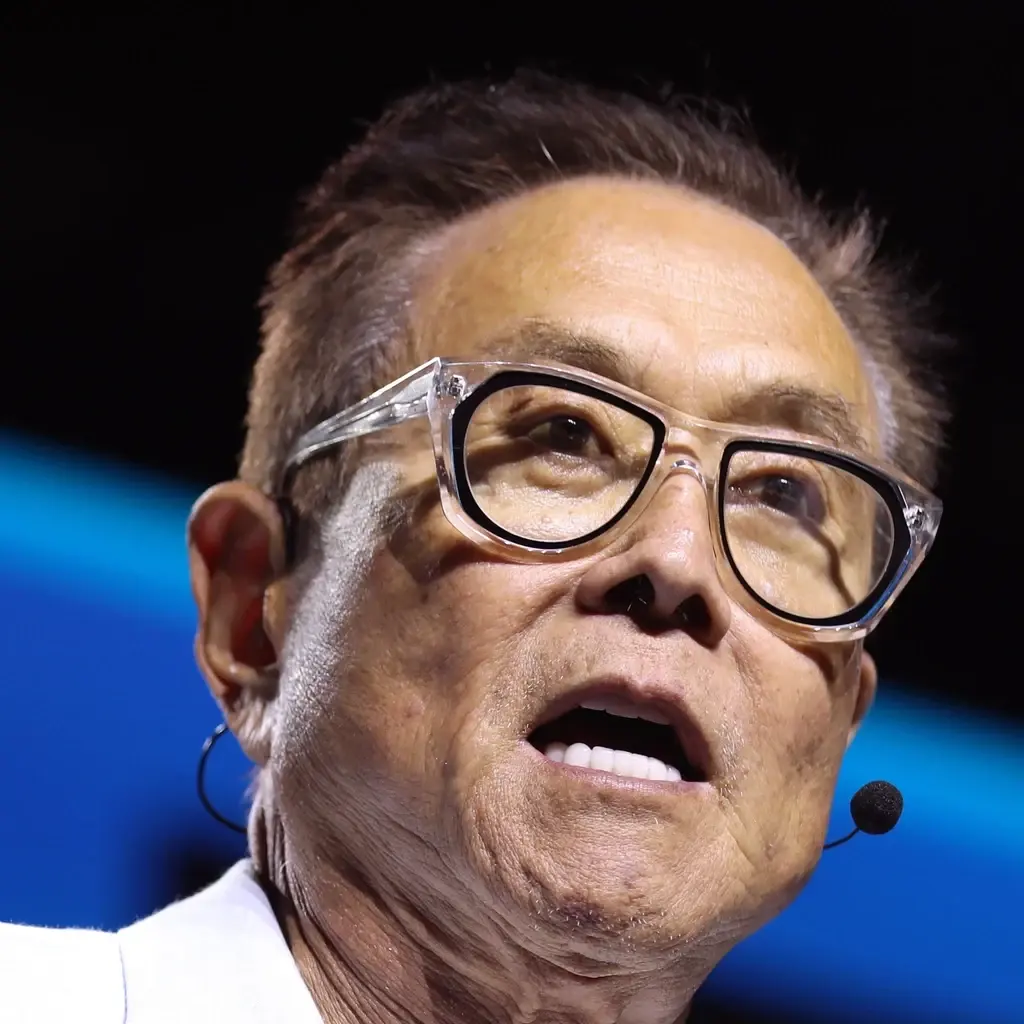
Robert T. Kiyosaki is an American finance author and investor. “Rich Dad Poor Dad” explores the author's views on financial education, assets, and building income.
Explore more books by Robert T. Kiyosaki