What you'll learn
Key ideas from The Virgin Way
These ideas compress the book's argument without treating the author's view as settled fact. Use them as an orientation before reading the full work or listening in Wiseley.
Listening is an active leadership practice that combines attention, silence, note-taking, and patience.
First-hand use and attention to small details help leaders see service problems that reports may miss.
A mission is more credible when it is distinctive, concise, practical, and reinforced through daily conduct.
Questioning what an organization treats as normal can reveal whose needs its accepted assumptions leave unmet.
Character, transferable ability, and evidence across successes and setbacks reveal more than credentials or interview polish alone.
Trust and autonomy support engagement when employees also understand the quality standards their work must meet.
Early input from affected divisions and frontline employees can surface practical constraints and strengthen shared ownership.
Due diligence examines disadvantages, competing priorities, and the cost of delay while keeping investigation from becoming chronic indecision.
Inside The Virgin Way
Read the first chapter in full here. The other 11 continue in the Wiseley app.
Chapter 1 of 12 · 5 min · Audio & text
Do Work That Energizes You
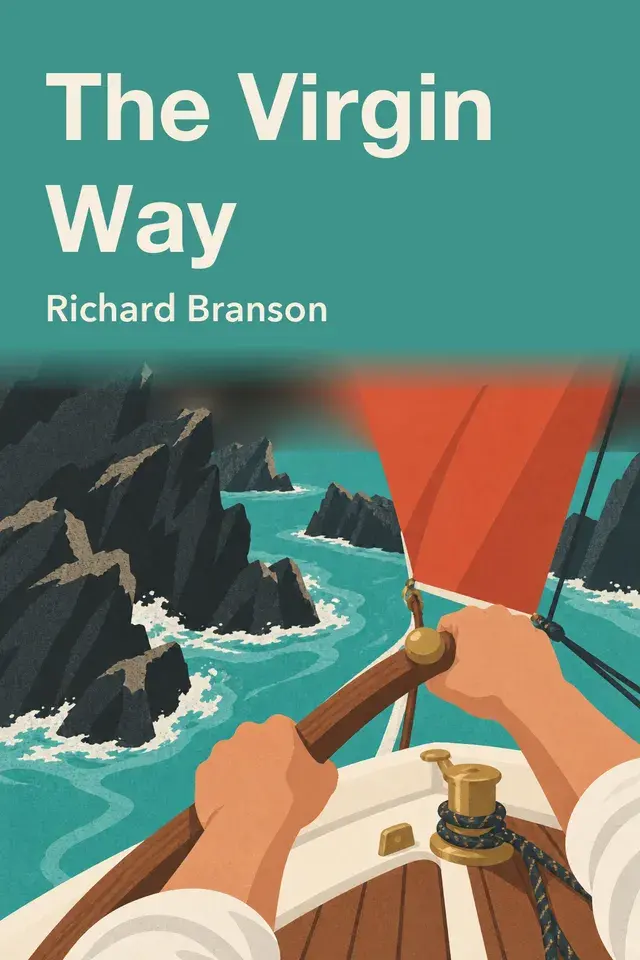
The Virgin Way, by Richard Branson.
Richard Branson presents the Virgin Way as a personal practice shaped by experience, not a formula that guarantees success. He begins with a simple test for choosing work: does it excite him, give him a chance to make a difference, and leave room for creative enjoyment? He applies that idea to writing as well as business. If he does not enjoy making a book, he doubts that readers will enjoy it. For him, the work and the people doing it matter together.
Enjoyment, in this account, is not a promise that work will always be easy or entertaining. It is a reason to spend limited time on challenges that feel worth pursuing. Branson urges people not to treat the present merely as a rehearsal for a better future. Remembering past experience and planning ahead still matter; neither should crowd out noticing whether today’s work is engaging and meaningful.
That emphasis also affects how he thinks about a wrong choice. He says people can pause, reassess, and, when possible, leave a situation that makes them unhappy. Doing so may require courage, especially when friends or family are involved. His advice to make mistakes quickly is not a claim that changing direction is effortless. Branson acknowledges that it may sound easier from someone who has already built a business. He says, though, that Virgin might not exist if he had kept giving time to things that felt wrong for him. In his view, recognizing a poor fit sooner is better than continuing to give time to something that feels wrong.
His departure from school illustrates that judgment, but only as a story about his own circumstances. At sixteen, he left Stowe School to pursue Student magazine. He believed that project did not require more time in classrooms, and that the curriculum then seemed disconnected from the future he wanted. He is not arguing that education is unimportant. On the contrary, he calls getting the best education one can imperative, particularly in a competitive commercial world. His decision reflected his fit and ambitions, not a recommendation for others to leave school.
Branson also describes why that route made sense to him. Memorizing material and repeating it back had been difficult, in part because he was dyslexic and had borderline attention-deficit disorder. Some teachers made their subjects engaging, but his attention had already turned toward entrepreneurship. Leaving school did not end his education. He says he developed a lasting appetite for learning about businesses, people, and cultures, mainly through firsthand experience rather than books or secondhand accounts. This explains how he learned; it does not establish that other people should learn in the same way.
His appetite for unconventional challenges appears in a very different story: sailing around the jagged rocks near Necker. Branson recalls enjoying sailing fast through and over the rocks; his guest laughingly remarked afterward that the route was not what he had in mind. Branson uses the contrast to question whether carefully following familiar routes is always enough. When a destination has not been reached before, familiar charts and data may offer reasons to stay on a known course without showing how to get somewhere new.
But his enthusiasm for risk needs to be read alongside his warnings. Branson says others may call some of his adventures reckless; he prefers to call them calculated risks. He says many belong in the “don’t try this at home” category. His story is therefore not an instruction to sail through dangerous rocks, or to treat every bold impulse as wisdom. Instinct can be a prompt to explore a possibility, especially when a challenge feels compelling. It is not proof that the choice is safe or sound. The stakes matter: excitement alone cannot tell someone what a decision may cost.
For Branson, acting and then learning belong together. An unconventional choice may lead somewhere worthwhile, or reveal that the choice was wrong. Experience becomes useful when a person takes its lessons seriously, reassesses, and changes direction when needed. His own account favors trying unfamiliar paths over assuming that conventional advice or familiar data settles every question. Yet he does not claim that contrarian decisions always succeed. He says his approach has served him and Virgin well most of the time, and cautions that the book may not suit everyone.
The chapter’s central idea is not to pursue excitement at any cost. It is to treat meaningful engagement as one guide to where effort goes, act with awareness of the risks, and let outcomes inform what happens next. Branson’s school decision and his sailing story show two very different versions of going an unconventional way. Neither turns his experience into a universal rule. Together, they introduce a working life shaped by enthusiasm, action, and a willingness to learn when reality calls for a change.
Chapter 2 of 12 · 6 min · Audio & textIn the app
Listen to Learn Before Leading
Leadership is often measured by what a person says: the clarity of an answer, the force of a speech, the confidence of a decision. Branson argues that this leaves out a quieter skill.
Chapter 3 of 12 · 7 min · Audio & textIn the app
See the Business From Outside
A business can look sound from the inside and still feel confusing, awkward, or even insulting to the people who use it. Richard Branson’s argument is that leaders should regularly test their decisions from the customer’s and employee’s point of view.
Chapter 4 of 12 · 7 min · Audio & textIn the app
Speak Clearly and Give Purpose
Listening can reveal what a company needs; leaders still have to put that learning into words people can understand and act on. Branson’s standard is to say what you mean in as few apt words as possible.
Chapter 5 of 12 · 8 min · Audio & textIn the app
Challenge the Status Quo
Organizations need people who can keep reliable systems working. Branson argues that leadership also means helping a business move into uncertain territory.
Chapter 6 of 12 · 10 min · Audio & textIn the app
Compete Through Better Experiences
For Branson, changing a business can begin with a plain question: why is this done this way? When Virgin entered aviation and rail, he was a dissatisfied passenger, not an industry expert.
Chapter 7 of 12 · 8 min · Audio & textIn the app
Hire for Character and Potential
Branson treats hiring as one of a leader’s central responsibilities, especially when selecting senior people who will make decisions on the leader’s behalf. A people department can support the process, but it cannot replace the leader’s judgment about who should carry that authority.
Chapter 8 of 12 · 9 min · Audio & textIn the app
Sustain a People-First Culture
A company can have a sound strategy and still struggle if employees don't feel connected to carrying it out. Branson credits much of Virgin's success to a people-first culture that emerged informally in its first record shop.
Chapter 9 of 12 · 8 min · Audio & textIn the app
Equip Entrepreneurs to Grow
Entrepreneurship can look like an individual act of daring, but Branson’s argument is broader: people can build the ability to start and grow ventures when they get practice and support. Stories of new businesses in South Africa and Jamaica encourage him, yet he stresses that they represent only a small contribution to the scale of the challenge.
Chapter 10 of 12 · 8 min · Audio & textIn the app
Connect Teams Across Boundaries
A company can be full of capable people and still struggle to work as one. As divisions grow apart, they may distrust one another, communicate poorly, and make decisions that serve their own teams but conflict with the company’s aims.
Chapter 11 of 12 · 7 min · Audio & textIn the app
Decide, Persist, and Show Up
Taking action does not always mean acting immediately. Branson’s preferred approach begins with a timing question: could waiting cause the opportunity to disappear or pass to a competitor?
Chapter 12 of 12 · 8 min · Audio & textIn the app
Design Business for Wider Good
Branson’s closing argument links a company’s daily choices to the wider conditions that make its success possible. Employees, customers, suppliers, and investors all belong to the communities around a business, so commerce affects more than shareholders.
Chapter 1 of 12 · 5 min · Audio & text: Do Work That Energizes You
Wiseley supports reading and listening to summaries in the app.
Continue in WiseleyAbout Richard Branson
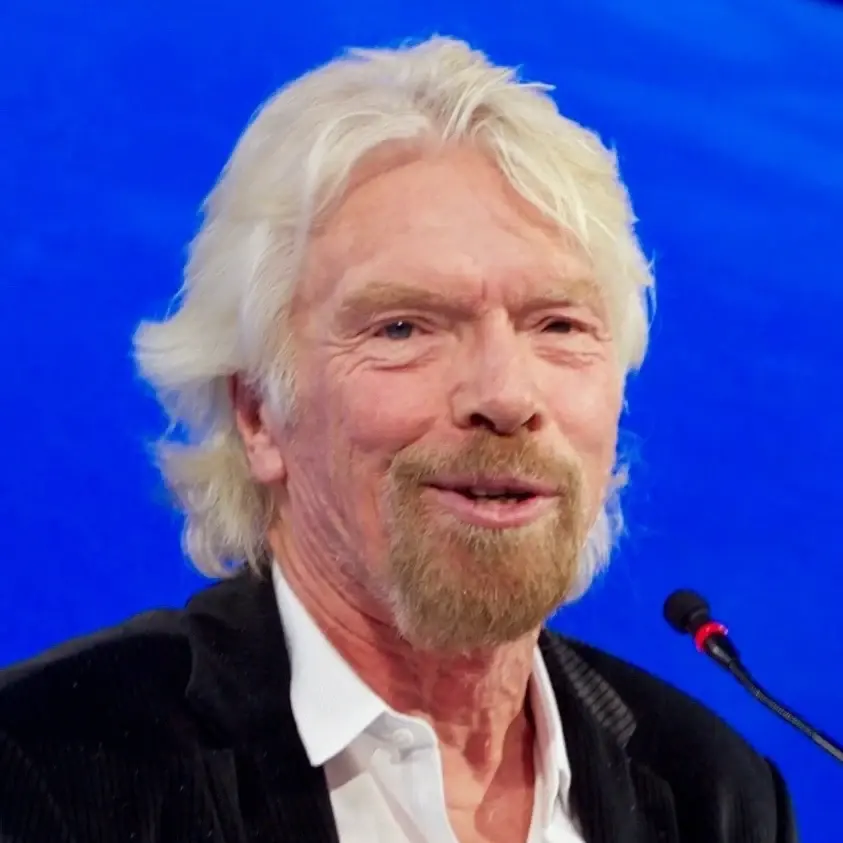
Richard Branson is an English entrepreneur and cofounder of the Virgin Group. “The Virgin Way” explores a leadership practice built around listening, customer experience, experimentation, and trust in people.
Explore more books by Richard Branson