What you'll learn
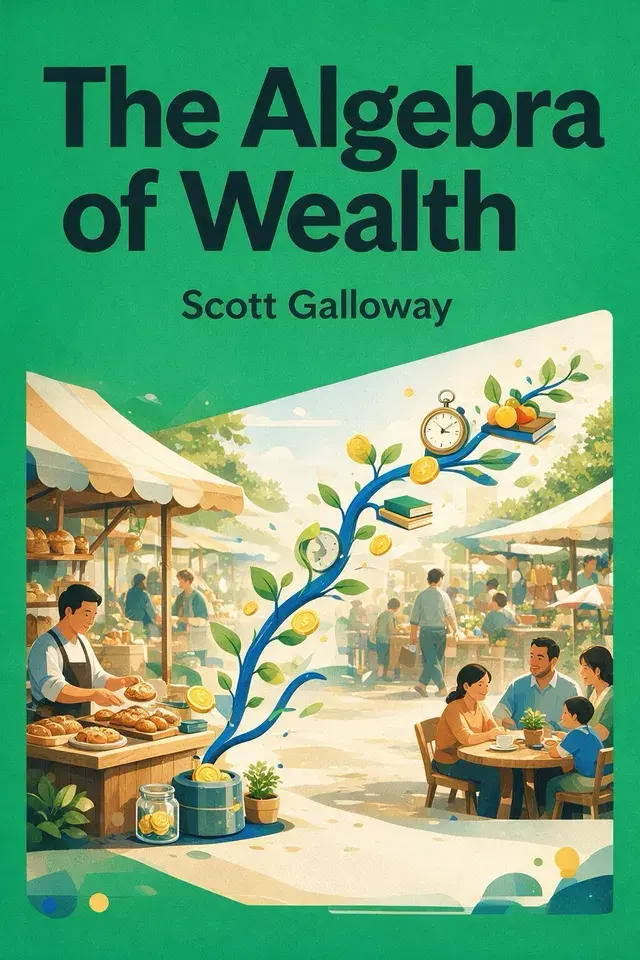
Key ideas from The Algebra of Wealth
These ideas compress the book's argument without treating the author's view as settled fact. Use them as an orientation before reading the full work or listening in Wiseley.
Wealth is defined as economic security: assets generate enough passive income to cover a chosen burn rate.
Economic security depends on character expressed through repeated behavior, not financial knowledge alone.
Focus makes scarce working time more productive by directing sustained effort toward durable earning power.
A realistic waterline budget connects actual spending with after-tax income and allocates surplus among consumption, intermediate needs, and long-term wealth.
Liquidity and price variability should match when money is needed, with emergency cushions sized to circumstances and rebuilt after use.
Passive, low-cost index funds are presented as the long-term core because sustained market-beating is difficult and fees compound.
The ethical endpoint of financial discipline is a life more available to other people.
How The Algebra of Wealth builds its case
Follow how the book develops its argument. Each note is a brief orientation, not a replacement for the chapter.
Security Before Status
People are often taught to recognize wealth through visible signals: a large salary, an impressive home, or the freedom to buy what others cannot. The opening argument of The Algebra of Wealth uses a different measure.
Character Against Consumption
Financial knowledge is not the same as financial behavior. Galloway opens this chapter with his own failure as evidence.
Focus Finds Leverage
Focus is the repeated choice of what deserves attention while most other signals are ignored. Economic security takes sustained effort over decades, so hard work supplies horsepower, but unfocused effort burns fuel without moving a career.
Time, Budgets, and Options
Time is the central financial resource because it cannot be refunded, borrowed, or stored. The past is fixed, the future uncertain, and the present is where choices occur.
How Capitalism Prices Risk
After income becomes savings, a deeper question begins: what does money do when it leaves your hands? Galloway frames money as an exchange of time.
Build a Durable Portfolio
Once income has become capital, the portfolio’s job is not to win every contest. It is to keep one mistake from deciding the rest of your life.
Taxes, Housing, and Mobility
Income is only the starting material. The book’s larger argument is that wealth appears when income becomes capital, but the amount available for that conversion is shaped by taxes, housing, and location.
Wealth in Service of Life
The book's final question is not how large a fortune can become, but what a fortune is for. Galloway's answer is that wealth matters when it reduces economic dependence and gives people more time, resilience, and presence for the relationships that make life meaningful.