What you'll learn
Key ideas from Power Failure
These ideas compress the book's argument without treating the author's view as settled fact. Use them as an orientation before reading the full work or listening in Wiseley.
Cordiner decentralized operating decisions to encourage initiative and long-term growth while keeping broad direction at headquarters.
Formal antitrust rules and discipline coexisted with misconduct that spread across GE and survived internal reviews.
Kidder’s compensation culture clashed with GE’s; GE skipped financial due diligence and inherited undisclosed trading practices, control failures, and potential legal liability.
GE Capital used GE’s credit standing to borrow cheaply and lend at higher rates, fueling growth while making loan quality consequential for GE.
GE Capital’s short-term commercial-paper funding of longer-term loans made ongoing investor confidence essential to liquidity.
Alstom promised greater power scale, but restricted diligence, French political intervention, and unresolved regulatory and integration work left material risks.
GE’s decline grew from interacting choices in capital allocation, governance, succession, and culture, alongside external shifts.
Inside Power Failure
Read the first chapter in full here. The other 20 continue in the Wiseley app.
Chapter 1 of 21 · 6 min · Audio & text
The Company Behind the Legend
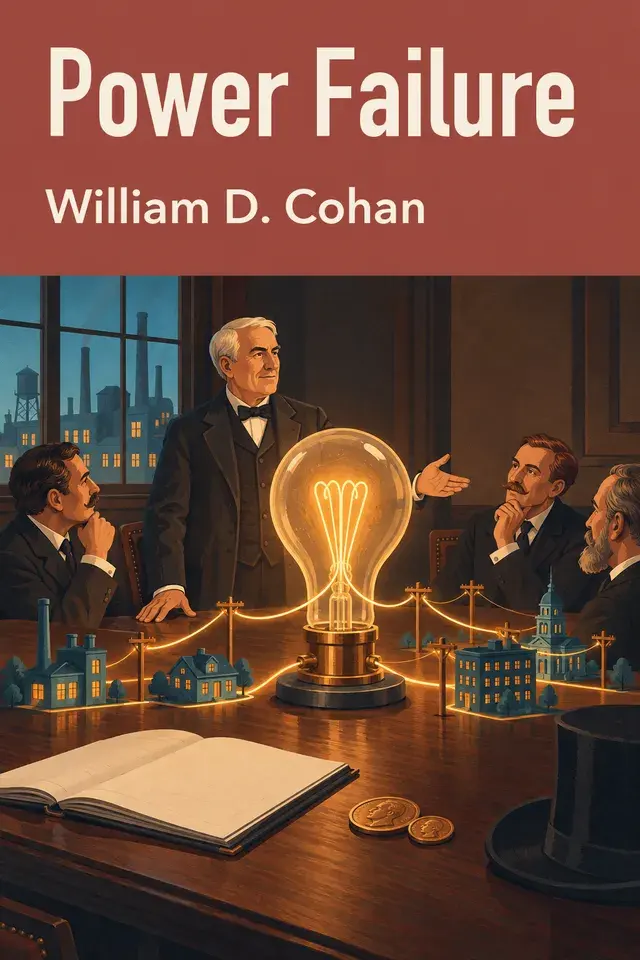
Power Failure, by William D. Cohan.
At lunch in 2018, Jack Welch repeatedly called choosing Jeff Immelt as his successor a mistake. Welch said he had left Immelt sound businesses and resources, and wanted each chief executive judged by what he did with the company he inherited. Immelt’s account ran the other way: he said he faced problems Welch had ignored or obscured and needed to prepare GE for a digital era. Cohan presents these as rival retrospective accounts, not a settled explanation of GE’s condition. The disagreement opens a larger question: how was the company built, and whose work does its legend remember?
That question reaches back to GE’s founding. The familiar story places Thomas Edison, the inventor, at its center. Cohan complicates this founder-centered account by pairing Edison’s technical achievements with Charles Coffin’s financing, organization, and business judgment. Before electricity, Coffin had become a successful shoe executive in Lynn, Massachusetts, through sales and attention to competition. When Silas Barton, a newspaper owner, and Henry Pevear, a leather manufacturer, brought Coffin together with Elihu Thomson and Edwin Houston to discuss fresh capital for their struggling electrical venture, Coffin supplied capital, bought out earlier investors, moved the business to Lynn, and took control. Thomson-Houston reopened in 1883.
There was hardly a ready-made market for electric power. Grids and appliances were scarce, and people worried that electric lighting could cause fires or explosions. Edison developed a durable lamp filament; in 1879, a carbonized-cotton filament burned for forty hours. But a working bulb could not light homes by itself. Edison organized businesses to manufacture lamps and generators, and in 1882 his Pearl Street station supplied the first electrical grid, serving Lower Manhattan. The example shows why invention needed a way to generate and distribute power before customers could use it.
Thomson-Houston had to create customers as well as equipment. Its salespeople traveled to promote arc lighting, and the company trained engineers to install and operate its systems. It also helped establish local power companies, often backed by wealthy investors and local governments, so plants would exist where customers could connect. The network grew from five central stations and 365 arc lamps in 1884 to 31 stations and 2,400 lamps in 1885. Electrifying streetcars helped drive demand, and the company’s system linking Boston and Lynn raised its profile by 1888.
Coffin’s financing supported that expansion but also tied the business to its customers’ fortunes. He recruited wealthy Boston investors and sold his family’s shoe business to focus on electrical power. Thomson-Houston sold equipment wholesale to small, poorly capitalized local electric companies. When those buyers could not pay entirely in cash, Coffin accepted some of their debt or equity securities. This vendor financing helped customers acquire equipment and supported growth, while leaving Thomson-Houston exposed if the buyers could not pay.
Coffin also expected the industry to consolidate. Acquisitions could add scale, secure technology, or settle patent disputes. After a patent dispute, Thomson-Houston bought Charles Brush’s company for more than three million dollars. It also acquired the failed Van Depoele company and retained the inventor’s services for royalties, strengthening its position in electric streetcars. These were business moves that shaped what the company could build and sell, not simply additions to an inventor’s list of ideas.
By 1891, Edison General Electric and Thomson-Houston were both substantial. Thomson-Houston had 4,000 employees compared with Edison General’s 6,000, yet it earned nearly as much revenue—10.3 million dollars versus nearly 11 million—and more profit: 2.7 million dollars against 2 million. Combining the rivals promised to reduce competition, bring capital to an expensive industry, and make management more economical. Who drove the merger is less clear. Villard had previously pressed for a combination, and he and Coffin revived talks in 1892. Edison later claimed he had initiated the deal, but Cohan presents little evidence for that claim. Contemporary accounts assigned responsibility differently, including to Villard and Insull.
The proposed share exchange reflected the balance of power: every three Thomson-Houston shares were to become five shares in the new GE, while each Edison General share became one. Filings also placed Thomson-Houston’s shareholders and managers in a stronger position. After GE was incorporated in 1892 as a holding company for the Lynn and Schenectady operations, Thomson-Houston shareholders held just over half the stock and its side held the key management posts. Coffin led the new company. Edison initially held a seat on its eleven-member board, but lost financial and managerial control. GE’s origin was therefore neither invention alone nor a simple founder’s handoff: Edison’s technical work joined Coffin’s financing and organization to build an electrical business at scale.
Chapter 2 of 21 · 7 min · Audio & textIn the app
Crises, Turbines, and Radio
GE’s early growth did not protect it from the Panic of 1893. The national crisis tightened credit and drove companies and banks into failure.
Chapter 3 of 21 · 6 min · Audio & textIn the app
Autonomy Without Accountability
After the war, General Electric had grown into a sprawling company. Ralph Cordiner believed its layers of centralized authority could stifle initiative.
Chapter 4 of 21 · 6 min · Audio & textIn the app
Welch Learns the Performance Game
Jack Welch’s early career joined technical work to an intense desire to win. William D.
Chapter 5 of 21 · 7 min · Audio & textIn the app
Planning, Power, and Promotion
Reg Jones saw a gap in GE’s decentralized structure. It had strengthened operating ability, but no one was responsible for judging how a business fit the company’s longer-term priorities or competed for its capital.
Chapter 6 of 21 · 6 min · Audio & textIn the app
The New CEO’s Operating Rules
Jack Welch took control of GE on April 1, 1981, after the board selected him to succeed Reg Jones. The company was already profitable and had a long record of improved earnings.
Chapter 7 of 21 · 9 min · Audio & textIn the app
Portfolio Discipline Meets Scandal
Welch’s portfolio discipline was about competitive position as well as profit. At the end of 1983, GE had $27 billion in revenue and $2 billion in profit, spread across a striking range of businesses.
Chapter 8 of 21 · 8 min · Audio & textIn the app
Acquisitions and the Finance Engine
By the mid-1980s, GE had cash and ambition to extend its reach. After buying Employers Reinsurance, it held $3.2 billion.
Chapter 9 of 21 · 6 min · Audio & textIn the app
The Cable Gamble
David Zaslav described NBC’s cable investments as a hedge. Bob Wright led the cable strategy as a new growth area for the network.
Chapter 10 of 21 · 8 min · Audio & textIn the app
Growth, Leverage, and Earnings
GE’s ascent rested on more than industrial production. Its financial arm became an increasingly large earnings engine, and investors rewarded the company for reliably meeting its promises.
Chapter 11 of 21 · 9 min · Audio & textIn the app
The Contest to Succeed Welch
Welch wanted a successor who could run GE, but he did not want the contest to become a prolonged campaign. He remembered the head-to-head process that had chosen him as painful.
Chapter 12 of 21 · 8 min · Audio & textIn the app
Immelt Takes the Helm
Jeff Immelt’s selection closed a long succession contest, but the surviving accounts disagree about when Welch had settled on him and how freely the board reached its conclusion. The decision also framed Welch’s last major acquisition effort: a bid meant to strengthen GE’s industrial businesses, whose failure reflected both European objections and GE’s own choices.
Chapter 13 of 21 · 10 min · Audio & textIn the app
When Confidence Meets Scrutiny
Immelt later remembered September 10, his first business day as chief executive without Jack Welch, as the one good day of his first year. On September 11, he was in Seattle for a Boeing visit when the attacks began.
Chapter 14 of 21 · 9 min · Audio & textIn the app
Refocusing GE and Rebranding Growth
Immelt’s refocus was an argument about where GE could grow and how investors should understand it. He wanted to rebuild industrial businesses that had borne the brunt of earlier cuts, invest more in research, and sell more GE products around the world.
Chapter 15 of 21 · 12 min · Audio & textIn the app
The Blind Spot Becomes a Crisis
The crisis did not begin when short-term credit markets suddenly froze. Warning signs had been building, but GE’s leadership culture made them harder to hear.
Chapter 16 of 21 · 7 min · Audio & textIn the app
Selling the Furniture
GE’s crisis response was not simply a matter of selling assets. It was also a test of whether investors would trust the company’s assurances.
Chapter 17 of 21 · 9 min · Audio & textIn the app
Power, Finance, and Alstom
Immelt’s transformation tied three decisions together: give local leaders more authority, build a larger industrial power business, and shrink GE Capital. Each was supposed to move GE’s growth and earnings toward global industrial markets.
Chapter 18 of 21 · 10 min · Audio & textIn the app
Targets, Activism, and Exit
Once GE had committed to Alstom, regulatory approval turned the purchase into a harder test. Regulators expected GE to sell Power Systems Manufacturing, or PSM, which competed in turbine parts and service.
Chapter 19 of 21 · 9 min · Audio & textIn the app
Flannery’s Reset and Breakup Plan
Flannery’s review turned GE’s portfolio question into a practical problem: what could the company afford to keep, fix, or separate when liabilities and operating businesses were tightly connected? The first warning came from insurance.
Chapter 20 of 21 · 9 min · Audio & textIn the app
A Breakup and a Contested Legacy
When GE’s board replaced John Flannery with Larry Culp in 2018, the Power business was in deep trouble. Directors saw an operational problem that needed a stronger operator, and Culp appeared to have more relevant experience.
Chapter 21 of 21 · 4 min · Audio & textIn the app
Engineering Beyond the Breakup
The breakup did not mean that GE had stopped doing engineering. Cohan closes by returning to the company’s technical work, describing a long industrial record, a large patent portfolio, an active aircraft-engine business, and new research.
Chapter 1 of 21 · 6 min · Audio & text: The Company Behind the Legend
Wiseley supports reading and listening to summaries in the app.
Continue in WiseleyWhat Power Failure is about
Power Failure traces GE from its electrical origins through the Welch and Immelt eras to a plan to divide the company. It asks how engineering strength, financial expansion, management choices, and oversight combined to shape GE’s fortunes. The history helps readers examine acquisitions, earnings pressure, succession, and liquidity through specific contested cases.
About William D. Cohan
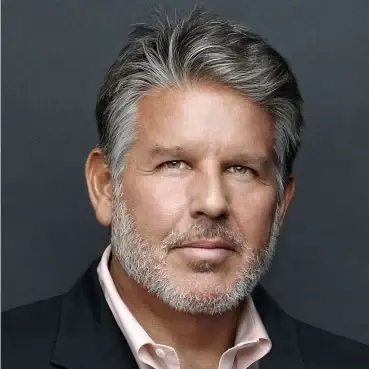
William D. Cohan is an American business writer. “Power Failure” explores General Electric’s path from its electrical origins through the Welch and Immelt eras to a planned breakup.
Explore more books by William D. Cohan