
What you'll learn
Key ideas from Trust and Inspire
These ideas compress the book's argument without treating the author's view as settled fact. Use them as an orientation before reading the full work or listening in Wiseley.
Rewards and pressure can secure specified behavior, while purpose and trust can invite ownership and initiative.
Belief in people’s potential leads leaders to notice, communicate, develop, and make room for growth.
Modeling earns credibility when a leader’s character, competence, and visible conduct align.
Work gains meaning when people can see how their effort contributes to something that matters.
A stewardship agreement pairs a clear result with freedom over methods inside mutually understood boundaries.
Smart trust weighs a person’s credibility and a task’s risks against safeguards, possible returns, and the cost of continued control.
Listening builds trust when leaders seek understanding and respect ideas, even when they decide against them.
Inside Trust and Inspire
Read the first chapter in full here. The other 11 continue in the Wiseley app.
Chapter 1 of 12 · 6 min · Audio & text
Leadership Meets a Changed World
Trust and Inspire, by Stephen M.R. Covey.
In winter 2004, six inches of rain fell in Death Valley. By spring, wildflowers covered its floor. Covey uses this change to challenge the assumption that what looks barren has no life or capacity within it. People, too, may have abilities that remain unseen when conditions do not call on them. A person's visible output does not necessarily reveal all they could contribute. The leadership question is whether the environment lets that potential emerge or leaves it unused.
A contrasting picture comes from a sales call to a family-owned manufacturer. Its founder, Senior, continued to watch over employees and would not hand leadership to his son, Junior. Junior was sixty-seven and had spent decades in the business. The executives believed he could lead, but Senior would not entrust the role to him. Covey saw a dejected team and a company whose progress was being held back. The story shows how a leader's need to keep control can constrain experienced people who are ready to contribute. Covey does not present the founder as a villain: he observes that leaders can have decent intentions while their approach still limits others.
Together, the examples frame the book's central concern. Potential can be present without being put to use. Covey contrasts cultivating conditions for people to grow with treating them mainly as resources for completing tasks. He reports that people in his seminars commonly recognize both that workers have more ability than their jobs use and that they are under pressure to produce more with less. That gap makes leadership a practical issue for organizations, not simply an individual matter.
The first change is in the world itself. Technology is advancing rapidly, and disruption reaches across industries. Artificial intelligence, automation, and other new tools add to the amount of information and the pace of change. No one can absorb everything, Covey argues; the ability to learn and relearn matters more than trying to know it all. Disruption can unsettle companies and established ways of working, but it also opens possibilities. People and institutions need to adapt to both risks and opportunities.
Work is changing as well. Knowledge and service work make up a larger share of what organizations do, and more work depends on information, creativity, and collaboration among people with different expertise. Manual and industrial work remain important, but they no longer describe the whole landscape. That shift makes flexible, interdependent teams more central to getting work done.
Where people work is changing too. Teams may work remotely, in hybrid arrangements, or entirely online, without sharing a physical workplace. Flatter structures also push decisions closer to the work so organizations can respond with greater speed and flexibility. These arrangements change how people coordinate, but they do not remove the need for trust and contribution across a team.
The workforce brings a wider range of generations, backgrounds, experiences, and perspectives. Covey argues that organizations can draw on those differences as sources of creativity and innovation when people are included. He also points to changing expectations: for many younger workers, a paycheck alone is not enough. People care about how they are led and whether their contribution matters. A workforce with varied perspectives and expectations calls for conditions in which those differences can add value.
Finally, people's choices have expanded. Technology gives consumers more ways to find what they want and gives workers more options for where and how they work, including remote and freelance work. Covey recounts a successful sales professional who chose not to travel frequently and planned to work for a company where she felt trusted, believed in, inspired, and valued. Her example illustrates that organizations compete for talent on more than the availability of a job. As options grow, people can choose workplaces according to how they expect to be treated and what kind of contribution they can make.
Covey draws two connected imperatives from these changes. To succeed in the workplace, an organization needs a culture that can attract, retain, engage, and inspire talent. A high-trust environment matters because people have choices and organizations need their abilities and commitment. To succeed in the marketplace, organizations need collaboration and innovation to respond to change and remain relevant. Diverse knowledge and shifting conditions make it difficult for any organization to rely only on established routines or a narrow source of ideas.
The two imperatives depend on human contribution. An organization may struggle to attract and keep talent if people cannot see value in their work or in how they are treated. It may also struggle to adapt if it cannot bring people's knowledge and creativity into shared work. Covey's case for a leadership shift begins here: as work and people's choices change, leaders need to create conditions where human potential can contribute. The stakes include both whether people can use more of what they bring and whether organizations can meet the demands of a changing world.
Chapter 2 of 12 · 7 min · Audio & textIn the app
From Compliance to Contribution
Covey asks us to distinguish task completion from voluntary contribution. A Command & Control approach uses position and power to secure compliance: people do what is requested because the requirement or consequence is clear.
Chapter 3 of 12 · 7 min · Audio & textIn the app
Why Old Styles Persist
Many leaders have heard the language of trust, empowerment, and collaboration. Yet knowing those ideas does not make them normal practice.
Chapter 4 of 12 · 6 min · Audio & textIn the app
Beliefs That Shape Leadership
A leader’s beliefs shape what they notice in people and how they use their authority. Covey sets out five beliefs as the foundation of Trust & Inspire: people have greatness within them; they are whole people; there is enough for everyone; leadership is stewardship; and enduring influence starts from within.
Chapter 5 of 12 · 8 min · Audio & textIn the app
Model the Trust You Seek
Modeling starts with the leader’s own conduct. People notice how a leader listens, responds to mistakes, treats others, and handles pressure.
Chapter 6 of 12 · 6 min · Audio & textIn the app
Trust People to Grow
Trust has two sides. Trustworthiness means being worthy of trust; trusting means choosing to extend it.
Chapter 7 of 12 · 7 min · Audio & textIn the app
Inspire Through Care and Purpose
Trust gives people room to contribute. Inspiration adds a human connection: people feel that they matter, belong, and can make a meaningful contribution.
Chapter 8 of 12 · 8 min · Audio & textIn the app
Agreements Without Micromanaging
A leader can be accountable for results and relationships at the same time. A stewardship agreement gives people a shared way to do both.
Chapter 9 of 12 · 7 min · Audio & textIn the app
Begin Within Your Influence
Change can feel impossible before anyone tries it. A company may reward short-term output, a supervisor may demand close control, regulations may limit choices, or teammates may lack time or buy-in.
Chapter 10 of 12 · 7 min · Audio & textIn the app
Listen, Learn, and Rescript
Some obstacles to changing leadership sit outside a person’s control. Others live in habits of thought: the assumption that the leader is the smartest person in the room, and the story that personal style cannot change.
Chapter 11 of 12 · 6 min · Audio & textIn the app
Trust and Inspire at Home
Leadership also happens at home, where care and authority meet over many years. A parent does not need a formal title to shape how others feel and grow.
Chapter 12 of 12 · 8 min · Audio & textIn the app
Trust Across Classrooms and Teams
Teaching brings the Trust & Inspire approach into a role that shapes more than subject knowledge. Teachers can model kindness, effort, learning, and contribution while helping students recognize what they may become.
Chapter 1 of 12 · 6 min · Audio & text: Leadership Meets a Changed World
Wiseley supports reading and listening to summaries in the app.
Continue in WiseleyAbout Stephen M.R. Covey
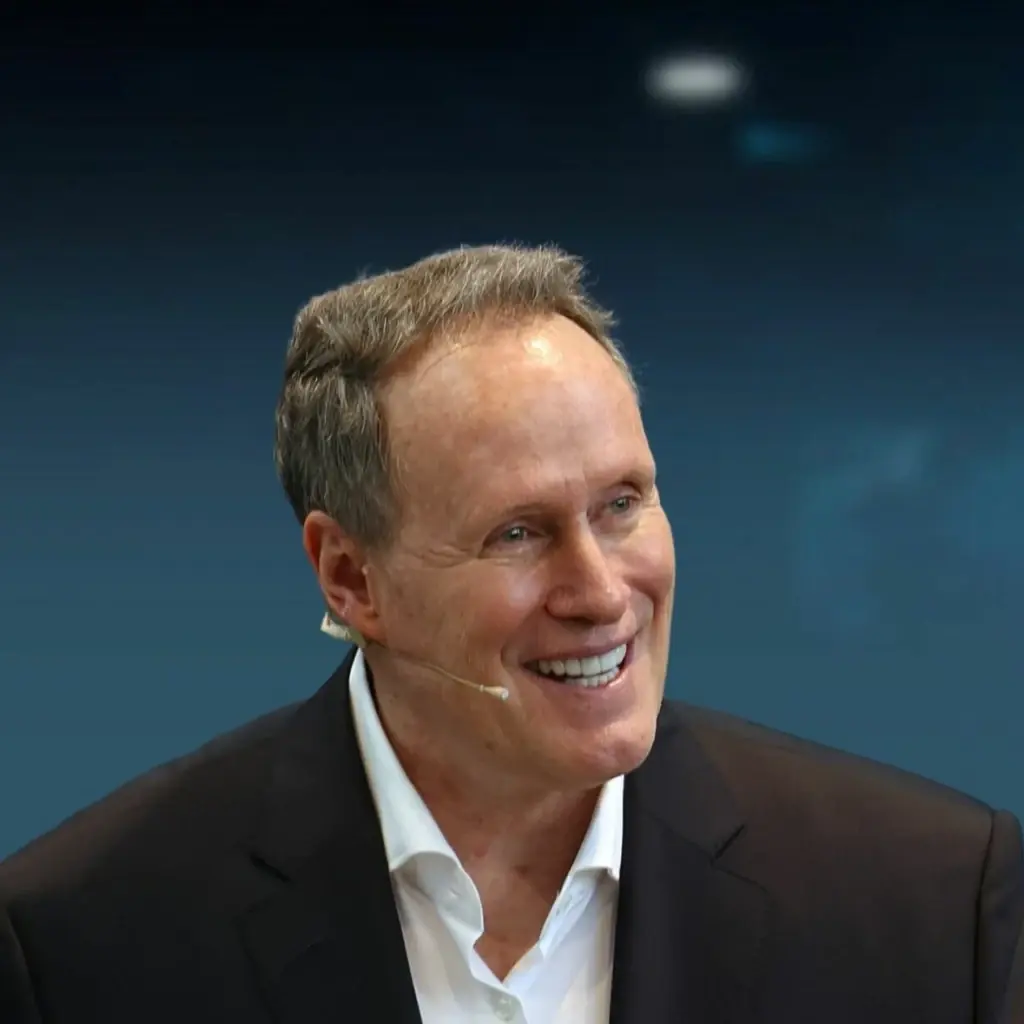
Stephen M.R. Covey is an American author and speaker on trust in leadership. “Trust and Inspire” explores why leadership still relies on control when modern work depends on trust, collaboration, and human potential.
Explore more books by Stephen M.R. Covey