
What you'll learn
Key ideas from Two and Twenty
These ideas compress the book's argument without treating the author's view as settled fact. Use them as an orientation before reading the full work or listening in Wiseley.
Two and Twenty pairs a management fee on assets with a share of profits, though fee terms vary and investors provide most of the capital at risk.
A credible deal thesis connects market and operational analysis with management, financing, and a plausible route to realization.
Re-underwriting tests whether a troubled company has a temporary liquidity shortage or a deeper business failure.
Organic Foods’ customers, suppliers, and nearly empty refurbished stores signaled that Farm-Fresh’s formula lacked local fit.
Active work and risk help explain premium fees, while hard-to-replicate expertise, information, contacts, and track records strengthen leading firms’ bargaining position.
Investors need to examine returns after fees, the risks behind reported performance, and the incentives that shape manager decisions.
Inside Two and Twenty
Read the first chapter in full here. The other 11 continue in the Wiseley app.
Chapter 1 of 12 · 6 min · Audio & text
The Economics Behind Two and Twenty
Two and Twenty, by Sachin Khajuria.
Private equity brings together investors’ money, borrowed capital, fees, and hands-on investment. A fund may buy control of a business, work with its managers to increase its value, and eventually sell. Firms can also invest in a company’s debt, including when the business is struggling. The aim is to earn returns for the fund’s investors, but the structure itself cannot ensure that result.
Investors generally commit money to a fund rather than hand it all over at the start. As the firm makes investments, it calls for portions of those commitments. Money not yet invested is often called dry powder. The firm manages this capital under an agreement that sets its fees and share of profits.
“Two and twenty” describes a common arrangement: an annual management fee of about two percent of assets under management, plus a performance fee, usually around twenty percent of profits. The performance fee is often payable only if an investment meets a specified return hurdle. These figures are benchmarks, and actual terms vary. In simple terms, the management fee is tied to the amount managed, while the performance fee is tied to investment results.
That combination shapes the firm’s incentives and revenues. A profit share can reward professionals when investments do well, and the prospect of sharing in gains is meant to align their interests with investors’. Professionals may invest some of their own money too, but the book notes that their contribution is usually a small part of the capital at risk. The firm’s share can be calculated on returns generated by the larger pool of investor money. Meanwhile, management fees can provide income as long as assets remain under management. At large scale, they have arguably become a source of profit, giving firms a reason to raise and manage more capital. None of this means every fund performs well, or that investors and firms bear the same financial exposure.
Borrowing adds another layer. Leverage is debt used to expand an investor’s purchasing power. The book’s example starts with a one-billion-dollar fund and adds three billion dollars of debt, giving it four billion dollars to invest. The debt makes a larger purchase possible than the fund could make with investor capital alone. But debt remains owed to lenders, usually with interest. Lenders also have a prior claim if a business fails, while equity investors stand to benefit from increases in its value. Borrowing can amplify the investment result, so greater purchasing power comes with greater exposure to whether the business can support its debts and retain value.
The firms’ reach extends beyond buying companies. Khajuria uses “private capital” for private equity and related strategies, including credit and infrastructure. Investors may allocate to these strategies alongside buyout funds. At the time of writing, Khajuria describes private equity together with related private-capital strategies as a twelve-trillion-dollar industry that doubled in the 2010s, and forecasts that this combined industry could exceed twenty trillion dollars by the end of the 2020s. That is a forecast, not a guarantee of future growth or investment performance. As firms manage more assets, management fees can grow too, even though a larger fee base says nothing by itself about the returns investors receive.
The TV Corp illustration shows how knowledge can shape an investment during a crisis. The firm had previously owned the German broadcaster. After selling it, the firm retained records, tracked operating and financial information, and kept up with sector developments and industry contacts. When the crisis pushed down prices, the team planned to buy TV Corp shares at a discount of more than seventy-five percent from the firm’s previous sale price. It also planned to buy the company’s debt for less than a third of its original value. Rather than take control of the company, the firm would buy its securities.
The team planned to stage its purchases so that it would not push prices up or attract notice. Its knowledge and continued monitoring helped it assess the business, but the thesis still depended on TV Corp remaining solvent and markets recovering. In the book’s account, the acquired shares and debt tripled in value within twelve months. The firm then sold over several weeks, judging that the added risk of holding outweighed the remaining potential gain. The case illustrates how prior knowledge and careful execution can support an investment thesis; its result does not establish what another crisis investment will earn.
Pension-backed investors help explain why firms can raise so much capital. Pension managers must invest to fund future retirement payments for teachers, firefighters, health workers, and others. The book describes a public-sector pension system that needs returns of roughly seven percent a year, helping explain why its managers may look beyond government bonds and lower-cost passive funds. Private equity offers the possibility of returns over a long investment horizon, and periods of volatility in public markets can make illiquid investments seem appealing.
Illiquidity also limits investors: they cannot withdraw their money whenever they choose. Private-capital funds can be costly and opaque, and a weak or failed investment may remain hard to sell while producing poor returns. A broad, low-cost index fund can outperform an active private-capital fund over a comparable long period. The economic model combines capital, leverage, fees, and active ownership in pursuit of returns. Whether it serves investors depends on how the investments perform after the risks and costs are accounted for.
Chapter 2 of 12 · 9 min · Audio & textIn the app
Build the Case, Plan the Exit
A private-equity deal begins with a reason to invest and a practical account of how value might change. The team needs to connect the company’s market, management, operations, and finances.
Chapter 3 of 12 · 7 min · Audio & textIn the app
Power, Growth, and Investor Interests
On David’s first day, the firm’s public image presented private equity as a way to build businesses while responsibly managing ordinary workers’ money. Its website highlighted retirement systems, diversity, sustainability, climate resilience, and workplace recognition.
Chapter 4 of 12 · 9 min · Audio & textIn the app
Own the Outcomes
Plastix’s rescue began with two obligations that were hard to separate: the firm had to judge whether the business could recover, and admit that its own actions had helped deepen the trouble. The company had problems before the buyout, but that history did not excuse the investment team’s part in the crisis.
Chapter 5 of 12 · 9 min · Audio & textIn the app
Find Good Complexity
A complicated deal is not attractive simply because other buyers hesitate. It becomes investable when a team can turn uncertainty into specific actions and connect those actions to a plausible return.
Chapter 6 of 12 · 7 min · Audio & textIn the app
When Playbooks Meet Local Conditions
An earlier deal can show a team what to investigate and which moves might be available. It cannot establish that another company has the same customers, competitors, suppliers, or room to change.
Chapter 7 of 12 · 6 min · Audio & textIn the app
Temperament and the Long Horizon
The chapter links three kinds of change: a leader’s response to scrutiny, a firm’s move toward retail investors, and a young professional’s career choices. In each, temperament matters because the next step can shape relationships and opportunities for years.
Chapter 8 of 12 · 7 min · Audio & textIn the app
Negotiate for Investor Value
Private equity has a blunt measure of success: investors need to receive the returns the firm promised to pursue. A deal that almost works does not create a profit to share.
Chapter 9 of 12 · 6 min · Audio & textIn the app
Turnaround Work and Its Price
Charlie’s Cookies is presented as a familiar, widely distributed franchise at a weak point. A shift toward cleaner eating has hurt revenue.
Chapter 10 of 12 · 7 min · Audio & textIn the app
Infrastructure as an Investment Strategy
The Australians pursuing European Broadcast had little name recognition in New York or London, and limited time to prove their new fund. Their proposed partnership was dismissed by a Lehman banker who focused on the fund’s current size.
Chapter 11 of 12 · 12 min · Audio & textIn the app
From Firm Intelligence to Selectivity
The Firm’s information advantage builds over time. Its “library” is not just a store of old deal files.
Chapter 12 of 12 · 8 min · Audio & textIn the app
Versatility and Public Accountability
Madison Stone had a respected name and decades of stability, but neither could protect it when leadership conflict undermined succession. Its story shows that a firm’s strength depends partly on whether it can renew its leadership and keep its people working together.
Chapter 1 of 12 · 6 min · Audio & text: The Economics Behind Two and Twenty
Wiseley supports reading and listening to summaries in the app.
Continue in WiseleyWhat Two and Twenty is about
Two and Twenty explains how private-equity firms combine fees, leverage, and active ownership to pursue returns. It asks what separates a sound investment from an overconfident gamble, and what obligations follow from the industry's growing influence. Deal cases offer ways to test a thesis, respond to failure, negotiate, and weigh broader consequences.
About Sachin Khajuria
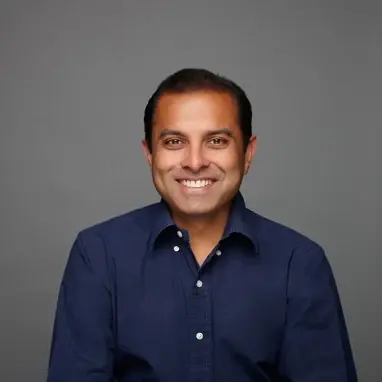
Sachin Khajuria is the author of “Two and Twenty”. The book explores how private-equity firms combine fees, leverage, and active ownership to pursue returns.
Explore more books by Sachin Khajuria