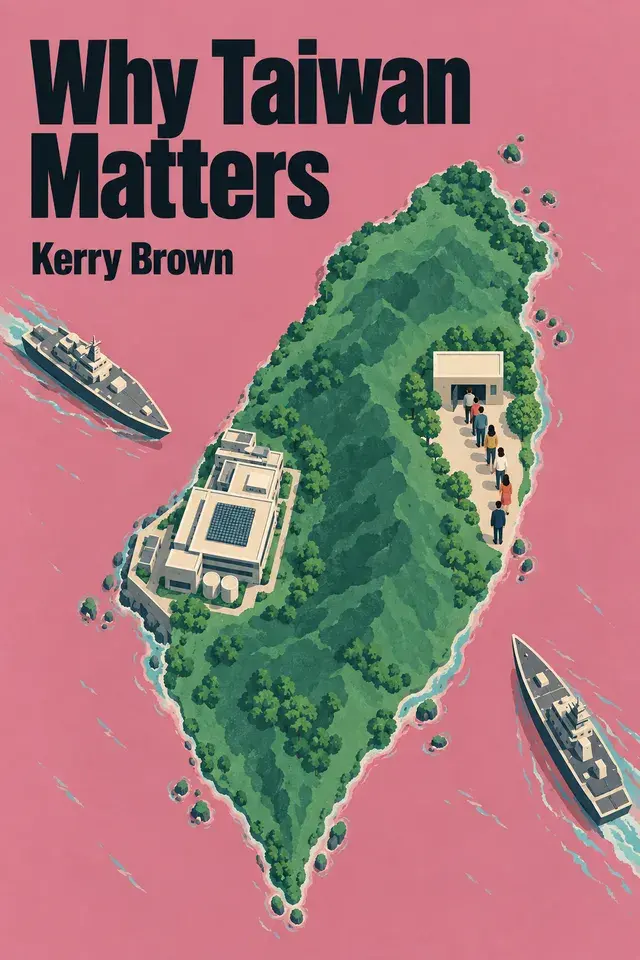
What you'll learn
Key ideas from Why Taiwan Matters
These ideas compress the book's argument without treating the author's view as settled fact. Use them as an orientation before reading the full work or listening in Wiseley.
Flexible one-China language and US strategic ambiguity have restrained moves without settling Taiwan’s status.
Taiwanese identity can combine Chinese cultural attachment with distinct local and civic belonging.
Chen’s 2000 victory established a peaceful opposition transfer, while political conflict and later convictions complicated his legacy.
The silicon shield is contested: dependence may discourage conflict, while TSMC’s strategic value may also intensify interest in control.
The New Southbound Policy coincided with more regional exports and trade; some investment originally bound for China went elsewhere, but China remains difficult to replace.
Beijing has combined economic integration with pressure for reunification, while Hong Kong’s experience has weakened trust in autonomy assurances.
War could halt semiconductor supply and strain the world economy, while Ukraine offers no sure measure of future allied support.
Dialogue, disciplined signals, and wider social exchanges can reduce misunderstanding without resolving competing sovereignty claims.
Inside Why Taiwan Matters
Read the first chapter in full here. The other 10 continue in the Wiseley app.
Chapter 1 of 11 · 7 min · Audio & text
The Ambiguity That Holds
Why Taiwan Matters, by Kerry Brown.
Why does Taiwan’s unresolved status matter so much? Most governments do not formally recognize Taiwan as a country, yet the island is widely discussed as a possible flashpoint. Its semiconductor industry also gives it importance far beyond its size. Brown’s answer begins with a tension: Taiwan matters both because of what people there choose for themselves and because other governments have never agreed on how to describe its place in the world. Those two dimensions cannot be separated. Treating Taiwan only as a diplomatic problem makes its residents seem like objects of decisions made elsewhere; treating it only as a local society ignores the dispute that shapes its room to act.
Brown therefore proposes an inside-out approach. Begin with who Taiwanese people are, how they live, and how they understand their belonging; then turn to history and relations with outside powers. This order does not settle what Taiwan is or dismiss China’s claims. It asks readers to keep people in view while evaluating claims governments make on their behalf. The historical record, too, is read differently: Chinese accounts present it as support for claims to Taiwan, many Taiwanese see evidence of autonomy and distinctiveness, and other observers find it mixed. A quick historical verdict would hide rather than resolve that disagreement.
In this chapter, “Taiwan” or “the island” is Brown’s practical shorthand for the self-governing polity led by the Republic of China government on Taiwan. “China” or “the mainland” refers to the People’s Republic of China. These names help keep the two governments distinct, but they do not turn the political dispute into a settled legal answer. The modern split followed the Chinese Civil War: the Nationalist government relocated to Taiwan, while the Communists established the People’s Republic on the mainland in 1949. At first, both governments claimed to represent the formerly unified state and spoke of reunification. The later settlement never closed that conflict.
In the 1970s, US and Chinese leaders constructed a diplomatic framework around the formula of one China, while leaving its meaning unresolved. The careful language gave governments room to maintain relations without making a definitive choice between the Republic of China and People’s Republic of China positions. Brown sees that semantic flexibility as consequential: it kept the disagreement from requiring an immediate answer. The United States added another form of uncertainty. Washington indicated a strong interest in Taiwan’s security but did not promise in advance exactly what it would do if China attacked. That posture could restrain both sides: Taipei could not assume Washington would back every move it chose, and China could not be certain that force would face no response.
For more than four decades, these ambiguities helped establish boundaries around Taiwan’s status. They left the island room to follow its own political path and gain relative self-determination, even as the dispute remained open. This is the distinction at the center of Brown’s argument: ambiguity managed the disagreement; it did not reconcile the parties or establish an agreed future. It could be a restraint without being a guarantee. The arrangement is under strain as China’s power and military capacity have grown, Taiwanese self-understanding has shifted, and the US posture has changed. Brown warns against assuming that a mechanism that helped preserve peace in the past will control every future crisis.
That limit matters when observers propose ending uncertainty through clearer recognition or a firm promise to defend Taiwan. Such gestures may be intended as solidarity, but Brown warns that Beijing has said it will take any measure to prevent Taiwan becoming a separate nation. Moving directly to a final settlement could therefore harden the conflict rather than protect peace. The point is not that ambiguity makes the dispute harmless, or that Taiwan’s future can be decided by outsiders. It is that an imposed answer carries risks that flexible language has helped defer.
Lithuania’s 2021 Taiwanese trade-office episode makes these costs concrete. Lithuania allowed a closer tie to Taiwan through an office identified as Taiwanese, and China responded with pressure. Brown presents the episode as a demonstration to other states: even a diplomatic gesture intended to deepen ties can bring consequences. It illustrates the pressure faced by governments that move closer to Taiwan. It is not evidence that ambiguity has solved the underlying conflict; the episode shows the political price of testing its limits.
This is also why Brown handles the word “country” with care. He sometimes uses it to respect Taiwanese people who regard Taiwan as a nation and who can experience denial of that existence as hurtful. The wording does not make him an advocate of independence, nor does he claim that using the word settles Taiwan’s statehood. It holds two facts together: many countries do not formally recognize Taiwan, while the island’s society and political life cannot be reduced to that diplomatic absence.
Brown’s question is therefore not simply which side has the stronger claim. It is how international actors can take the choices of Taiwan’s people seriously while avoiding a forced settlement whose consequences could be grave. An inside-out view keeps residents visible in a debate often driven by outside powers. Ambiguity has bought room for Taiwan to follow its own path, but it remains a way of managing unresolved claims, not a promise that peace will last.
Chapter 2 of 11 · 7 min · Audio & textIn the app
Identity in Everyday Taiwan
Identity in Taiwan becomes concrete in the choices people meet in ordinary life. The passport is one example: it carries both “Republic of China” and “Taiwan,” with Taiwan more prominent.
Chapter 3 of 11 · 11 min · Audio & textIn the app
An Island Made by History
The National Palace Museum in Taipei holds a large collection of Chinese imperial objects, many created far from Taiwan and before the island was part of the Chinese world described in the book. Their route to Taipei makes that inheritance concrete, but also records political upheaval.
Chapter 4 of 11 · 8 min · Audio & textIn the app
From Isolation to Democracy
Taiwan’s move toward democracy did not begin as a planned transition. In the 1970s, the island faced growing diplomatic isolation while political repression continued at home.
Chapter 5 of 11 · 12 min · Audio & textIn the app
Presidents and the Public's Voice
As Taiwan’s political space widened, the next test was whether its institutions could earn authority from voters and whether elected leaders could manage competing views of autonomy and economic ties. Lee Teng-hui’s presidency helped move power away from arrangements inherited from the Nationalist era and toward institutions chosen by a broader public.
Chapter 6 of 11 · 7 min · Audio & textIn the app
Prosperity Built on Semiconductors
Taiwan’s semiconductor prominence grew from a longer development path, not from one act of foresight. The island first built a broader base for manufacturing and exports.
Chapter 7 of 11 · 7 min · Audio & textIn the app
The Costs of Deep Dependence
Taiwan’s economic dependence on China extends well beyond semiconductors. Trade and production links have helped Taiwanese businesses reach global markets, while making prosperity more exposed to decisions and conditions across the strait.
Chapter 8 of 11 · 9 min · Audio & textIn the app
Beijing's Pressure and Taiwan's Choices
Taiwan’s China policy has had to balance economic contact with a political dispute that contact has not settled. Until the late 1980s, Taiwan rejected Beijing’s legitimacy and prohibited trade, investment, and direct contact with the mainland.
Chapter 9 of 11 · 8 min · Audio & textIn the app
Washington's Conditional Commitment
Washington’s support for Taiwan grew out of strategic calculations that changed over time. After the Communists won control of mainland China, many in Washington saw that victory as part of a wider advance by an authoritarian power aligned with the Soviet Union.
Chapter 10 of 11 · 9 min · Audio & textIn the app
How a Crisis Could Become War
Strategic ambiguity is meant to discourage either side from changing Taiwan’s status by force or by unilateral declaration, while limiting the chance of a direct US-China conflict. Washington has supported Taiwan, but its policy has left open how it would respond to an attack.
Chapter 11 of 11 · 10 min · Audio & textIn the app
Keeping the Future Open
After examining how the dispute could become a crisis, Brown turns to the harder political question: what can be done when none of the available arrangements can presently satisfy the parties? He compares proposals that range from redesigning the relationship to accepting China’s greater regional power.
Chapter 1 of 11 · 7 min · Audio & text: The Ambiguity That Holds
Wiseley supports reading and listening to summaries in the app.
Continue in WiseleyAbout Kerry Brown
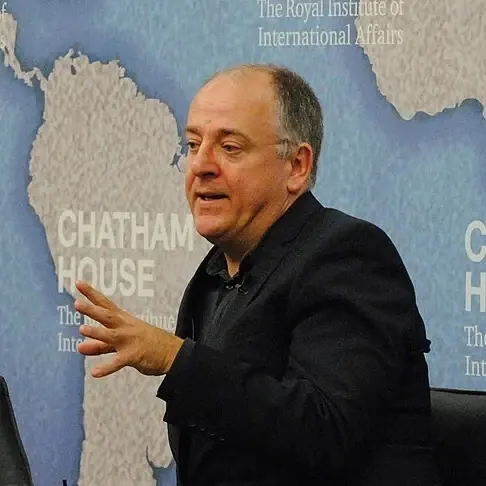
Kerry Brown is a British scholar of modern China and professor at King’s College London. “Why Taiwan Matters” explores why Taiwan’s unresolved status matters to its people and to the world.
Explore more books by Kerry Brown