
Use four lenses, not one forecast
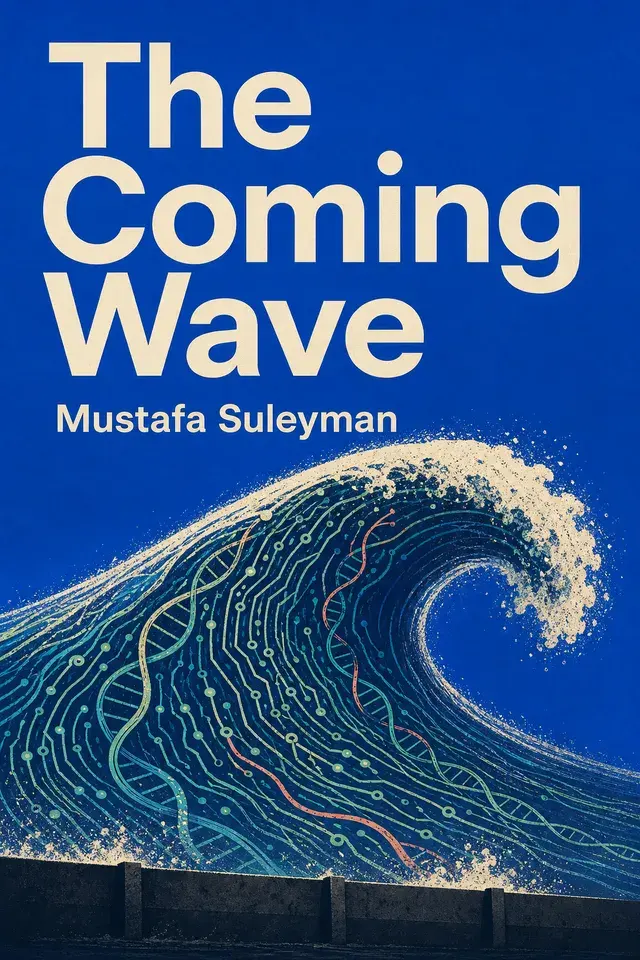
Superintelligence supplies a long-horizon control problem: what if strategically superior capability cannot be reliably directed or corrected? The Coming Wave studies containment under competitive adoption and proliferation. Sapiens widens the frame to shared stories, institutions, and the ways information systems organize cooperation, while Factfulness trains suspicion toward intuitive narratives that outrun data. Together they create questions at four levels—system, institution, civilization, and evidence.
- System: what can the technology do, optimize, and resist?
- Institution: who deploys, audits, limits, and answers for it?
- Civilization: what kinds of authority and coordination does it reshape?
- Evidence: which claims are measured, dated, and comparable?
A reading order that reduces tunnel vision
Start with The Coming Wave for the immediate institutional problem, then read Superintelligence to understand why some researchers focus on rare but extreme control failures. Follow with Factfulness to inspect the evidence habits behind alarming or reassuring narratives. End with selected sections of Sapiens as a broad, contestable interpretation of information and cooperation—not as settled history. Keep disagreements visible; a balanced list is not a requirement to average incompatible claims.
- Record the publication date beside every capability claim.
- Separate an author’s model from observations that could test it.
- Add primary technical and policy sources before describing the present state.
Keep the current layer outside the books
A durable book guide should explain arguments that remain intelligible after the news cycle. For the dated layer, the UK AI Security Institute’s December 2025 report covers frontier language models released through October 2025; it records improvement in tested domains while warning that controlled evaluations are proxies and the report is not a forecast. NIST’s Generative AI Profile supplies voluntary risk-management guidance, and the official EU AI Act supplies a legal framework rather than a performance measure. Keep those three evidence types separate, and avoid a sentence such as “AI can now…” unless the capability, conditions, model set, cutoff date, and source are explicit.
- Durable layer: concepts, threat models, incentives, and questions.
- Living layer: dated evaluations, standards guidance, and official legal text.
- Editorial rule: label inference, and carry the source’s stated limitations forward.
Sources and scope
Book ideas are attributed to their authors. External evidence is linked directly when a claim needs more than the source book.
- Superintelligence: Source for long-horizon capability, alignment, and control arguments.
- The Coming Wave: Source for diffusion, adoption incentives, containment, and state capacity.
- Sapiens: A Brief History of Humankind: Source for the author’s broad, debated account of information, institutions, and cooperation.
- Factfulness: Source for evidence habits, dramatic instincts, and checking broad claims against data.
- AISI Frontier AI Trends Report (2025) — UK AI Security Institute
- Artificial Intelligence Risk Management Framework: Generative Artificial Intelligence Profile — National Institute of Standards and Technology
- Regulation (EU) 2024/1689 laying down harmonised rules on artificial intelligence — Official Journal of the European Union (EUR-Lex)
To report a factual, attribution, rights, or accessibility concern, email hello@wiseley.app.
Questions readers ask
Is Superintelligence outdated?
Its specific context is dated, but its control arguments remain influential. Use it for the structure of those arguments and verify every claim about present systems separately.
Why include books that are not only about AI?
Technical capability is only one layer. Institutions, collective stories, incentives, and evidence habits shape how claims are interpreted and how technologies are governed.