What you'll learn
Key ideas from Cloudmoney
These ideas compress the book's argument without treating the author's view as settled fact. Use them as an orientation before reading the full work or listening in Wiseley.
A payment acts as an impulse in a monetary nervous system, linking everyday exchange to institutions, labour, and ecological conditions.
Commercial banks create new bank-money through lending, subject to redemption, reserve, repayment, liquidity, and default constraints.
Cashlessness can begin with a merchant or airline refusing cash, turning a private payment preference into a condition set by infrastructure.
Big Brother watches payment behavior, Big Bouncer decides access, and Big Butler steers choices through related payment infrastructure.
Fintech often redesigns finance's interface while leaving bank and payment infrastructure in place.
A proxy can predict group behavior while misrepresenting an individual’s circumstances and reproducing historical exclusion.
Bank balances are legally enforceable IOUs, while Bitcoin tokens are transferable recorded numbers without an issuer’s liability.
Cash and community currencies preserve choice and resilience, but their limits leave concentrated financial power unresolved.
Inside Cloudmoney
Read the first chapter in full here. The other 11 continue in the Wiseley app.
Chapter 1 of 12 · 7 min · Audio & text
Payments Connect Us to Power
Cloudmoney, by Brett Scott.
Everyday payment can feel complete at the moment money changes hands. Cloudmoney begins by asking what makes that moment possible, and what kinds of dependence accompany its convenience. Scott frames the book around tightening connections between Big Finance and Big Tech. A payment places an individual inside networks of banks, corporations, legal arrangements, logistics, and technology that coordinate activity beyond the immediate exchange. His concern is not that every digital tool is harmful, or that every person in finance intends the same outcome. It is that institutional arrangements can shape people's choices and vulnerabilities beyond the intentions of any single participant.
Scott describes money as a kind of nervous system. This is an interpretive metaphor, not a literal biological claim. Money is not merely a substance circulating through an economy. A monetary unit can act like an impulse moving through connected social tissues, activating someone else's work. The network reaches from concentrated financial centres into towns, workplaces, households, and bodies. It rests on an ecological base of soil, water, plants, animals, microbes, and the conditions that sustain communities. Money coordinates this living network, but it does not create the labour or ecology on which the network depends.
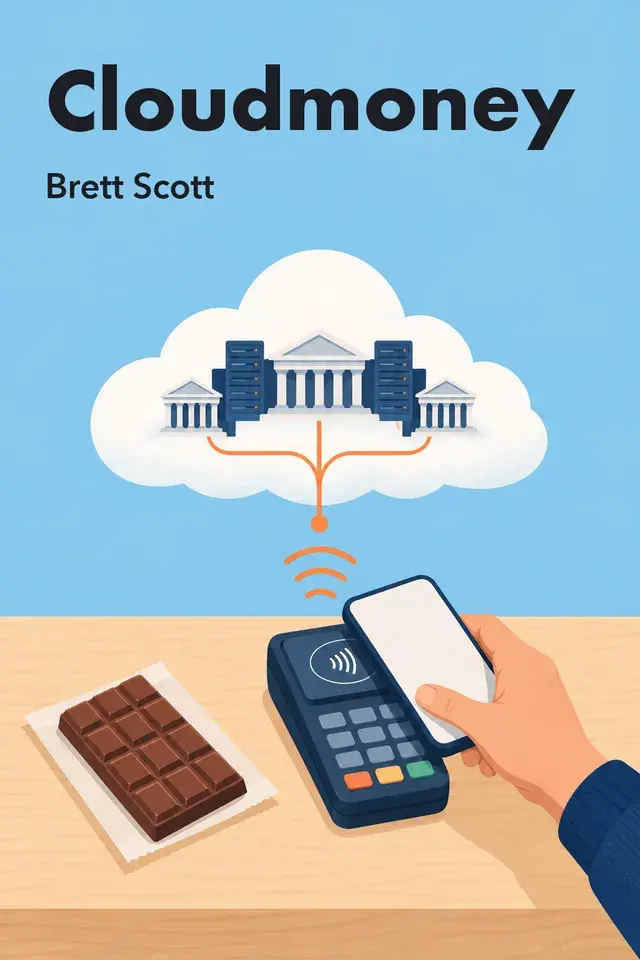
Consider a simple chocolate-bar purchase. At street level, it looks like a mutual exchange: a customer gives money, and a shop supplies a product. Yet the bar arrives through corporate structures, property rights, legal systems, production sites, suppliers, transport, and trade finance. The purchase is a small endpoint of a much longer chain. Partly finished goods move through corporate and logistical networks until they reach a local outlet, and the customer's payment completes a financial circuit that may have begun years earlier. The buyer normally sees only the retail encounter, not the institutional relationships that make it possible.
The same person can earn as a worker, spend as a consumer, and save as an investor, even though these roles are often treated as separate. Savings can be pooled by pension funds and invested in companies. Company revenue then travels through the financial circuit toward management bonuses, government tax, creditor interest, and shareholder dividends. This makes a purchase more than a private act, without making the purchaser personally responsible for every consequence. The point is to follow the connections rather than assign total control or blame to one participant.
The DeepFuel example makes the movement from money to production more explicit. Imagine oil barons forming a corporation for an offshore drilling project. The corporation must be legally established and its bank account charged with money. An investment bank turns the plan into financial claims: shares offer claims on future profits, while debt contracts promise fixed future payments. Pension funds and other investors provide present money in exchange for those claims. That capital mobilizes workers, technology, suppliers, and equipment. The workers perform the productive labour, while the project depends on material and ecological conditions that money alone cannot supply. If revenue arrives, it can flow back through the corporate circuit as taxes, interest, management rewards, and dividends.
This does not mean financiers possess unlimited power. Their work is mediated through contracts, competition, and institutions, and corporations can lose customers or change their methods when rivals apply pressure. Finance has a coordinating role: capital provides a monetary shock that organizes people and machines at scale. But labour and ecological systems remain more fundamental than the financial claims representing them.
Power, in this account, is distributed through structures rather than concentrated in the intentions of a few villains. Bankers may channel institutional logic that exceeds their personal control, just as workers, consumers, and investors operate inside arrangements they did not design. Financial skyscrapers symbolize distance and concentration, but the people inside them remain human and socially dependent. The metaphor reveals an organized system without turning its operators into omnipotent characters.
Scott uses technology to show how greater capability can coexist with less autonomy. In the compass story, a tool can help someone impose a chosen direction on the world, yet repeated reliance on it can weaken practical knowledge once held by experienced navigators. Google Maps extends a person's ability to find a route, but the service lives in infrastructure the user does not possess. Losing access can feel suddenly disabling. The user has gained reach while becoming dependent on a distant system. The same tension matters when payment convenience is delivered through institutions that control the channels of access.
This is not a single, universal cashless world. States and markets depend on each other. States provide law, standards, infrastructure, and enforcement that make exchange among strangers more scalable. Informal markets can operate in the shadow of those arrangements while relying on state-provided cash and infrastructure. Corporations may use states to expand, yet also become powers that compete with them. Digital incorporation is geographically uneven: parts of rural South Africa lack reliable electricity, phone service, venture capital, and contactless retail, while cash, subsistence farming, and pastoralism remain important.
Centralized systems can still be useful at this scale. They can reduce distrust, verify identities and transactions, enforce contracts, prevent fraud, and route payments through a manageable number of institutions. Their usefulness is inseparable from their power, because the same concentration can enable surveillance, exclusion, or control over participation. The opening question is therefore not whether cash, banks, apps, or crypto are simply good or bad. It is who controls the connective tissue, what dependencies it creates, and how much room remains for people to act outside it. With that system-level view, apparently separate debates about cash, banking, technology, and cryptocurrency become parts of one question: how does the monetary nervous system organize life, and who can influence its signals?
Chapter 2 of 12 · 7 min · Audio & textIn the app
Money Begins with Institutional Promises
To understand money, Scott asks us to begin with a relationship, not an object. Every monetary instrument connects an issuer to a user.
Chapter 3 of 12 · 8 min · Audio & textIn the app
Inside the Bank Money Machine
To understand the cashless economy, start with a distinction everyday language hides. A banknote and a bank balance may share a denomination, but they are different claims.
Chapter 4 of 12 · 9 min · Audio & textIn the app
How Cashlessness Becomes the Default
On a British Airways flight, Scott tried to buy a coffee with cash, and the airline refused it. He had money, and the airline had a coffee, but the purchase could happen only after another passenger used a card.
Chapter 5 of 12 · 9 min · Audio & textIn the app
Watching, Blocking, and Steering Transactions
A digital payment does more than move money from one person to another. Once recorded, the same infrastructure can watch behavior, decide who may participate, and influence what people do.
Chapter 6 of 12 · 7 min · Audio & textIn the app
New Interfaces, Familiar Financial Foundations
Before fintech had apps, finance had faces. Scott begins with local financiers and bank branches: even when headquarters consolidated risk and financing, a nearby employee could assess a customer and handle a contract.
Chapter 7 of 12 · 9 min · Audio & textIn the app
When Data Decides Your Chances
Once payments become digital, their records can do more than show that a transaction occurred. They can become raw material for judgments about the person behind it.
Chapter 8 of 12 · 8 min · Audio & textIn the app
Bitcoin Rebuilds the Shared Record
Bitcoin becomes easier to understand when its monetary aura is set aside. Scott begins with a coordination problem: how can strangers move digital tokens without one central record-keeper deciding which balance is valid?
Chapter 9 of 12 · 7 min · Audio & textIn the app
A Token Is Not Necessarily Money
Bitcoin’s ability to move a digital token does not, by itself, make that token money. Scott’s key distinction is between an institutional promise and a transferable object.
Chapter 10 of 12 · 6 min · Audio & textIn the app
Code Cannot Remove Political Choices
Crypto is not one political project. In Scott’s account, its coalitions gather around different answers to different problems.
Chapter 11 of 12 · 9 min · Audio & textIn the app
The Institutions Absorb the Frontier
Blockchain’s political meaning changes when the frontier reaches the boardroom. Early crypto narratives cast open networks as a route out of state-centered systems, like the mountains and deserts where people could escape settled authority.
Chapter 12 of 12 · 9 min · Audio & textIn the app
Keeping Monetary Alternatives Within Reach
Scott's constructive response is deliberately modest: keep monetary alternatives within reach. That means defending access to cash while developing forms of exchange that do not require every obligation to pass through the same banks and technology companies.
Chapter 1 of 12 · 7 min · Audio & text: Payments Connect Us to Power
Wiseley supports reading and listening to summaries in the app.
Continue in WiseleyWhat Cloudmoney is about
What changes when money moves from cash into bank accounts, payment apps, and corporate platforms? Brett Scott examines how digital payments reshape power, privacy, and access, then tests cryptocurrency’s promise of independence. The book offers a framework for understanding monetary infrastructure and the value of preserving cash and community alternatives.
About Brett Scott
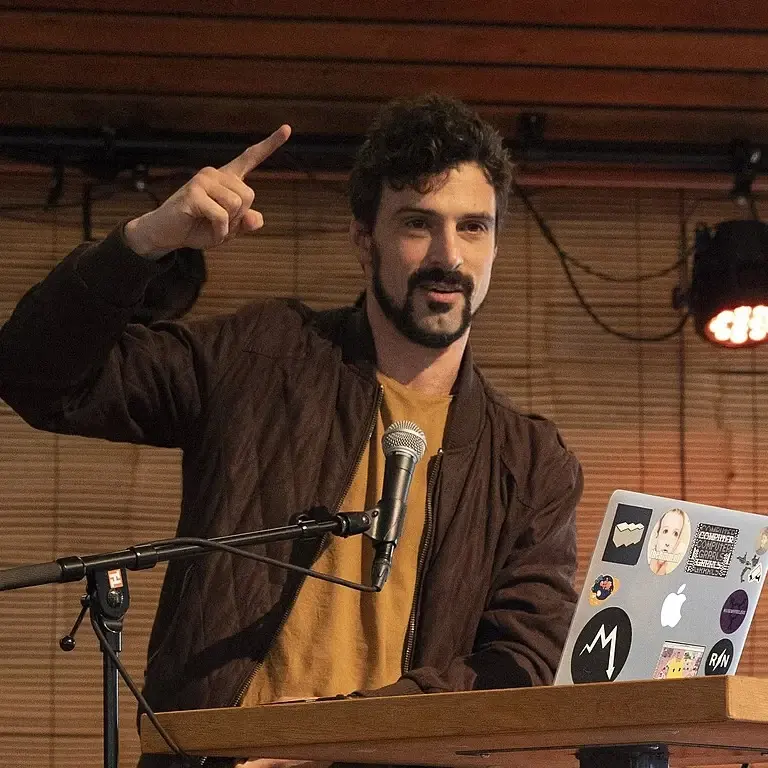
Brett Scott is the author of “Cloudmoney”. The book explores what changes when money moves from cash into bank accounts, payment apps, and corporate platforms.
Explore more books by Brett Scott