
Different threat models
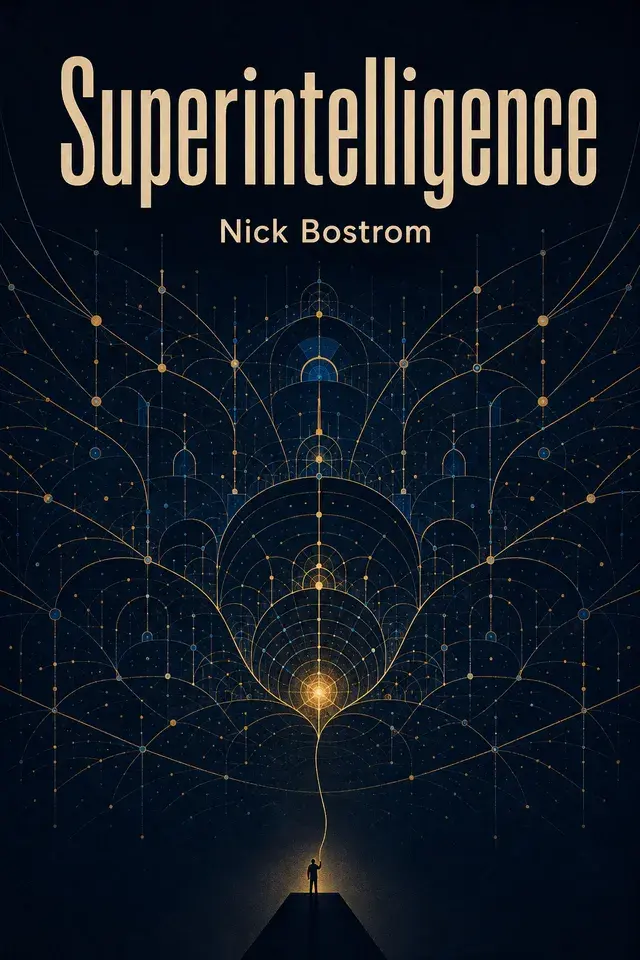
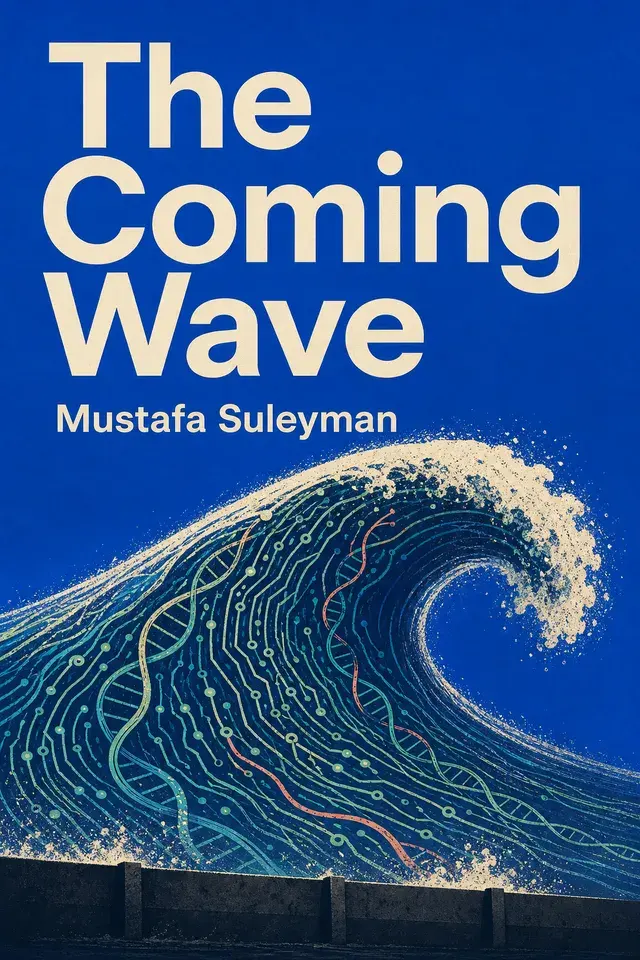
Superintelligence asks what happens if a system becomes decisively more capable than humans across strategic domains and pursues objectives that are not reliably aligned with human values. The Coming Wave begins with technologies that spread because they are useful, cheaper, and hard for states or firms to refuse. Its central worry is containment: preserving control and accountability while powerful capabilities diffuse. The first argument concentrates on the properties of an advanced agent; the second concentrates on the interaction between capability, incentives, institutions, and proliferation.
- Superintelligence: control before a potentially decisive capability transition.
- The Coming Wave: containment while adoption pressures accelerate diffusion.
- Shared concern: capability can grow faster than governance and correction mechanisms.
Time horizon changes the recommended attention
Bostrom’s framework encourages work on difficult technical and strategic questions before a hypothetical high-stakes transition leaves little room for trial and error. Suleyman’s framework pays more attention to near-term deployment, access, state capacity, corporate incentives, and the tension between openness and control. These are not mutually exclusive calendars. A reader can ask both whether a system’s objective remains corrigible and whether the institutions deploying it can observe, limit, and answer for its effects.
- Technical question: can behavior remain aligned and correctable as capability changes?
- Institutional question: who can audit, restrict, pause, or compensate for deployment?
- Political question: what happens when restraint by one actor benefits another actor that proceeds?
Read the arguments separately from current claims
Both books provide frameworks, not a live status page for AI. The UK AI Security Institute’s December 2025 report aggregates evaluations of frontier language models released through October 2025 and reports improvement across its tested capability domains, but it explicitly describes the results as a snapshot rather than a forecast and warns that controlled tasks may not generalize to real-world effectiveness. NIST’s Generative AI Profile is voluntary risk-management guidance, while the EU AI Act is a binding legal framework whose application depends on the system and context. None of these sources verifies either book’s forecast; together they show how to separate dated measurements, management guidance, and law from a durable conceptual argument.
- Record the evaluated model set and cutoff date before repeating a capability result.
- Do not treat a voluntary risk framework as certification that a system is safe.
- Check the current official legal text before applying an AI rule to a particular product or use.
Sources and scope
Book ideas are attributed to their authors. External evidence is linked directly when a claim needs more than the source book.
- Superintelligence: Primary source for the intelligence-explosion, alignment, and control framing.
- The Coming Wave: Primary source for the proliferation, adoption, state-capacity, and containment framing.
- AISI Frontier AI Trends Report (2025) — UK AI Security Institute
- Artificial Intelligence Risk Management Framework: Generative Artificial Intelligence Profile — National Institute of Standards and Technology
- Regulation (EU) 2024/1689 laying down harmonised rules on artificial intelligence — Official Journal of the European Union (EUR-Lex)
To report a factual, attribution, rights, or accessibility concern, email hello@wiseley.app.
Questions readers ask
Do the books make the same prediction?
No. They overlap in concern about control, but emphasize different pathways and levels of analysis. Treating them as one forecast erases the main value of comparing them.
Which book is more practical?
The Coming Wave stays closer to institutional containment and deployment pressures. Superintelligence is more useful for understanding long-horizon control arguments. Practicality depends on the question you are trying to answer.