Books worth understanding, not just finishing.
Explore 987 carefully structured book summaries. Discover the central ideas and themes, then decide what deserves a full read.
All book summaries

The Snowball
The Snowball follows Warren Buffett from a Nebraska childhood of counting, saving, and small businesses to Berkshire Hathaway’s rise through value investing, insurance, and disciplined capital allocation. It asks how wealth compounds—and what that discipline costs in family life, public responsibility, and succession—offering a connected account of method, character, and consequence.
The Social Contract
Rousseau asks how people can enter political society without surrendering freedom. He argues that legitimate authority rests on a reciprocal compact, laws expressing a general will, and citizens who remain active lawmakers. The book then tests this ideal against government, representation, civic institutions, history, and religion, clarifying both its power and its risks.

The Sociopath Next Door
The Sociopath Next Door asks why people who experience conscience can miss its absence in others. Martha Stout presents conscience as an emotionally rooted bond, traces how manipulation and authority can exploit ordinary trust, and offers practical warning patterns. The book also considers how connection, cooperation, and care give moral life value.
The Spirit Level
The Spirit Level asks why, once societies are broadly affluent, the size of income gaps can matter more than further economic growth for health and social wellbeing. It follows inequality through status anxiety, trust, relationships, life chances, punishment, and work, then considers how greater equality could support cooperation, sustainability, and practical institutional change.
The Splendid and the Vile
Erik Larson follows Winston Churchill’s first year as prime minister, from Britain’s expectation of invasion and aerial catastrophe through the Blitz and the emergence of American support. The central question is how leadership, technology, public morale, family life, and private courage sustain a society when survival depends on acting amid uncertainty.
The Stoic Mindset
How can we pursue ambitious goals without letting outcomes govern our lives? Drawing on his skating career and personal setbacks, Mark Tuitert presents Stoic practices for examining judgments, responding to adversity, finding direction, and building character through everyday action.
The Story of Philosophy
Will Durant’s selective history follows major philosophers from Socrates and Plato to James and Dewey, asking how reason, desire, science, faith, freedom, and social order relate. It shows how competing answers can clarify personal conduct and public institutions while exposing the limits of knowledge.
The Story of the Human Body
Why does a body shaped by scarcity, movement, and cooperation struggle with abundance, comfort, and inactivity? This book traces human evolution from bipedalism through culture, farming, and industrial life, then uses that history to explain mismatch diseases and consider how medicine, behavior, and environments can support better health.
The Storyteller
Dave Grohl’s memoir asks how a life in music can hold memory, ambition, grief, family, and responsibility at once. It follows his path from punk’s DIY community through Nirvana, Foo Fighters, fatherhood, and public risk, showing how songs become a way to survive change and remain connected.

The Storytelling Edge
The Storytelling Edge asks why some stories hold attention, build trust, and move people to act—and how organizations can use those effects without reducing storytelling to promotion. It connects narrative craft with practical frameworks for writing, audience development, data-informed content, and the organizational habits needed to sustain them.
The Subtle Art of Not Giving a F*ck
Mark Manson asks what a better life is worth caring about when pain, failure, uncertainty, conflict, and death cannot be avoided. His answer is to choose a few reality-based values, accept responsibility for one’s responses, and commit to struggles and relationships that create meaning rather than chase constant positivity.
The Success Myth
Emma Gannon examines why career status, constant output, wealth, fame and conventional milestones can fail to create lasting contentment. The book asks how inherited expectations and unequal starting points shape ambition, then offers ways to define success through wellbeing, time, relationships, boundaries and ordinary pleasures while pursuing goals that feel genuinely one’s own.
The Symposium
Set at an Athenian banquet and recalled through layers of testimony, Plato’s dialogue asks what Love is and what makes it worth pursuing. The speeches connect love with courage, ethical conduct, cosmic balance, and lost wholeness; Socrates recasts it as desire for lasting good, creative renewal, and beauty. Alcibiades tests that ideal through his attachment to Socrates.
The Tale of the Dueling Neurosurgeons
How can injuries and illness change perception, memory, emotion, or identity, and what do those changes reveal about the mind? Through historical cases and neurological investigations, Sam Kean traces how brain systems communicate, adapt, and fail, showing both the explanatory power and the limits of learning from individual patients.
The Tangled Tree
How did the Tree of Life change when scientists compared molecules instead of appearances? The Tangled Tree follows Archaea, endosymbiosis, horizontal gene transfer, mobile DNA, microbial communities, and CRISPR, showing why evolution is both branching and networked—and what that means for species, human biology, antibiotics, and genome editing.
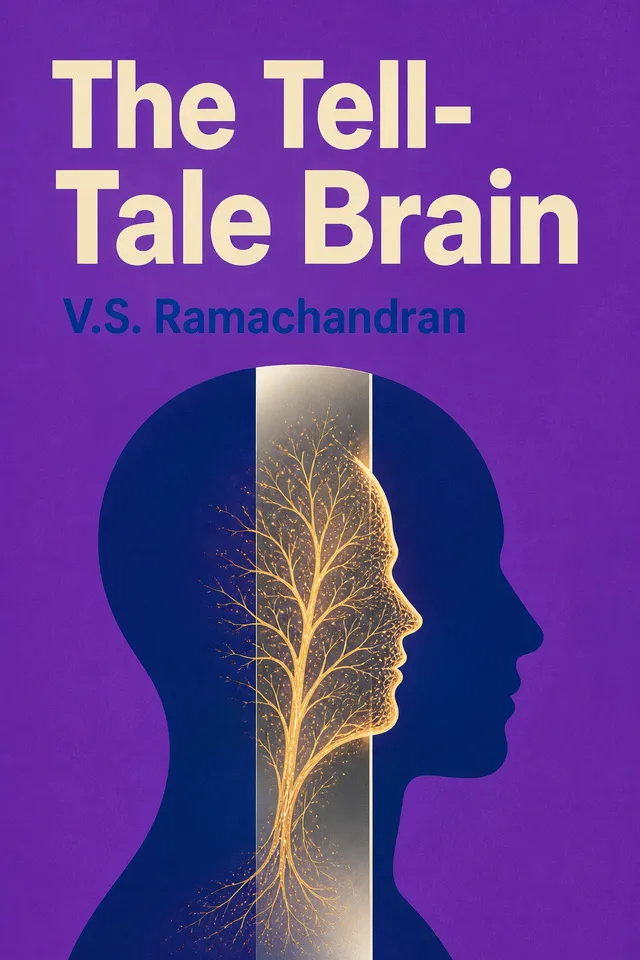
The Tell-Tale Brain
The Tell-Tale Brain presents the brain as a plastic, networked interpreter whose unusual failures reveal ordinary perception, body ownership, social understanding, language, art, and selfhood. Its central question is how ape-derived neural systems became capable of human culture and consciousness; its value is a mechanism-based map of both evidence and uncertainty.
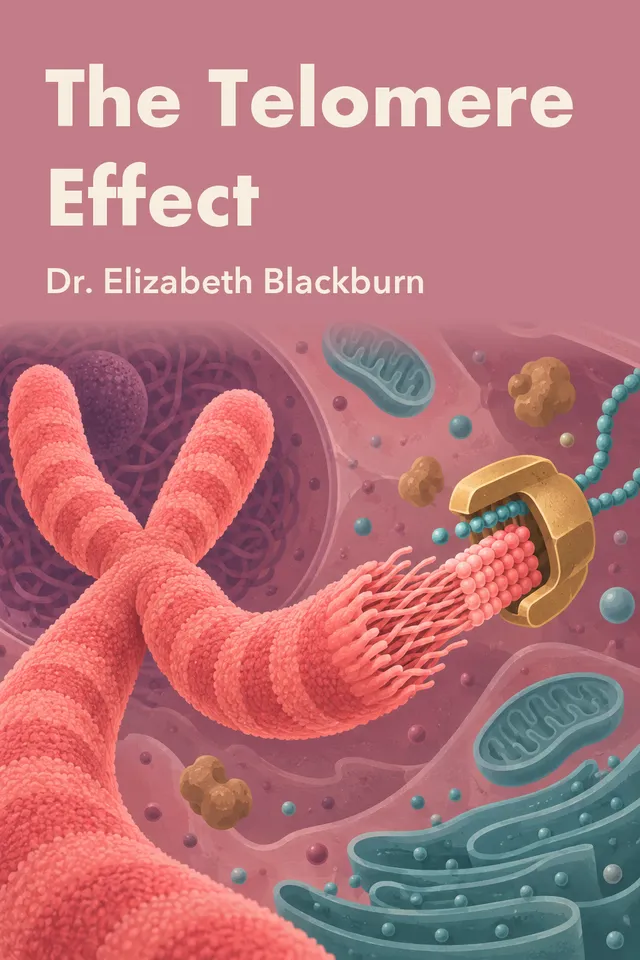
The Telomere Effect
The Telomere Effect asks how chromosome-end maintenance connects stress, daily habits, relationships, and life conditions to cellular aging and healthspan. It explains telomeres and telomerase, weighs the limits of current evidence, and offers practical approaches spanning emotional resilience, exercise, sleep, food, supportive care, and community environments.
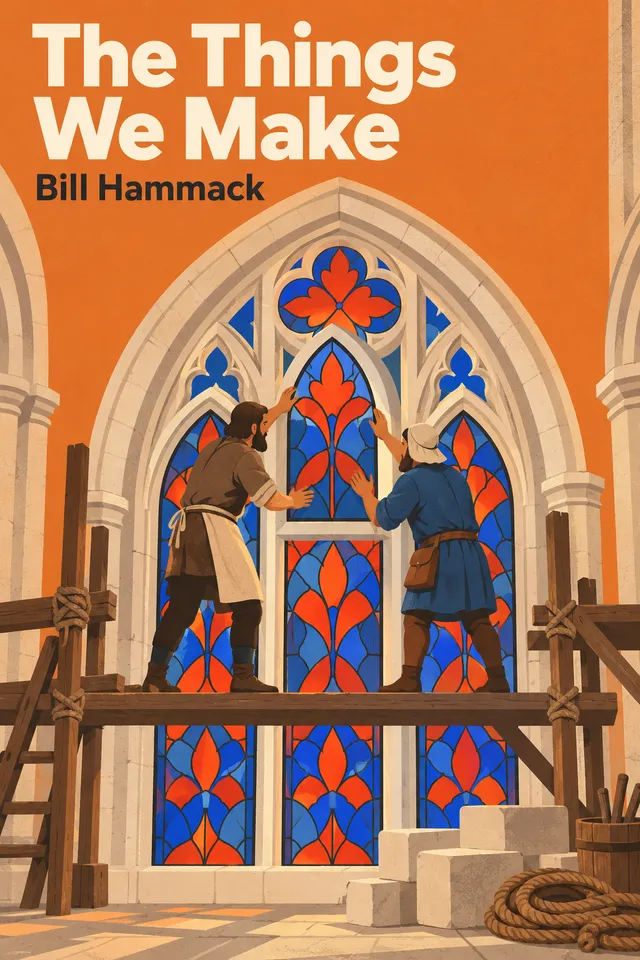
The Things We Make
Bill Hammack examines how engineers turn uncertain problems into workable things through practical rules, experiments, trade-offs, and the resources at hand. The book asks what makes a solution “best,” how science and mathematics support design without dictating it, and why understanding how technology is made helps people judge its effects and guide its use.