What you'll learn
Key ideas from The Telomere Effect
These ideas compress the book's argument without treating the author's view as settled fact. Use them as an orientation before reading the full work or listening in Wiseley.
The authors connect cellular aging with healthspan while treating genes, lived conditions, and chance as interacting influences.
Telomeres protect chromosome ends, and their gradual loss helps limit how often many cells can divide.
Reappraising arousal as useful energy may support a challenge response without eliminating nervousness or guaranteeing cellular protection.
Regular, recoverable exercise can support stress regulation and cellular maintenance; training beyond recovery can overwhelm the body’s adaptive response.
Longer sleep and higher-rated sleep quality are associated with longer telomeres; regular timing may help maintain telomerase rhythms.
Supportive ties may buffer stress, while mixed ties can add strain; neighborhood greening has been associated with lower distress and greater perceived safety.
Early adversity can become biologically and behaviorally embedded, while timely supportive care can enable recovery without fixing any one child’s future.
Inside The Telomere Effect
Read the first chapter in full here. The other 10 continue in the Wiseley app.
Chapter 1 of 11 · 5 min · Audio & text
Healthspan and the Cellular Clock
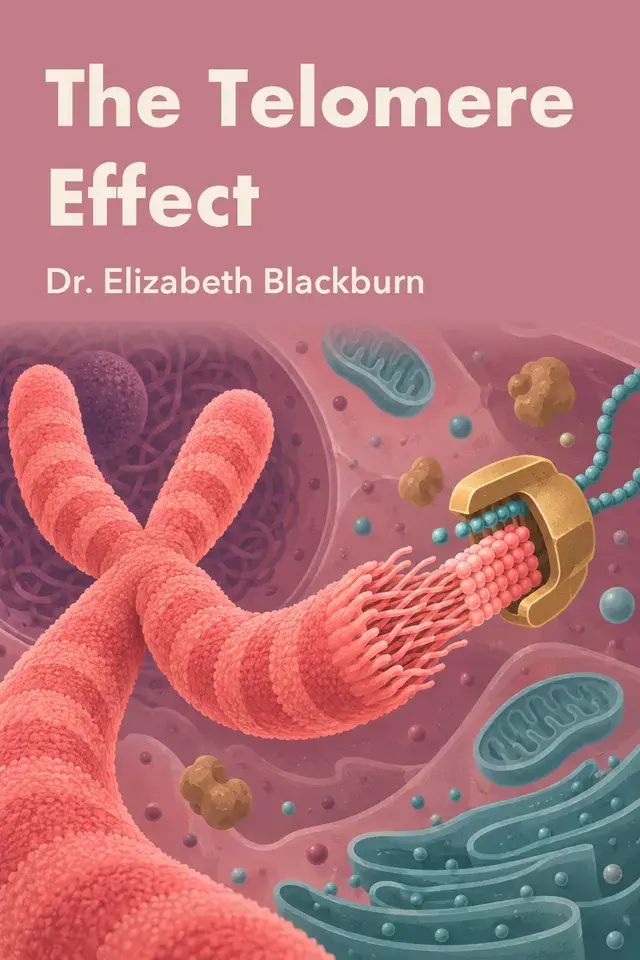
The Telomere Effect, by Dr. Elizabeth Blackburn.
Living longer and living well are related, but they are not the same measure. A long life can include many years of illness, fatigue, or reduced ability to take part in everyday life. To describe that difference, the authors distinguish lifespan, healthspan, and diseasespan.
Lifespan is the total time a person lives. Healthspan is the stretch of life spent in good health. Diseasespan is the period when noticeable illness interferes with quality of life. It may hasten death, or it may continue for years. Counting birthdays alone cannot tell us how much of someone’s life was healthy.
The authors make the contrast concrete through Kara and Lisa, invented characters who are the same chronological age and both under stress. Kara appears tired and prematurely aged. Her weakened immunity, joint pain, and early signs of heart disease suggest that several problems have arrived together.
Lisa, by contrast, remains healthy longer. Her diseasespan is compressed into a few years near the end of life. The comparison is not a guarantee that anyone will follow either path. It shows how two people of the same age can have very different amounts of healthy life, and how the timing of illness matters alongside total lifespan.
This is why the authors focus on healthspan. A longer life is not automatically a better one if much of it is spent sick or with reduced vitality. The relevant question is not simply how old someone becomes, but when health gives way to disease and how long that period lasts.
The book connects some of this variation to cellular aging. It identifies telomeres as one cellular feature that changes with age and links their attrition with diseases of aging. That connection offers part of an explanation for why disease can arrive earlier for some people. It is not a complete account of aging or a precise timetable for an individual.
Genes contribute to disease risk and cellular condition, but the authors do not treat inheritance as destiny. They also describe the influence of lived conditions, relationships, environments, habits, responses to difficult events, and chance. These factors interact. A habits-only explanation could unfairly blame people for illness, while a genes-only explanation misses how circumstances can matter. Neither account explains every person’s path by itself.
The book’s aim is to help readers understand and support years of health, rather than chase youth or expect a fixed lifespan. The authors do not promise that everyone can avoid disease, live to a particular age, or keep a youthful appearance. They frame the goal as improving the chance of a life that is both longer and better, while recognizing that cells age and people eventually die.
Marie-Jeanne offers a picture of active later life. Around eighty, she is still going to her research institution, hosting discussions for younger colleagues, and navigating the stairs. She remains curious about new experiences. Her example shows that old age need not mean withdrawing from meaningful work or learning. It is an illustration of possibility, not a promise that everyone will have the same abilities.
The authors also describe changes in emotional life and priorities with age. Research they cite suggests that older adults often experience more positive than negative emotions. This does not mean constant happiness: positive and difficult feelings can coexist, making emotional experience richer and more complex. Some people also choose to narrow their social circles, keeping meaningful relationships and letting go of troublesome ones. The authors connect this shift with better priorities, more positive feelings, and less stress.
Together, these examples make healthspan a practical aim: preserving the ability to participate in life for as many years as circumstances allow. Age marks time lived, but it does not fully describe a person’s health or determine when illness will begin. Cellular aging helps explain some of the differences, while the book’s broader account leaves room for many influences and individual variation.
Chapter 2 of 11 · 10 min · Audio & textIn the app
Telomeres, Telomerase, and Renewal
Telomeres help explain how a cell’s capacity to renew can change over time. They are repeated stretches of DNA, together with protective proteins, at the ends of chromosomes.
Chapter 3 of 11 · 12 min · Audio & textIn the app
Stress Appraisal Shapes Cellular Wear
Stress is not a single dose. Ordinary daily ups and downs are not presented as a steady assault on telomeres, and a month-long work crisis is not expected to cause meaningful lasting harm.
Chapter 4 of 11 · 11 min · Audio & textIn the app
Thinking Patterns and Recovery
The previous chapter considered how people interpret stressful events in the moment. This chapter turns to the thought habits that can color many moments.
Chapter 5 of 11 · 8 min · Audio & textIn the app
Exercise Without Overtraining
Exercise can help the body manage stress and maintain its cells, but more is not always better. Maggie learned this after running her first hundred-mile ultramarathon, then completing three more that summer.
Chapter 6 of 11 · 8 min · Audio & textIn the app
Sleep as Cellular Maintenance
Sleep is an active part of the body’s maintenance system, not simply time when nothing happens. It helps set the biological clock, supports learning and memory, and gives the brain time to process emotional experiences.
Chapter 7 of 11 · 12 min · Audio & textIn the app
Metabolic Health Beyond Weight
Body weight is easy to measure, but it gives an incomplete picture of metabolic health. Body mass index compares weight with height; it cannot tell how much weight is muscle, how much is fat, or where fat is stored.
Chapter 8 of 11 · 10 min · Audio & textIn the app
Social and Physical Environments
A person’s surroundings can shape health by changing how much strain they face and which habits are practical. A neighborhood may feel safe or demanding.
Chapter 9 of 11 · 8 min · Audio & textIn the app
Prenatal Conditions and Cellular Inheritance
Telomere health has a beginning. Before children make choices of their own, their cells already have a starting point.
Chapter 10 of 11 · 13 min · Audio & textIn the app
Childhood Stress, Care, and Repair
Children do not need to understand telomeres for early care to shape how they experience stress. Blackburn and Epel describe how neglect, violence, and instability can affect development and stress regulation.
Chapter 11 of 11 · 8 min · Audio & textIn the app
From Personal Renewal to Collective Health
The book closes by widening its focus from personal health to the conditions people share. Lifestyle, mental health, and the surrounding environment all matter to physical wellbeing, the authors argue.
Chapter 1 of 11 · 5 min · Audio & text: Healthspan and the Cellular Clock
Wiseley supports reading and listening to summaries in the app.
Continue in WiseleyAbout Elizabeth Blackburn
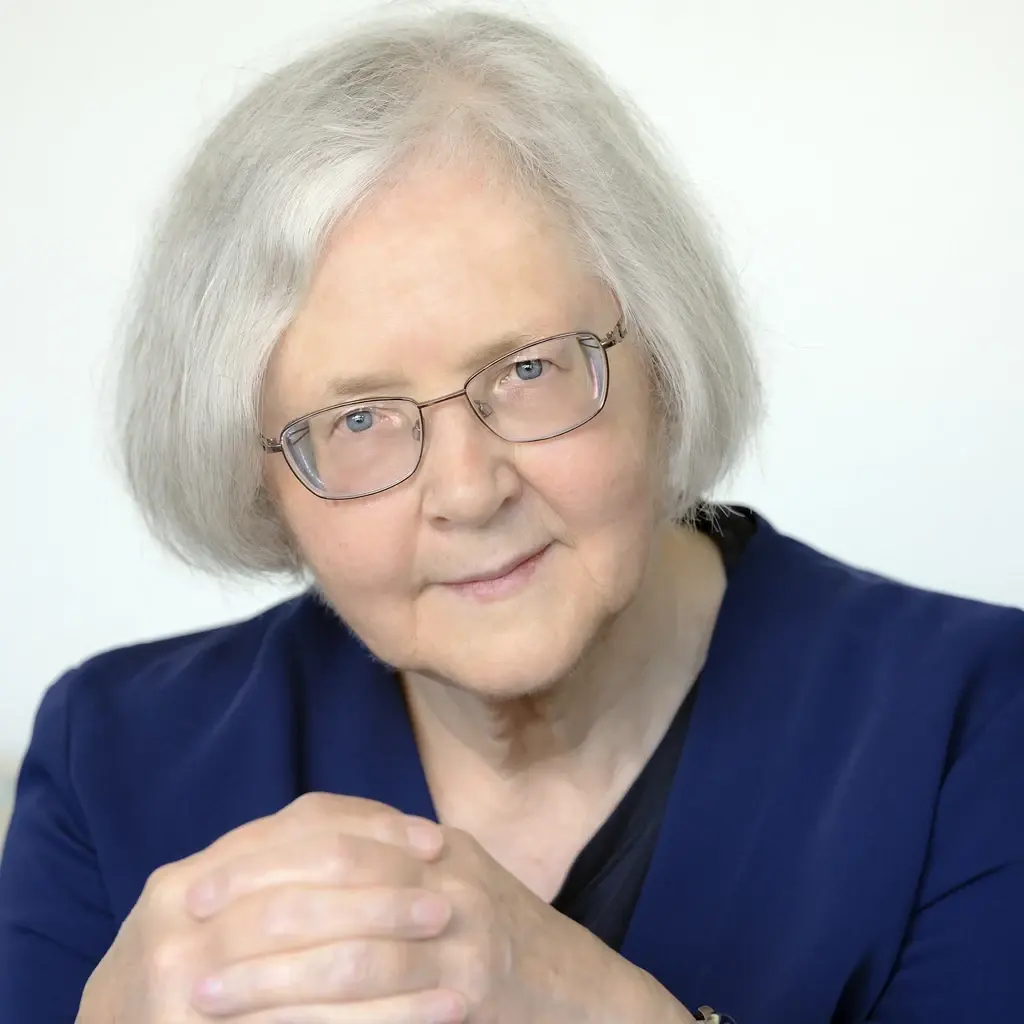
Elizabeth Blackburn is an Australian-American biologist and Nobel laureate. “The Telomere Effect” explores how telomeres connect stress, daily habits, and life conditions to cellular aging and healthspan.
Explore more books by Elizabeth Blackburn