What you'll learn
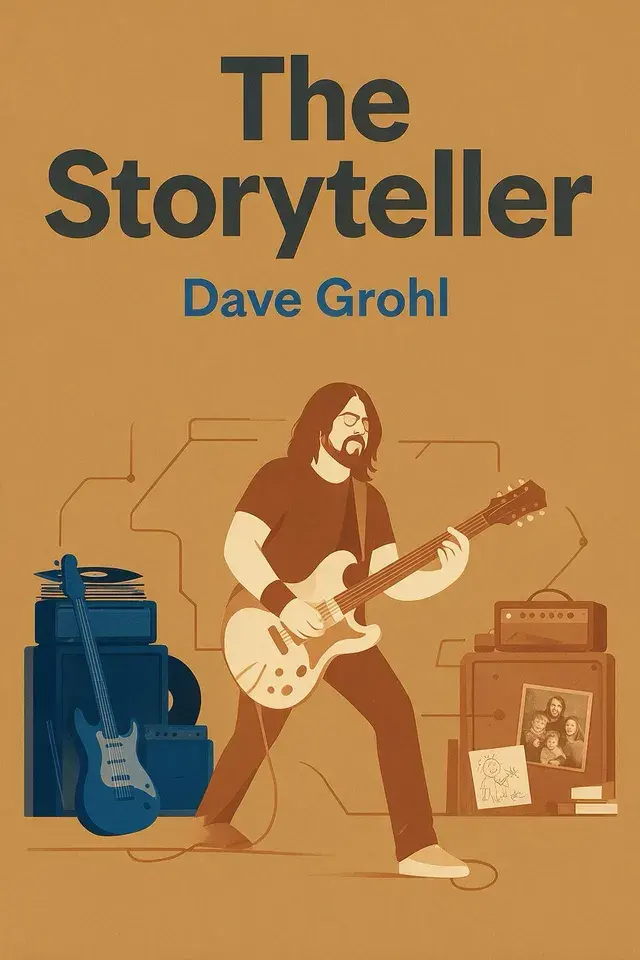
Key ideas from The Storyteller
These ideas compress the book's argument without treating the author's view as settled fact. Use them as an orientation before reading the full work or listening in Wiseley.
Grohl treats music as a memory system, retrieving people and places through songs, albums, bands, and sounds.
Punk replaces distant virtuosity with agency: raw expression, practice, rehearsal, and independent creation can precede professional validation.
The van, venues, borders, and missing money make touring a daily education in improvisation, dependence, and survival.
Nirvana’s rehearsal discipline, intuitive writing, and careful recording turn deprivation into Nevermind’s focused musical force.
Private, constrained recording restores agency before Grohl knows whether the songs will become a band.
Fatherhood turns touring into shorter absences, intense returns, and a continuing negotiation over what presence requires.
Violet’s courage teaches that artistic vulnerability can make truthful connection possible without eliminating fear.
How The Storyteller builds its case
Follow how the book develops its argument. Each note is a brief orientation, not a replacement for the chapter.
Memory Before the Stage
Grohl begins with time written on the body. His inner life still feels young and mischievous, but years of microphones, travel, and sacrificed sleep have left visible costs.
Punk, Commitment, and the Leap
At a 2015 Foo Fighters show in Gothenburg, Grohl discovers that stadium rock is not distant spectacle when you stand at its edge. The crowd’s delayed sing-along comes back like a wave, creating an almost out-of-body exchange.
The Road as School
Joining Scream begins as a decision against security. Grohl must leave school, abandon Dain Bramage, confront his parents, and enter a future without a safety net.
Fame Without a Playbook
Scream teaches Grohl that a band can feel like family and still be fragile. Touring is held together by what he calls ride-or-die loyalty, but it includes illness, suspected poisoning, squats, canceled shows, and emergency substitutes.
Grief Becomes New Music
After Nirvana ends, Dave Grohl’s problem is not simply what to do next. Music itself has become painful.
Family Changes the Tour
At the Bridge School Benefit, Grohl first sees that music and family might coexist. The concert supports children with severe speech and physical impairments, and its shared love changes an assumption he had carried: fatherhood would begin only after touring ended.
Courage at the Crosswalk
Near the end of the memoir, courage is not a fearless state. It is a decision to remain available—to family, music, and other people—even when the body or imagination urges retreat.