Books worth understanding, not just finishing.
Explore 475 carefully structured nonfiction summaries. Start with the central argument, keep the useful ideas, then decide what deserves a full read.
All book summaries
Being You
Being You asks how conscious experience and the self arise from the living brain. It develops a predictive account of perception, measures of conscious level, and layered models of bodily, narrative, social, animal, and artificial minds. Its value is a mechanistic way to think about altered states, agency, and the limits of inferring experience.
Benjamin Franklin: An American Life
How did a Boston printer become a scientist, civic organizer, revolutionary, diplomat, and constitutional mediator—and what did that transformation reveal about virtue, power, and belonging? This summary follows Franklin’s self-invention, practical institutions, political evolution, family contradictions, and contested legacy to clarify how everyday usefulness became a national ideal.
Better Than Before
Better Than Before examines how people build and sustain habits by matching strategies to individual tendencies, values, environments, and relationships. It asks why the same routine helps one person but fails another, and shows how self-knowledge can become practical, repeatable change.
Between the World and Me
A father writes to his son about living in a Black body inside an American Dream shaped by racial hierarchy, violence, and historical plunder. The book asks what consciousness, love, study, memory, culture, and struggle can preserve when safety, innocence, and escape cannot be guaranteed.
Beyond Good and Evil
Beyond Good and Evil asks what lies beneath philosophy’s claims to truth and morality. Nietzsche traces how instincts, religion, discipline, scholarship, social identity, and rank shape values, offering a demanding lens for testing inherited judgments and imagining freer forms of thought before a Dionysian closing meditation on transformation.
Beyond Order
Beyond Order asks how to live when order makes action possible but can harden into rigidity, while chaos, suffering, and malevolence remain unavoidable. It connects social participation, chosen aims, truthful memory, beauty, romance, responsibility, and gratitude into a practical account of turning potential into responsible action.

Big Magic
Big Magic asks how to live creatively without waiting for fearlessness, permission, perfect conditions, or guaranteed success. Elizabeth Gilbert treats creativity as both a human birthright and a collaboration with inspiration, then explores curiosity, disciplined practice, financial realism, play, persistence, and trust as ways to make and release work.
Bird by Bird
Anne Lamott’s Bird by Bird is a guide to the craft and inner life of writing. It asks how attention, memory, and lived experience can become truthful, vivid work despite fear, perfectionism, envy, isolation, revision, and uncertain publication—and offers small assignments, patient observation, community, and purpose beyond external success.
Bittersweet
Bittersweet asks what sadness, longing, grief, and mortality can teach us when we stop treating them as defects. Susan Cain connects difficult emotion to compassion, creativity, love, and meaning, then examines forced positivity in American life and work. The book offers ways to carry loss without denying joy, using attention, connection, and purposeful action.
Blink
Blink asks when a first impression is wiser than prolonged analysis. It explores how unconscious minds extract patterns from brief encounters, why expertise can sharpen or bias those reactions, and how stress, stereotypes, and decision settings can distort them—then shows how training and better-designed systems can make judgment more reliable.
Blue Ocean Strategy
Why do some companies escape crowded markets while others sink into price competition? Blue Ocean Strategy presents a business-strategy approach centered on value innovation—creating a leap in buyer value while lowering cost—and offers tools to redraw boundaries, find noncustomers, test profitability, and mobilize execution.
Bold
Bold examines how exponential technologies and internet-enabled crowds change who can build, fund, and solve problems at global scale. It asks which habits make ambitious action credible, then maps platforms, communities, crowdfunding, and incentive prizes as ways to distribute expertise and risk—while stressing that abundance depends on deliberate, ethical choices.
Born a Crime
Born a Crime follows Trevor Noah's childhood and young adulthood in and after apartheid South Africa. It asks how identity, belonging, and moral agency are built when law assigns race, poverty narrows choices, language divides communities, and family love coexists with violence. Its value is a systems-aware account of survival.

Born to Run
Christopher McDougall investigates why ordinary running so often injures modern bodies while the Rarámuri of Mexico’s Copper Canyons run extraordinary distances in sandals. Through science, race reporting, and an uneasy cross-cultural search for Caballo Blanco, the book asks what endurance, technique, community, and freedom reveal about why humans run.
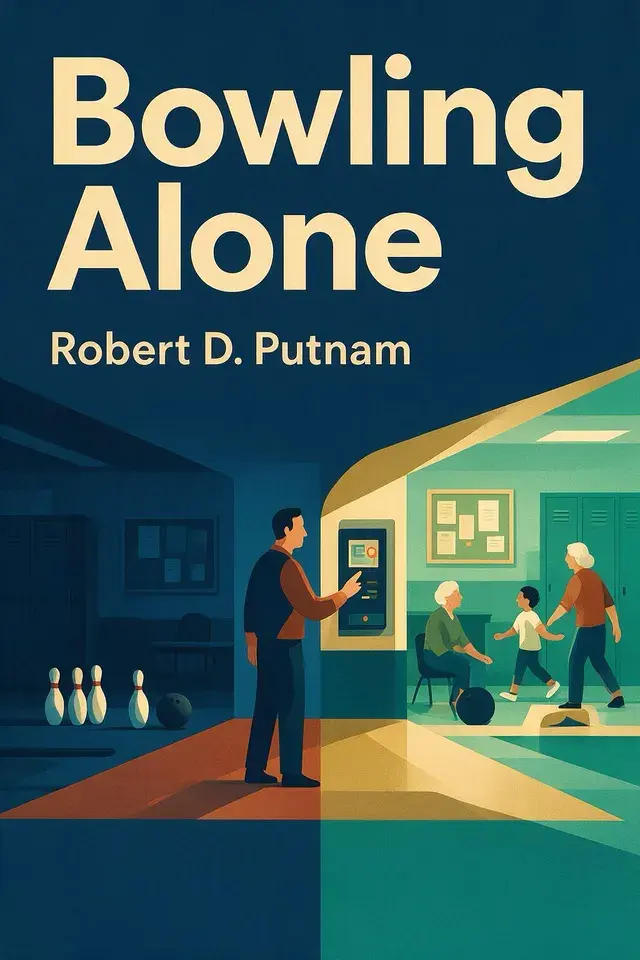
Bowling Alone
Bowling Alone asks why Americans became less likely to join, trust, visit, volunteer, and act together after a period of civic growth. Putnam examines generations, media, work, mobility, and institutions as possible explanations, then shows what social capital makes possible and how inclusive community ties might be rebuilt.
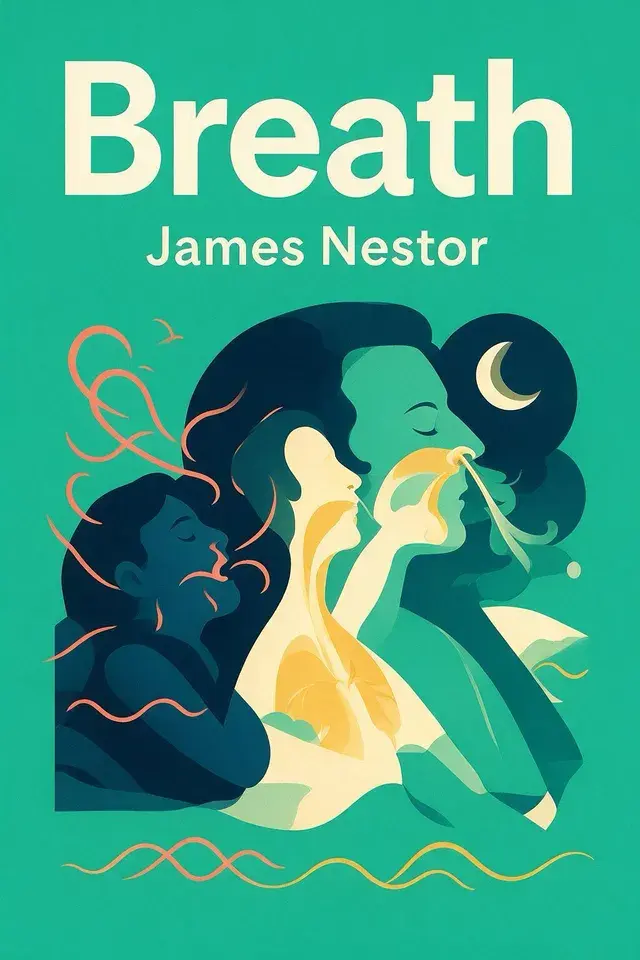
Breath
Breath examines how the route, pace, volume, and shape of breathing may affect sleep, exercise, stress, airway development, and emotional experience. It asks whether an automatic function can be retrained, then maps the book’s experiments, historical traditions, physiological theories, practical techniques, and warnings into a compact framework for judgment.

Build
Build is Tony Fadell’s experience-based guide to creating yourself, products, companies, teams, and leadership. It asks how to learn through failure, choose problems customers truly need, turn vision into execution, and know when to persist, adapt, or leave—offering practical principles for building better work and organizations.
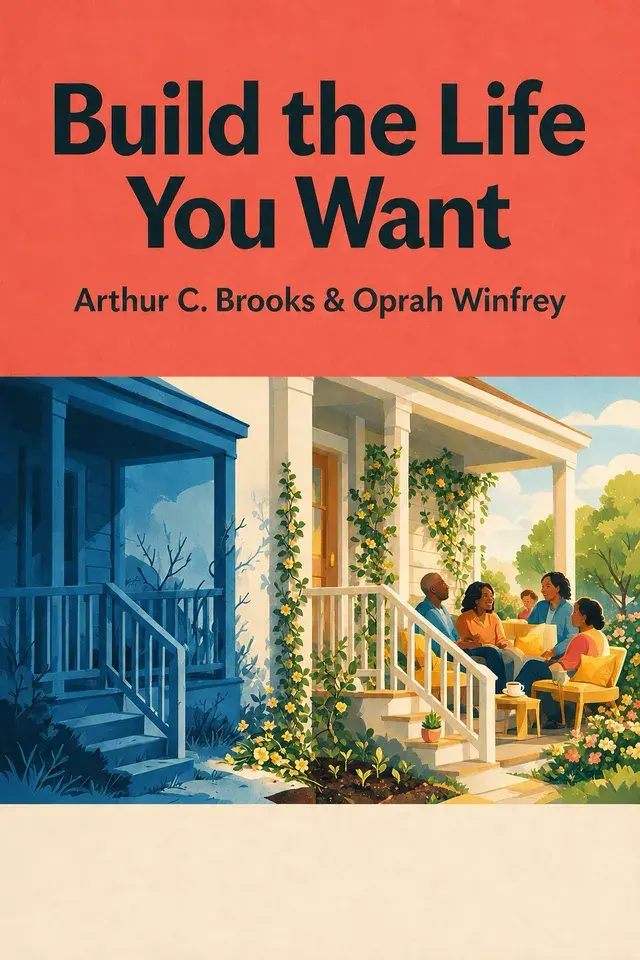
Build the Life You Want
Build the Life You Want asks how people can become happier without waiting for circumstances to improve. It links emotional self-management with family, friendship, meaningful work, and spiritual practice, offering a framework for turning difficult feelings and imperfect relationships into choices that support purpose, connection, and service.