What you'll learn
Key ideas from Animal Farm
These ideas compress the book's argument without treating the author's view as settled fact. Use them as an orientation before reading the full work or listening in Wiseley.
Human ownership turns animal labor and reproduction into subsistence, income, and violence while ending animals’ lives when they lose usefulness.
The first harvest demonstrates real gains in food, leisure, morale, and ownership when labor is organized for the animals themselves.
Superior literacy and agenda-setting let the pigs convert administrative expertise into unequal decision-making power.
Napoleon uses private force to turn factional disagreement into centralized rule, ending open debate and making obedience the test of revolutionary loyalty.
Forced confessions and executions turn dissent into treason, while abolishing Beasts of England erases the revolution’s future-facing language.
Statistics and ceremonial praise replace lived hardship with official evidence of progress and leadership.
Boxer’s loyalty turns promised retirement into a reason to sacrifice his health, leaving him disposable when production ends.
By walking on two legs, rewriting equality, restoring Manor Farm, and joining human rulers, the pigs complete their transformation.
Inside Animal Farm
Read the first chapter in full here. The other 5 continue in the Wiseley app.
Chapter 1 of 6 · 7 min · Audio & text
The Logic of Exploitation
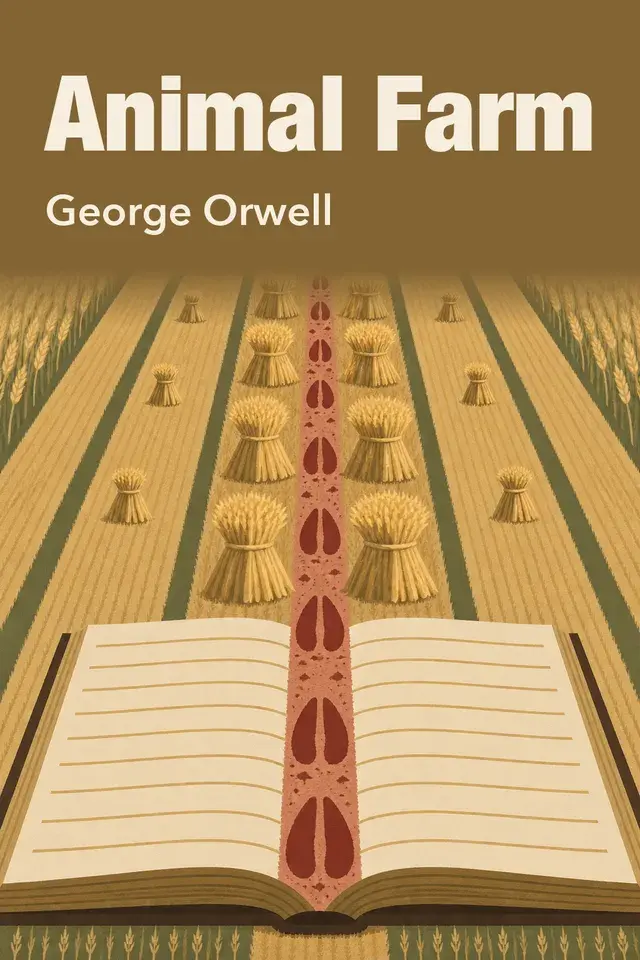
Animal Farm, by George Orwell.
Animal Farm begins with a question of ownership: who does the work, and who receives what it produces? At Manor Farm, Mr. Jones owns the land, but the animals supply the labor, food, and new generations. They receive only enough to remain alive. What they produce becomes human food, income, or property. The revolt begins with this material grievance, not with an abstract wish for change.
Old Major, a respected twelve-year-old prize boar, calls a secret meeting before he dies. His speech, a doctrine rather than a neutral account, describes animal life as miserable, exhausting, short, and unfree. He rejects the idea that nature or England’s poverty makes suffering unavoidable. The fertile soil, he argues, could support animals in comfort. Human ownership is the cause because humans consume without producing, command labor, and return only enough to keep animals alive.
Major points to milk taken by humans, eggs sold instead of becoming chickens, and Clover’s foals sold despite her labor and pregnancies. He predicts that animals who lose their usefulness will be slaughtered, rendered, or drowned. In his argument, exploitation reaches beyond wages or rations: it controls animals’ bodies, labor, reproduction, and lifespan.
From this diagnosis, Major builds a doctrine of solidarity. Humans are enemies; animals are comrades. A vote extends that community to rats, although the dogs dissent and the cat votes on both sides. Unity also means refusing human practices such as houses, beds, clothes, alcohol, money, and trade, while forbidding animal tyranny and killing. Animalism therefore promises not just a new manager, but a society that will not copy the domination it has resisted.
The doctrine becomes emotionally concrete through Beasts of England, an old song whose full lyrics return to the animals. It imagines the overthrow of Tyrant Man, fields belonging to animals, freedom from harnesses, whips, and nose-rings, and abundant crops. It also asks the present generation to work for a freedom it may not live to see. The animals quickly sing together, crossing differences in species and intelligence, until Jones’s gunfire ends the meeting.
Major dies three nights later. Snowball, Napoleon, and Squealer turn his teaching into Animalism through secret meetings, and the pigs become its teachers because they are considered the cleverest. Snowball is inventive, Napoleon forceful, and Squealer persuasive.
Their audience is not uniformly committed. Some animals defend Jones or fear starvation without him. Mollie asks whether sugar and ribbons will remain; Snowball calls ribbons a badge of slavery, but she is unconvinced. Boxer and Clover become faithful followers, while Moses’s Sugarcandy Mountain still attracts believers. The movement has a common grievance, but not yet a common level of understanding or sacrifice.
The rebellion arrives sooner than expected because Jones has deteriorated into neglect. On a Sunday, he gets drunk, the men milk the cows and go rabbiting, and the animals remain unfed until evening. A cow breaks open the store-shed; hunger becomes collective action. Jones and four men answer with whips, but the animals attack together and drive them from the farm. Mrs. Jones escapes with possessions, followed by Moses, and the gate closes behind the old regime. The timing is spontaneous, but Animalism gives the uprising a shared political meaning.
Victory is marked by removing the instruments of control: bits, nose-rings, chains, knives, reins, blinkers, nosebags, whips, and the horses’ ribbons. Manor Farm becomes Animal Farm. The farmhouse is inspected but not occupied; it is preserved as a museum. These acts make liberation physical. The animals claim familiar land and buildings as their own while refusing to live like the humans they expelled.
That claim is written into the Seven Commandments. Two-legged creatures are enemies, while four-legged or winged creatures are friends. Animals must not wear clothes, sleep in beds, drink alcohol, or kill one another. The final law says that all animals are equal. The commandments are presented as permanent and unalterable.
But the law reaches the animals through an unequal channel. The pigs teach themselves to read and write, Snowball writes the farm’s name and commandments, and the cleverer animals memorize them. Most animals depend on others to make the new doctrine legible. Minor spelling errors reveal the limits of this emerging authority, even as the animals accept the text as binding.
The first milk dispute exposes the tension more sharply. The cows’ udders are painfully full after a day without milking. The pigs fill five buckets, but Napoleon blocks questions about where the milk will go. Later, the milk has disappeared without explanation. The story does not establish who received it, so this is not proof of settled privilege. It does show that the pigs already control a resource and its information.
This is where the revolution’s promise meets its first contradiction. Human ownership had converted animal labor and reproduction into subsistence, income, and violence. Animalism answers with solidarity, equality, and collective belonging. Yet the new order begins with pigs holding the skills to formulate the law and the authority to withhold an account of what the animals produce. Jones has been overthrown; control over knowledge and resources remains unresolved.
Chapter 2 of 6 · 6 min · Audio & textIn the app
Revolutionary Equality Under Strain
After the humans are expelled, the first test of Animal Farm is practical: can the animals feed themselves and organize their work? Initially, they can.
Chapter 3 of 6 · 6 min · Audio & textIn the app
Power Captures the Revolution
After the revolution's first gains, the pigs still need majority ratification, but Snowball and Napoleon turn policy into a factional contest. Snowball persuades publicly; Napoleon canvasses privately and commands the sheep's support.
Chapter 4 of 6 · 8 min · Audio & textIn the app
Terror and Manufactured Reality
As work on the windmill continues into a bitter winter, the farm’s material crisis becomes impossible to ignore. Frozen weather stops quarry work, thicker walls demand more stone, and the animals are cold, hungry, and less hopeful.
Chapter 5 of 6 · 5 min · Audio & textIn the app
Victory, Loss, and Official Truth
After the executions, the regime must make violence look lawful. The animals privately sense a conflict with the Sixth Commandment.
Chapter 6 of 6 · 8 min · Audio & textIn the app
When Rulers Become the Same
By the final stage of the farm’s rule, Boxer embodies the system’s treatment of labor. He regards work as a matter of honor, ignores warnings about his health, and keeps repeating that he will work harder.
Chapter 1 of 6 · 7 min · Audio & text: The Logic of Exploitation
Wiseley supports reading and listening to summaries in the app.
Continue in WiseleyAbout George Orwell
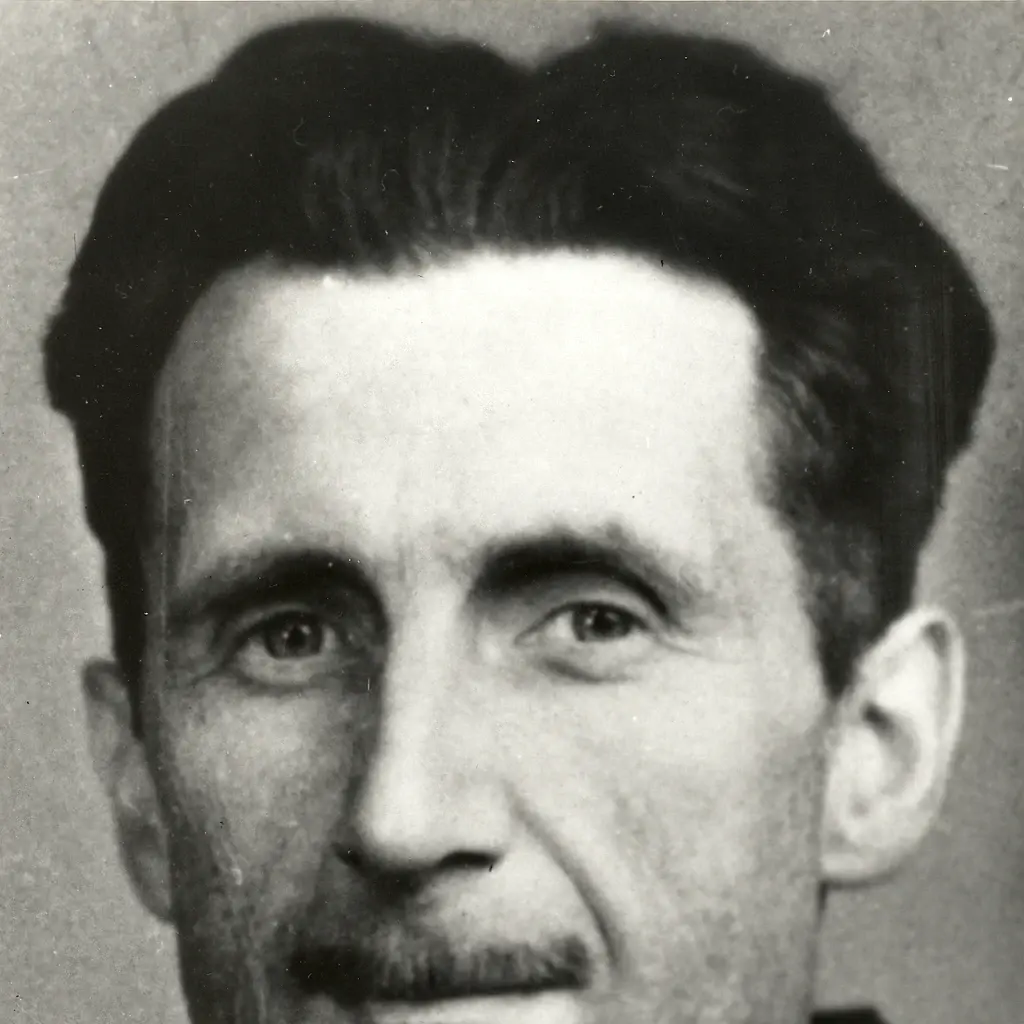
George Orwell was an English author and journalist. “Animal Farm” explores how a revolt against exploitation hardens into a new hierarchy through fear, propaganda, and manipulated memory.
Explore more books by George Orwell