Books worth understanding, not just finishing.
Explore 987 carefully structured book summaries. Discover the central ideas and themes, then decide what deserves a full read.
All book summaries
The Compound Effect
The Compound Effect explains how small, repeated choices accumulate into habits, momentum, and long-term progress or decline. It asks how a person can notice automatic behavior, take responsibility, and redirect that trajectory. The summary distills tools for tracking choices, designing routines, managing influences, and sustaining extra effort.

The Confidence Code
The Confidence Code asks why capable women still hesitate, underrate themselves, or opt out—and whether confidence is inherited, socially shaped, or learnable. It connects biology, gender expectations, perfectionism, action, failure, and mentorship into a practical account of building self-belief without confusing bravado with strength.

The Confidence Game
The Confidence Game examines how con artists turn ordinary needs for trust, meaning, and hope into staged deception. It traces how a target is selected, emotionally engaged, persuaded, and kept committed, then considers why victims may stay silent. Psychological research and detailed cases explain these mechanisms and the limits of practical defenses.

The Confidence Gap
Russ Harris reframes confidence as the capacity to act on what matters while fear and self-doubt are present. The book shows how to unhook from discouraging thoughts, make room for difficult feelings, clarify values, build relevant skills, and learn from setbacks—so action and self-trust need not wait for certainty.

The Connected Child
The Connected Child explores how early neglect, trauma, and developmental challenges can shape behavior and relationships. It asks how caregivers can build safety and attachment while guiding difficult behavior toward learning. Its practical tools include observation, routines, communication, discipline, play, sensory support, and caregiver reflection.

The Consolations of Philosophy
Alain de Botton follows Socrates, Epicurus, Seneca, Montaigne, Schopenhauer, and Nietzsche to ask how philosophy can steady us against unpopularity, frustrated desire, anxiety, bodily shame, cultural judgment, romantic pain, and hardship. The book offers a practical map for questioning inherited beliefs, recalibrating expectations, and turning difficulty into clearer, more durable forms of life.

The Courage to Be Disliked
An audio-first guide to Adlerian psychology’s answer to a central question: how can people become free and happy without controlling others or living for approval? It follows the move from past-determined stories to chosen action, respectful education, community, friendship, work, and deliberate love.
The Creative Act
The Creative Act treats creativity as a human way of perceiving, receiving, and shaping experience—not a rare talent. It asks how a maker can stay open to inspiration, develop skill, experiment, edit, collaborate, and release work without surrendering personal judgment, while art remains a way to connect people across time and language.
The Creative Thinking Handbook
How can people escape familiar thought patterns and solve unfamiliar problems? Griffiths and Costi frame creativity as a trainable discipline: define the real challenge, generate alternatives, test them with balanced judgment, and carry a choice into action. Their tools apply to personal decisions, teams, and organizational innovation.
The Culture Code
Daniel Coyle asks how groups turn individual talent into collective performance. The book traces three linked practices—building safety, sharing vulnerability, and establishing purpose—and shows how leaders can use repeated cues, candid feedback, shared routines, and clear behavioral rules to support dependable execution and creative work.

The Daily Dad
The Daily Dad asks how parents can shape children’s character through example, sustain unconditional love, and stay close while helping children become themselves. Its daily meditations turn that question into practices for self-control, encouragement, curiosity, resilience, and attention to family life.

The Daily Stoic
The Daily Stoic asks how Stoic philosophy can become a daily practice: what belongs to our choice, how should we examine impressions and desires, and how can adversity become useful action? Its value is a practical framework for steadier judgment, disciplined habits, contentment, and humane conduct.

The Danish Way of Parenting
How can everyday parenting help children grow more resilient, empathetic, and self-reliant? The book introduces PARENT—play, authenticity, reframing, empathy, no ultimatums, and togetherness—and traces how these practices shape children's learning, relationships, and family life.

The Data Detective
Tim Harford’s The Data Detective asks how to judge numerical claims without falling into gullibility or blanket distrust. Through cases in medicine, polling, research, algorithms, public statistics, and charts, it shows how measurement choices, missing evidence, incentives, and prior beliefs shape what data seem to say—and offers practical habits for checking a claim.

The Dawn of Everything
The Dawn of Everything asks why human history is so often told as a march from foraging to farming, inequality, cities, and states. Graeber and Wengrow assemble archaeological and Indigenous evidence to show how people repeatedly redesigned collective life—and why recovering those alternatives changes what we think is politically possible.

The Decline and Fall of the Roman Empire
Edward Gibbon asks how Roman power changed as Christianity, imperial administration, fiscal pressure, civil conflict, Persian rivalry, and Gothic migration reshaped the empire. This summary follows those interacting mechanisms while distinguishing documented episodes, conjecture, and later religious or political embellishment, giving listeners a compact map of his argument about decline.
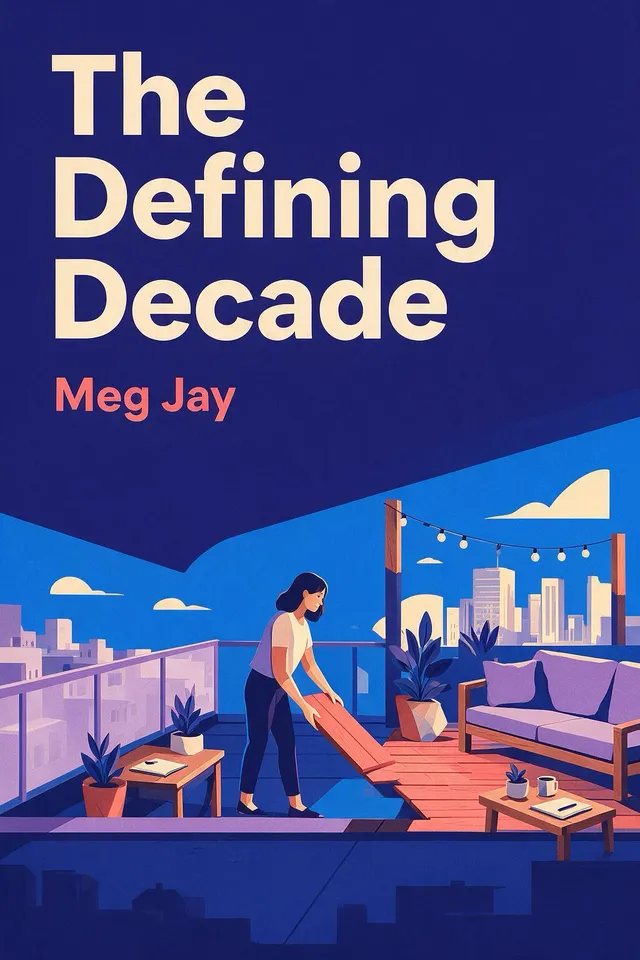
The Defining Decade
The Defining Decade asks why the twenties matter when adulthood is delayed and uncertain. It connects work, relationships, brain development, personality, fertility, and time perception, showing how informed commitments and concrete action build options while drift can quietly narrow them.

The Demon-Haunted World
The Demon-Haunted World asks how people can distinguish reliable knowledge from comforting stories in a technologically powerful society. Sagan joins wonder to skepticism, then traces the question through UFOs, memory, education, media, scientific responsibility, and democratic freedom. The practical value is a disciplined way to test claims without losing humane curiosity.