
What you'll learn
Key ideas from The Confidence Gap
These ideas compress the book's argument without treating the author's view as settled fact. Use them as an orientation before reading the full work or listening in Wiseley.
Confidence is both a feeling of certainty and an act of self-reliance; meaningful action does not have to wait for the feeling.
Fear can coexist with confidence and accomplishment; it is not proof of weakness or incapacity.
Fusion gives thoughts influence; defusion creates room to choose action while a thought remains.
Confidence becomes more grounded when practice develops the component skills a valued activity requires.
Values are ongoing qualities of action, while goals are outcomes that can be completed; both shape purposeful movement.
Experiential avoidance can ease fear briefly while reinforcing withdrawal and shrinking the range of situations a person is willing to approach.
Committed action means returning to meaningful steps through reluctance, fear, and setbacks without waiting for confidence or a better mood.
Failure can hurt and still offer feedback, followed by kindness, learning, and a values-based next step.
Inside The Confidence Gap
Read the first chapter in full here. The other 8 continue in the Wiseley app.
Chapter 1 of 9 · 6 min · Audio & text
Confidence Begins With Action
The Confidence Gap, by Russ Harris.
People often know what they want to change but believe they must first feel confident enough to begin. They wait to speak up, try something new, pursue a relationship, or make a serious effort until doubt and fear have gone. That pause is the confidence gap: confidence is treated as a prerequisite for action, though it may not arrive on demand. While someone waits, an important part of life can remain on hold.
Harris distinguishes two meanings of confidence. One is a feeling of certainty or assurance. The other is an act of trust: relying on yourself to do what matters, even without certainty. Both meanings are valid, but confusing them creates the trap. In a demanding situation, confidence as action can include anxiety, self-doubt, or fear. It means choosing how to behave rather than requiring a particular feeling first.
Nelson Mandela illustrates the distinction. Harris describes him as acting courageously while afraid. His example does not depend on fear disappearing; it shows that a person can shape their actions and outward conduct while difficult feelings remain. Courage, in this sense, is not a fearless mood. It is behavior guided by what matters despite fear.
Harris uses his own history to show how self-doubt can narrow a life. He describes longstanding social anxiety and using alcohol to cope. Fear of rejection led him to avoid sober dating and to end relationships before the other person could reject him. At medical school, self-doubt also kept him from studying; he failed his exams during his first two years and had to retake them. Qualifying as a doctor did not automatically settle the doubt. As a junior doctor, he remained anxious about decisions and diagnoses. Later, he learned to socialize with little alcohol, study, write, and speak to audiences. His account presents change as something learned through practice, not as a feeling that had to arrive first.
Confidence is also specific to a domain. Someone may rely on themselves in familiar routines and still feel unsure when speaking publicly, dating, making art, playing sport, or handling intimacy. A lack of confidence in one area does not mean confidence is absent everywhere. Harris’s client Dave, a physiotherapist who wants to write a novel, cannot get started because he expects every first-draft page to be excellent. Seb’s experience shows another path: after an embarrassing, stressful experience, fear of failing again leads to rumination and self-criticism, then to greater performance anxiety and avoidance. These examples point to different barriers, even though both can keep a person from practising.
Harris describes several common sources of low confidence. Expectations may be so high that a beginner demands excellent results immediately. Harsh self-judgment can turn one difficult attempt into a sweeping verdict about the self. A person may become preoccupied with fear, giving it more attention than the task. They may lack experience in a new setting, or they may genuinely need to build relevant skills. These are distinct problems. More practice can help with experience or skill gaps; simply demanding a better feeling cannot substitute for learning. Fear and self-critical thoughts, meanwhile, do not prove that someone is defective or incapable.
The practical alternative is a repeating Confidence Cycle. First, practise the skills the chosen activity actually requires. Reading about a skill or wishing for confidence is not the same as rehearsing it. A person who wants to speak, create, play, or connect needs practice relevant to that activity. Natural ability may make the work easier, but it does not remove the need to develop and use skills.
Next, apply those skills in a real challenge. Practice that never reaches the situation that matters may leave the person unprepared to act there. Application also reveals what the task is actually like and which skills need more attention. The aim is not to wait until every doubt has gone, or to pretend that practice alone makes a challenge easy. It is to use what has been practised and learn from trying.
Afterward, review the result without turning it into a judgment of personal worth. Ask what worked, what did not, and what could be changed next time. A missed opportunity or clumsy attempt can provide information about what to practise or adjust. Harsh self-criticism tends to discourage further effort; a fair review leaves room to learn. Then modify the approach and begin the cycle again. Repeated practice, application, reflection, and adjustment build ability and a more grounded basis for self-reliance.
This cycle also explains why a burst of confidence from a motivational book, recording, or seminar may not last. Harris says such methods can create temporary confidence feelings in a safe setting, but those feelings often fade under real challenge. The point is not that a temporary lift can never help. It is that it cannot replace the repeated work of learning and applying relevant skills. The process takes time and effort, and it does not guarantee a particular outcome.
The direction for that effort is action that matters to the person. Confidence is useful because it can help someone participate, pursue a goal, or behave in a way they care about. Harris’s reversal is simple: take the actions of confidence first, with uncertainty present, and let experience teach you what comes next. The feeling may follow, but meaningful action need not wait for it.
Chapter 2 of 9 · 5 min · Audio & textIn the app
Fear Is Not a Verdict
A difficult action can bring fear before anything bad has happened. It is easy to read that feeling as a verdict: “I’m not confident enough,” or “I should stop.”
Chapter 3 of 9 · 9 min · Audio & textIn the app
Unhook From Unhelpful Thoughts
A thought can sound like a verdict: You will fail. You are not ready. There is no point in trying. When those words arrive, it can feel as though they settle what you can do. Yet thoughts influence behavior without controlling it. A person can have a thought about quitting and keep going. The skill in this chapter is learning to notice a thought without automatically treating it as an instruction. Harris calls being caught up in a thought fusion. We may take it literally, struggle with it, or let it steer our…
Chapter 4 of 9 · 7 min · Audio & textIn the app
Accept Yourself, Attend Now
Once a thought has been noticed as a thought, another question follows: what happens when the mind turns that thought into a verdict about the whole person? A missed opportunity can become “I’m a failure.”
Chapter 5 of 9 · 9 min · Audio & textIn the app
Practice What the Task Needs
Confidence in a domain becomes more grounded when it rests on the skills that activity actually requires. Feeling uncertain alone cannot tell you whether you need more skill, more experience, or a different relationship to self-doubt.
Chapter 6 of 9 · 8 min · Audio & textIn the app
Let Values Set the Direction
Values and goals both point toward change, but they do different jobs. A value is an ongoing quality of action: a way you want to behave or relate to other people.
Chapter 7 of 9 · 9 min · Audio & textIn the app
Make Room for Fear
When fear appears, it is tempting to make its disappearance the condition for acting. We distract ourselves, withdraw, postpone, or argue with our feelings.
Chapter 8 of 9 · 8 min · Audio & textIn the app
Persist, Fail, Learn, Recommit
Knowing what matters gives an action direction. It does not make the next step easy.
Chapter 9 of 9 · 7 min · Audio & textIn the app
Perform, Review, Begin Again
The book’s practical account of confidence comes together in a recurring sequence: prepare, act, review, and begin again. The phases are clearest in a concert, match, presentation, or exam, where practice precedes performance and reflection follows.
Chapter 1 of 9 · 6 min · Audio & text: Confidence Begins With Action
Wiseley supports reading and listening to summaries in the app.
Continue in WiseleyAbout Russ Harris
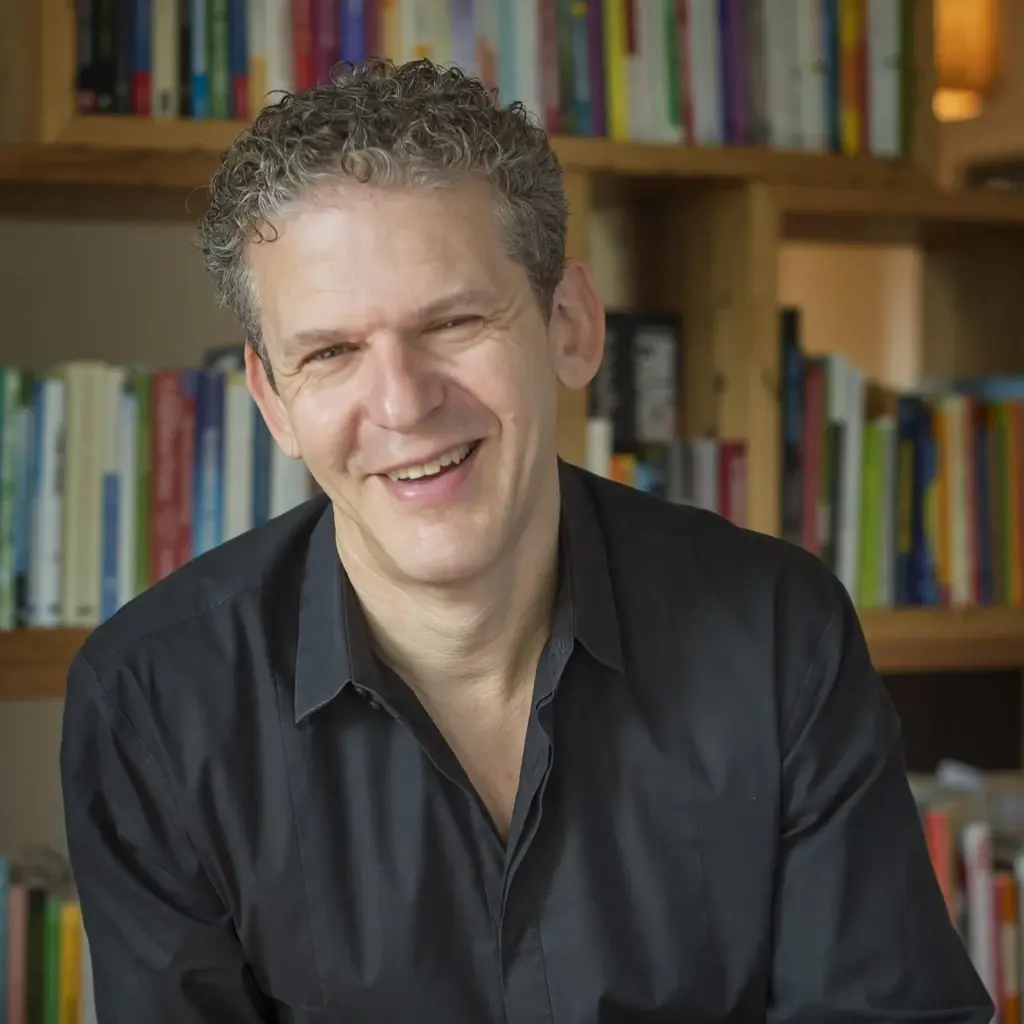
Russ Harris is a therapist and trainer in acceptance and commitment therapy. “The Confidence Gap” explores confidence as the capacity to act on what matters while fear and self-doubt are present.
Explore more books by Russ Harris