What you'll learn
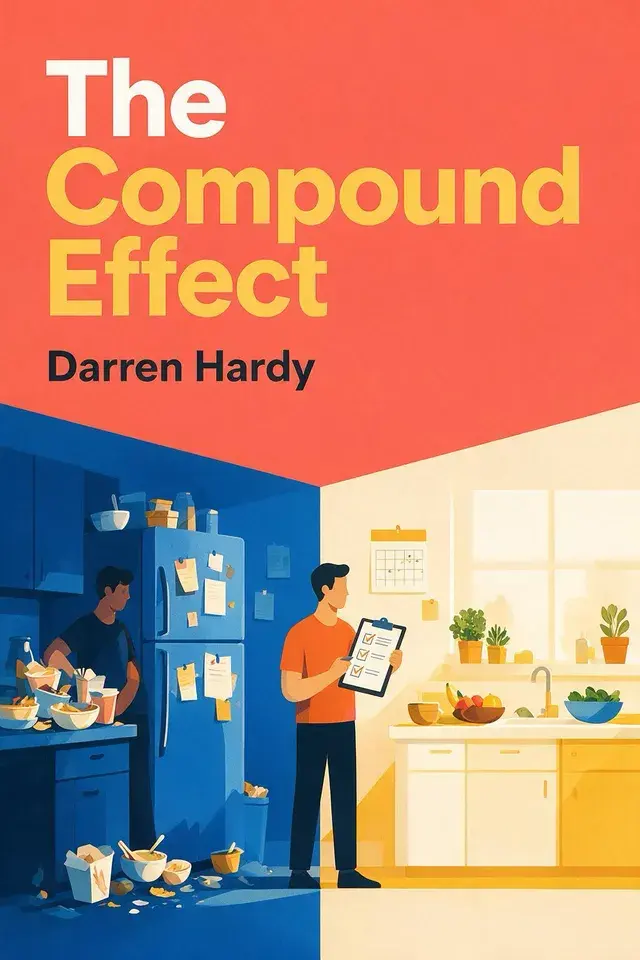
Key ideas from The Compound Effect
These ideas compress the book's argument without treating the author's view as settled fact. Use them as an orientation before reading the full work or listening in Wiseley.
Small choices become behaviors and accumulated patterns, producing progress or decline over time.
Delayed visibility makes patient compounding easy to abandon before its effects emerge.
A compelling why gives repeated choices the emotional force that willpower alone cannot reliably sustain.
Habit replacement combines behavioral diagnosis with environmental fit, useful substitutes, and additions that make desired choices easier to repeat.
Routines turn chosen behaviors into repeatable patterns that reduce stress and make effective action more predictable.
Mental input acts as a continuing influence, with repeated fear or constructive material shaping expectations and the quality of later thought.
Persistence after the wall and effort beyond the planned endpoint can turn consistent foundations into differentiation.
How The Compound Effect builds its case
Follow how the book develops its argument. Each note is a brief orientation, not a replacement for the chapter.
Small Choices Set the Course
Hardy’s starting point is deliberately ordinary: the direction of a life is shaped by small choices repeated over time. A food decision, a use of an hour, a financial choice, or a response in a relationship may feel too minor to matter.
Design Habits Around Why
Once tracking has made a pattern visible, the harder problem is replacement. Hardy defines a habit as an acquired behavior that has become nearly involuntary.
Build and Protect Momentum
Once a useful behavior has been chosen, the next challenge is making it repeatable. Hardy calls the force that grows from routines and sustained effort Big Mo, or momentum.
Curate Your Influences
Hardy treats influence as part of the machinery of change, not as background scenery. What enters the mind, whom someone regularly spends time with, and what the surrounding environment permits all shape behavior.
Use Effort to Accelerate
Once preparation, chosen habits, and momentum are in place, the Compound Effect can turn steady progress into separation. Hardy calls the decisive test a moment of truth: hardship strips away self-protective stories and forces a choice between continuing and giving up.