Books worth understanding, not just finishing.
Explore 987 carefully structured book summaries. Discover the central ideas and themes, then decide what deserves a full read.
All book summaries

Smarter Not Harder
How can better health and performance require less effort? Dave Asprey proposes combining nutritional resources, targeted challenges, and recovery to work with the body’s energy-conserving tendencies. This summary explains his approach to fitness, cognition, resilience, and personal experimentation while preserving its qualifications, individual differences, and distinction between reported experience and supporting evidence.

Smoke Gets in Your Eyes
Drawing on her six years in the American funeral industry, Caitlin Doughty asks what changes when people encounter death directly instead of hiding it. Crematory work, funeral customs, cultural histories, and family choices show how bodies are handled, how grief is shaped, and how people can prepare for more humane care.

So Good They Can't Ignore You
Why do satisfying careers so often emerge without a clear calling? Cal Newport challenges passion-first advice and traces a practical sequence: develop rare skills, accumulate career capital, exchange it for sustainable control, and test meaningful missions through patient experiments. The framework clarifies how to work toward better work.

Sophie's World
Sophie’s World follows a girl’s introduction to philosophy, from wonder and myth through science, religion, ethics, and existentialism, while a mystery unsettles the boundary between reality and fiction. It asks how to think and live when inherited answers are incomplete, connecting personal freedom with cosmic wonder.
Sovereign Self
What does inner freedom mean when relationships, desires, and circumstances keep changing? Acharya Shunya’s Vedic account locates sovereignty in the enduring Self. It connects that spiritual vision with practices for examining thoughts, meeting grief, choosing ethical actions, and maintaining compassionate boundaries in everyday life.

Spare
Spare is Prince Harry’s memoir of growing up as the “spare,” losing his mother, seeking purpose through military and humanitarian work, and leaving royal life with Meghan. It asks how inherited roles, grief, media power, and family loyalty shape identity—and how a person can build a life beyond them.

Speak Like a CEO
Speak Like a CEO asks how leaders can develop a credible personal voice, clarify a message, and earn trust. Suzanne Bates applies that question to speeches, presentations, media encounters, meetings, and conversations, offering practical methods for message design, question handling, listening, and steady improvement.

Spillover
Spillover traces how infections move between animals, people, and altered environments, asking why some cross-species jumps fade while others become epidemics or pandemics. Through Hendra, Ebola, SARS, malaria, Lyme disease, Nipah, influenza, and AIDS, it connects host ecology, evolution, human networks, and public-health preparedness into a way of thinking under uncertainty.
Spiritual Partnership
Gary Zukav frames spiritual partnership as an equal relationship devoted to spiritual growth. He connects it to a proposed shift beyond five-sensory awareness and to practical work: noticing fear, examining intention, and choosing loving responses while each person remains responsible for their own change. Examples extend from couple conflict to parenting and work.

Spook
Mary Roach investigates whether anything of the self survives death, moving through past-life memories, attempts to locate or weigh a soul, mediums, electronic voices, hauntings, a contested will, and near-death experiences. The inquiry shows how to test striking claims against controls, ordinary explanations, and the limits of what an experiment can establish.

Stamped from the Beginning
Stamped from the Beginning traces how racist ideas were created, revised, and attached to slavery, law, science, culture, and public policy from the colonial era through Black Lives Matter. It asks why racial inequality survives formal progress and offers a framework for distinguishing personal persuasion from institutional change.
Starry Messenger
How can viewing humanity from a cosmic perspective change everyday judgment? Neil deGrasse Tyson applies scientific reasoning to conflict, risk, food, identity, justice, and mortality. The book offers ways to question inherited assumptions, compare evidence, and consider shared responsibilities while acknowledging the limits of data in resolving moral choices.

Start Finishing
Start Finishing asks how people can turn meaningful ideas into completed work amid competing priorities, limited capacity, uncertainty, and distraction. Charlie Gilkey offers a practical sequence for choosing a project, planning time and support, anticipating drag, building momentum, and learning from completion.
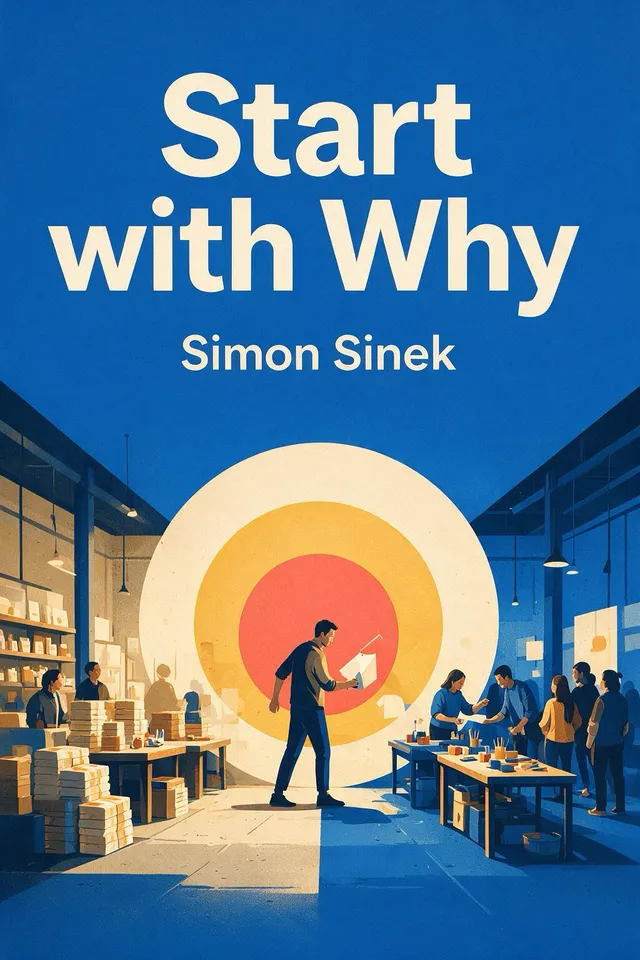
Start with Why
Start with Why asks why some leaders, companies, and movements inspire voluntary loyalty while others depend on short-term manipulation. It introduces the Golden Circle—WHY, HOW, and WHAT—and shows how purpose becomes a practical filter for trust, culture, innovation, communication, succession, and lasting success.

Steve Jobs
Walter Isaacson’s biography follows Steve Jobs from adoption, Silicon Valley, and counterculture through Apple, NeXT, Pixar, and the digital ecosystem. Its central question is how a demanding, often harmful personality joined technology, design, and the humanities to create enduring products—and what such intensity costs collaborators, users, and family.
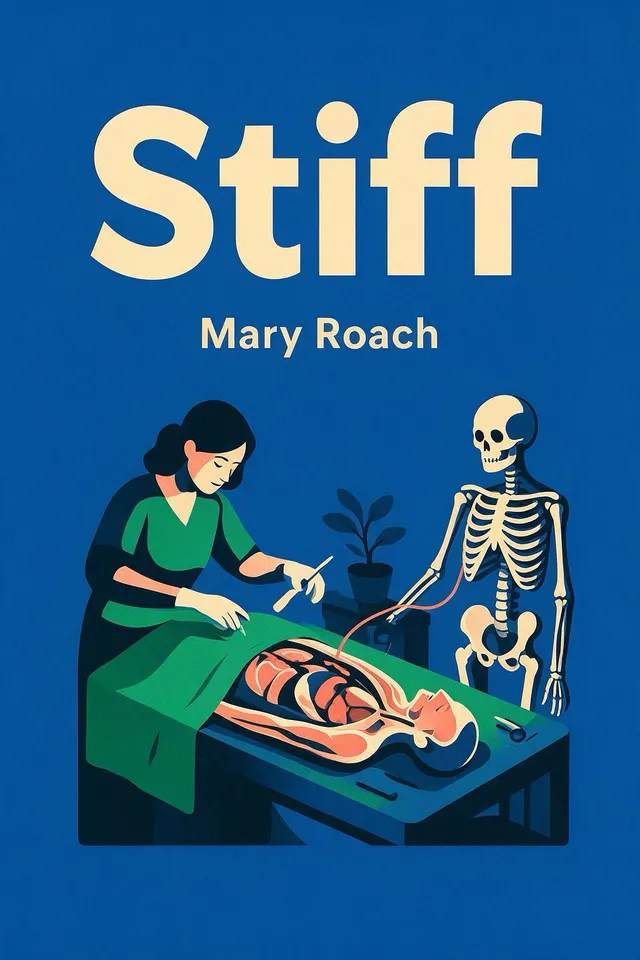
Stiff
Stiff examines what happens when human remains become tools for anatomy, forensic investigation, injury prevention, transplantation, and funeral practice. Its central question is how usefulness can coexist with consent, dignity, uncertainty, and grief, helping readers see why technical solutions to death are also ethical and cultural choices.
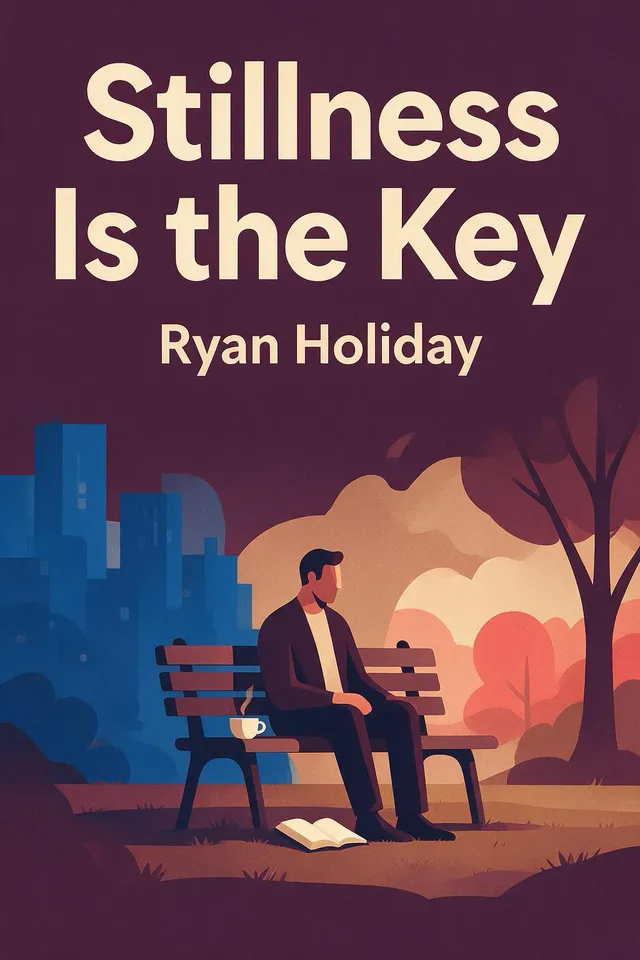
Stillness Is the Key
Ryan Holiday examines stillness as a trainable condition of clear attention, moral steadiness, and embodied balance. How can a person remain calm and effective amid noise, pressure, desire, and uncertainty? The answer connects mental discipline, spiritual practice, relationships, routines, rest, courageous action, and mortality.

Stolen Focus
Stolen Focus asks why modern conditions make sustained attention difficult, and whether the problem is personal weakness or a damaged environment. Johann Hari connects distraction to speed, technology, exhaustion, stress, food, pollution, and constrained childhoods, then pairs practical habits with a case for collective change.