What you'll learn
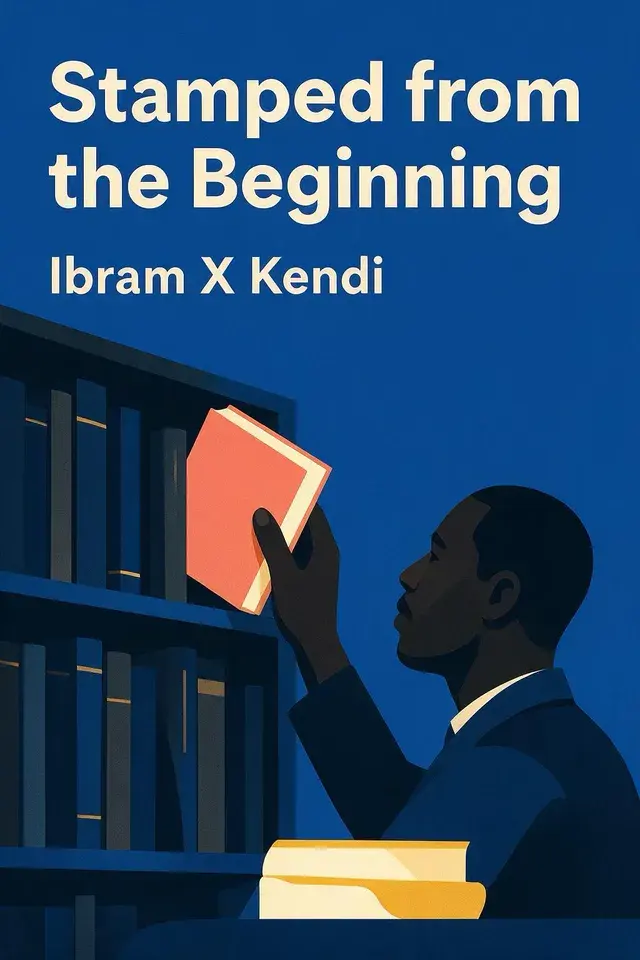
Key ideas from Stamped from the Beginning
These ideas compress the book's argument without treating the author's view as settled fact. Use them as an orientation before reading the full work or listening in Wiseley.
The chapter presents racist ideas as explanations produced to defend unequal policies and redirect blame for their effects.
Cotton expansion, domestic slave trading, and racial science converted Black labor and bodies into foundations of profit and hierarchy.
Enslaved people's flight, labor resistance, and military service made wartime emancipation possible, challenging the story that freedom arrived through Lincoln alone.
Black Southerners defined freedom materially: control of labor, land, safety, political rights, and independence from former masters.
Federal retreat enabled disenfranchisement and segregation to present racial control as neutral law while preserving cheap Black labor.
Racial hierarchy survived the retreat from biology by recoding inequality as heredity, intelligence, culture, family disorder, and institutional deficiency.
Black Power shifted the struggle from White acceptance to self-defense, community control, economic repair, and institutional power.
Obama’s election and Black Lives Matter revealed both postracial denial and the need for intersectional, local-to-global organizing that secures institutional power.
How Stamped from the Beginning builds its case
Follow how the book develops its argument. Each note is a brief orientation, not a replacement for the chapter.
How Racist Ideas Gain Power
Stamped from the Beginning opens with racial disparities in police violence, wealth, and imprisonment. The prologue places them beside Black Lives Matter.
Enlightenment Freedom, Racial Hierarchy
Enlightenment freedom did not simply replace older religious defenses of slavery with equality. It widened universal language while giving hierarchy new secular forms.
Uplift, Revolt, and Colonization
After the Revolution, Black freedom claims challenged White reformers to reconcile liberty with slavery. Many answered with uplift suasion: free Black people were urged to display literacy, sobriety, churchgoing, legal marriage, industry, frugality, and respectability.
Abolition’s Limits, Black Resistance
After uplift and colonization had failed to secure freedom, abolition sharpened the demand: slavery had to end, and Black people belonged in the United States. William Lloyd Garrison’s Liberator, launched in January 1831, revived organized White opposition.
Emancipation Without Equal Freedom
Emancipation did not arrive as a single gift from a single liberator. It grew from a crisis that exposed antebellum antislavery's limits.
Reconstruction’s Retreat into Jim Crow
Reconstruction’s retreat did not simply restore slavery. Once federal protection receded, White southerners rebuilt racial control through law, violence, labor policy, and knowledge that recast domination as progress.
Migration, Culture, and Institutional Racism
After Jim Crow consolidated racial control, racism’s language began to shift. Franz Boas and the Atlanta University conference challenged the idea that bodies, blood, and diseases revealed fixed races.
Reform, Black Power, and Repression
After World War II, racial domination had to change its public language. The United States claimed leadership of the free world, yet lynching, segregation, and colonial rule damaged relations with newly independent nations.
Recoding Racism, Organizing for Change
By the late twentieth century, racism no longer needed to speak openly of Black biological inferiority. It spoke through welfare, crime, family, culture, language, intelligence, and personal responsibility.