What you'll learn
Key ideas from Spare
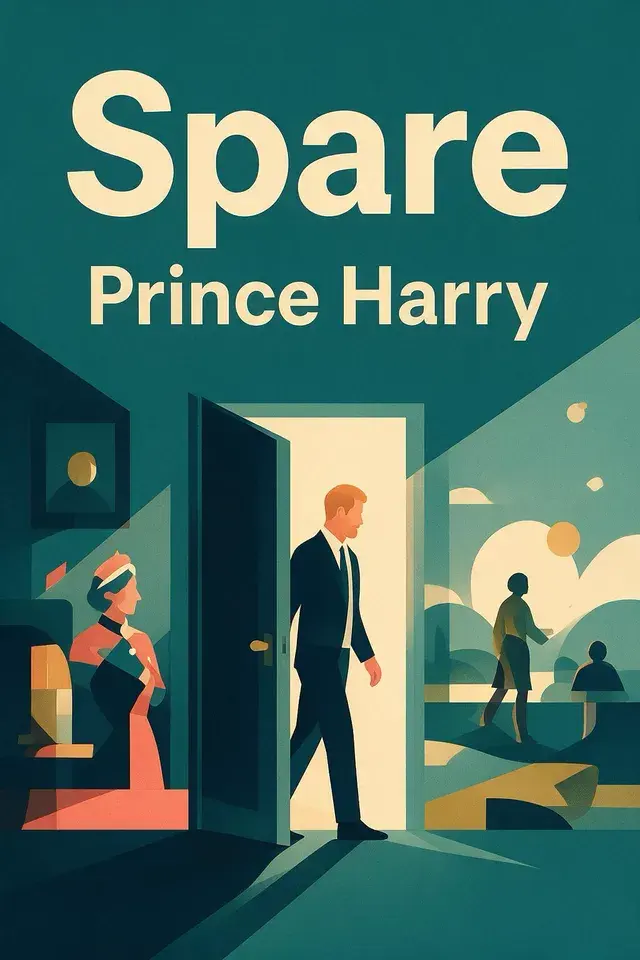
These ideas compress the book's argument without treating the author's view as settled fact. Use them as an orientation before reading the full work or listening in Wiseley.
The Heir and Spare distinction begins as accepted duty, but defines Harry through backup, bodily usefulness, and the identity of being second.
Harry’s grief lacks a usable language, so mischief, danger, sport, substances, secrecy, and imagined signs become ways to manage pain.
Australia gives Harry competence, privacy, and the temporary identity of Spike, while Palace correspondence and paparazzi restore Prince Harry.
Civilian suffering and disputed interpretations expose the limits of certainty and the contradiction in claiming to win hearts and minds.
Invictus turns wounded-veteran sport into public recovery and gives Harry a civilian mission after formal military service.
Harry portrays racist and misogynistic coverage as an invasive machinery that threatens safety, family, and private reality.
Exit negotiations collapse when security and funding are withdrawn, pushing the family through North American refuges toward independent life and lost royal roles.
Lilibet’s birth and Meghan’s affirmation establish fatherhood as an identity beyond the Spare, grounded in presence, protection, and love.
How Spare builds its case
Follow how the book develops its argument. Each note is a brief orientation, not a replacement for the chapter.
The Spare and the Past
A few hours after his grandfather’s funeral, Harry waits at Frogmore for a secret meeting with his father and older brother. Frogmore was supposed to last forever, but became a brief stop after he and his wife fled in January 2020, fearing for their sanity and physical safety.
Grief Behind Royal Walls
After the funeral and its immediate school aftermath, Harry faces a harder problem: he has no dependable language for grief. Care exists, but it is intermittent or indirect.
Work, Africa, and Purpose
At the end of Eton, Harry faces the first adult question that feels truly his: what comes next? His peers are moving toward university, but he is not drawn to an academic route.
Shame, Sandhurst, and Service
Harry entered the Army hoping to become useful, disciplined, and temporarily anonymous. He wanted clear rules, where service could replace the identity of a prince and tabloid subject.
War as Refuge and Reckoning
Harry’s first Afghan tour is presented as the answer to a private hunger: a chance to be useful, anonymous, and absorbed in work. Yet it tests the moral confidence that makes the work feel meaningful.
The War Comes Home
After the first Afghan tour ends by force, Harry returns to a civilian world that feels noisy and unreal. Friends discuss ordinary plans while he moves between panic and anger.
Building a Life Beyond War
When the Army closed the door on another combat tour, Harry faced more than a career change. Desk duties seemed pointless, and he kept asking to return to war.
Love Against the Machine
After their relationship became serious, love turned into logistics. Harry and Meghan made a two-week rule: they would not go longer than two weeks without seeing each other.
Leaving Without Protection
After the wedding, Harry says the question was whether royal life would protect his family or protect its own image. The ceremony was beautiful but ringed by snipers because police had detected unprecedented threats, and even the honeymoon required a disguised vehicle.
A Life Beyond the Spare
By the end of Spare, Harry turns from institutional reconciliation toward self-authorship. He speaks in his own voice, contests the media power he believes harmed his family, and builds a life with Meghan and their children.