
Six lenses that should remain in tension
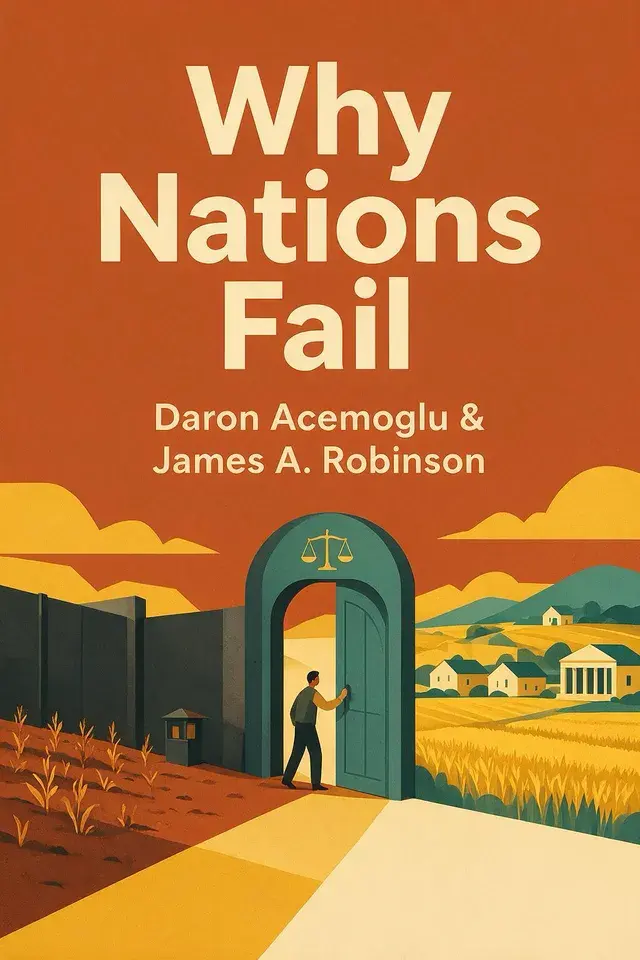
Guns, Germs, and Steel emphasizes environmental and geographic conditions in long-run differences. Why Nations Fail centers political and economic institutions. Sapiens offers a sweeping account of cooperation through shared imagined orders. Factfulness challenges dramatic intuitions with data habits. The Righteous Mind explains moral judgment and group division through psychology. Killers of the Flower Moon grounds power in a specific history of wealth, racism, law, and murder. Each illuminates something and risks hiding something when made total.
- Conditions: what opportunities and constraints existed?
- Institutions: who could make, enforce, and benefit from rules?
- Stories: what shared meanings coordinated action?
- Evidence: which intuition survives measurement?
- Psychology: why do groups perceive fairness and threat differently?
- Case: how did these forces operate in one place and time?
Compare explanations instead of collecting conclusions
Choose one event or difference and ask what each lens notices first. Geography may explain constraints without explaining later institutional choices. Institutions may explain incentives without capturing identity or moral conviction. Psychology may explain group attachment without explaining who controls land, law, or capital. A broad narrative may identify a pattern while smoothing over chronology and counterexample. The aim is not to average the books, but to learn where one explanation needs another.
- Write the book’s main causal claim in one sentence.
- Name the evidence that would weaken it.
- Add one voice, region, or mechanism the narrative leaves peripheral.
A reading order from wide to grounded
Begin with Factfulness to establish evidence habits. Read Guns, Germs, and Steel and Why Nations Fail as competing large-scale explanations. Add The Righteous Mind for group perception and moral disagreement. Read Sapiens last among the sweeping works so its narrative can be compared rather than absorbed as a default. Finish with Killers of the Flower Moon, where institutions, prejudice, wealth, and individual action become concrete and morally specific.
- Wide lens first only when a counter-lens follows.
- Case study last to test whether abstractions preserve human stakes.
- Treat every grand theory as an argument with scope, not a map without borders.
Sources and scope
Book ideas are attributed to their authors. External evidence is linked directly when a claim needs more than the source book.
- Guns, Germs, and Steel: Source for Jared Diamond’s environmental and geographic thesis; presented as a debated argument.
- Why Nations Fail: Source for the institutional account of long-run prosperity and failure.
- Sapiens: A Brief History of Humankind: Source for Yuval Noah Harari’s broad and debated narrative of cooperation and imagined orders.
- Factfulness: Source for data habits and the critique of dramatic global intuitions.
- The Righteous Mind: Source for moral psychology, intuition, reasoning, and group division.
- Killers of the Flower Moon: Source for the specific historical case of Osage wealth, murder, racism, law, and investigation.
To report a factual, attribution, rights, or accessibility concern, email hello@wiseley.app.
Questions readers ask
Which book should I start with?
Factfulness is a useful warm-up for evidence habits. If you want the central debate, read Guns, Germs, and Steel beside Why Nations Fail rather than choosing one in isolation.
Are the big historical theses settled?
No. These works are influential arguments with substantial criticism and scope limits. A responsible guide attributes claims, includes counterpoints, and avoids presenting a single cause as consensus.