
Check whether the books ask the same question
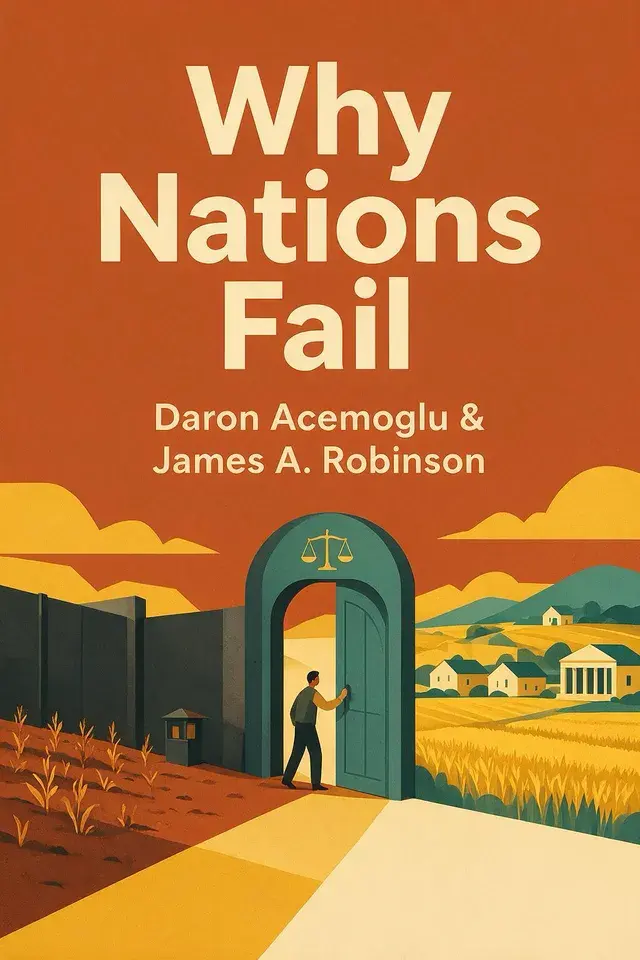
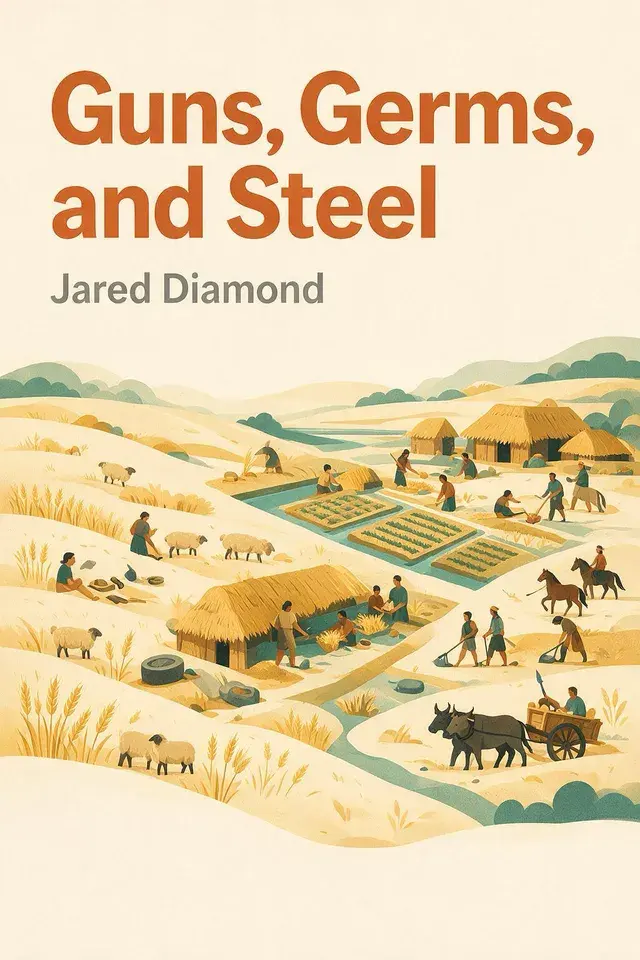
Write each book’s central question without its answer. Why Nations Fail asks how political and economic institutions shape persistent prosperity and poverty. Guns, Germs, and Steel asks why large material inequalities emerged among societies across very long spans of time. The Dawn of Everything challenges linear stories that treat farming, cities, hierarchy, and the state as a single inevitable sequence. These projects overlap, but they do not begin at the same scale or promise the same kind of explanation.
- Name the outcome each author is trying to explain.
- Record the time span and geographic scale.
- Do not force a disagreement until the questions genuinely overlap.
Map evidence to the claim it carries
Create a three-column table for cases, evidence, and inference. A comparison across neighboring regions may isolate institutions while saying little about deep prehistory. Archaeological variation can weaken a universal sequence without identifying the dominant cause of modern income differences. Environmental constraints can shape available paths without determining every institutional choice. Mark whether each example illustrates a possibility, tests a rival explanation, or supports a broad causal claim. The same vivid case should not silently perform all three jobs.
- Distinguish examples from comparative tests.
- Ask what evidence could count against the author’s thesis.
- Look for cases selected or omitted by both books.
Build a layered answer instead of naming a winner
Place causes in sequence: background conditions, available choices, institutions, shocks, and feedback over time. Then state where each book is most informative and where its lens becomes too coarse. A layered explanation can still contain genuine conflict; it simply refuses to treat geography, institutions, culture, and political experimentation as interchangeable variables. Finish with one unresolved case that both frameworks would need to explain. That open case is a better next reading question than a scoreboard.
- Order causes rather than piling them into one list.
- State the level where each framework has the most explanatory power.
- Keep one counterexample visible when writing your conclusion.
Sources and scope
Book ideas are attributed to their authors. External evidence is linked directly when a claim needs more than the source book.
- Why Nations Fail: Grounds the institutional framework, comparative cases, and claims about political and economic incentives.
- Guns, Germs, and Steel: Grounds the long-run environmental and geographic framework used in the comparison method.
- The Dawn of Everything: Grounds the critique of linear social evolution and the emphasis on political experimentation and archaeological variety.
To report a factual, attribution, rights, or accessibility concern, email hello@wiseley.app.
Questions readers ask
Can two conflicting history books both be useful?
Yes. They may explain different scales, periods, or mechanisms. Usefulness does not erase contradiction, but it helps locate exactly where the contradiction begins.
How do I avoid choosing the argument I already prefer?
Write the strongest disconfirming case for each thesis before your conclusion, and apply the same evidence standard to both authors.