
1. Define the floor, not the fantasy
Write the version you hope to do on an ordinary day, then reduce it until it remains credible on a tired day. “Exercise for forty minutes” might become “put on shoes and walk to the corner.” The small version is not a trick or a new standard of excellence. It is the floor that preserves contact with the behavior. A floor works only when completing it genuinely counts; secretly treating it as failure restores the pressure you were trying to remove.
- Name the full version and the minimum version separately.
- Make the minimum observable: one page, one email draft, five minutes, one prepared ingredient.
- Never increase the minimum in the middle of a difficult week.
2. Give the habit a dependable home
Attach the minimum version to a moment that already happens: after starting the kettle, after closing the laptop, or after placing a child’s lunchbox by the door. Then prepare the environment so the next action is visible and easy. Avoid vague anchors such as “when I have time.” A useful anchor tells you where and when the behavior begins, while a prepared environment removes one decision that could delay it.
- Anchor formula: After I do X, I will do the minimum version of Y.
- Remove one piece of friction the evening before.
- Mark completion immediately with a simple check, note, or moment of satisfaction.
3. Write the recovery rule now
A resilient habit has instructions for interruption. Use: “If I miss the habit, the next scheduled opportunity is a minimum-version day.” This rule prevents compensation, shame, and heroic catch-up from making the return harder. Review the week by asking what failed—memory, ability, environment, timing, or reward. Change one condition, not your identity. The goal of the first month is to become someone who returns reliably, not someone who never encounters disruption.
- Do not repay missed days with double effort.
- Keep a visible record of restarts, not only streak length.
- Increase the full version only after the minimum version feels dependable.
Sources and scope
Book ideas are attributed to their authors. External evidence is linked directly when a claim needs more than the source book.
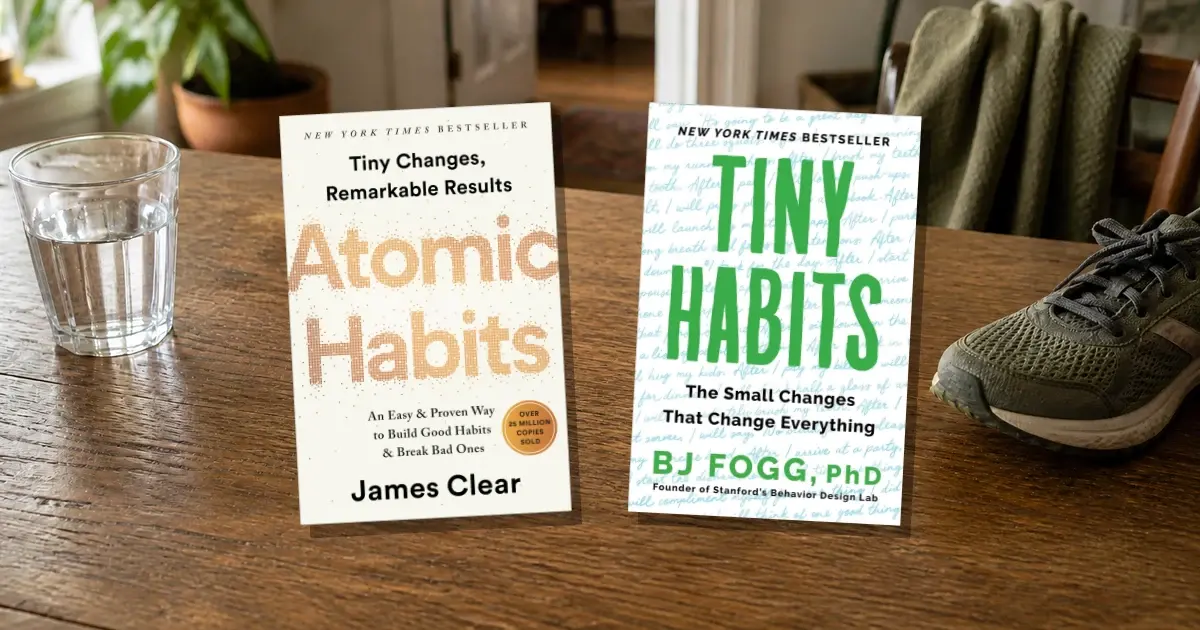
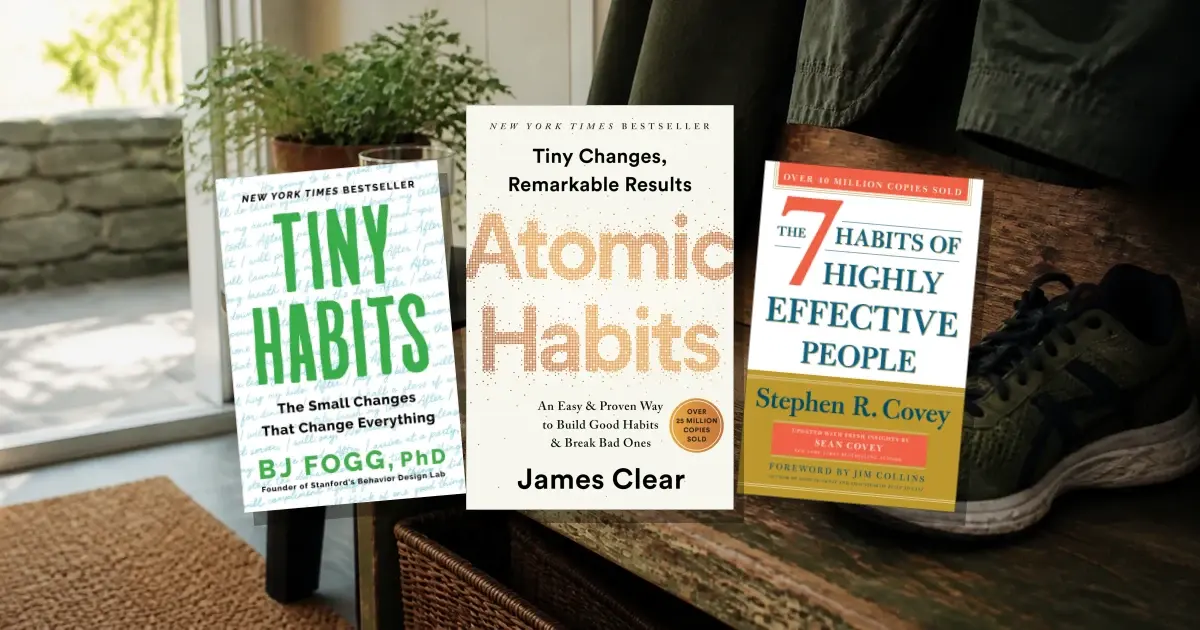
- Atomic Habits: Grounds the cue, environment, friction, identity, and review elements.
- Tiny Habits: Grounds the minimum behavior, anchor, ability, and immediate reinforcement elements.
- The 7 Habits of Highly Effective People: Grounds the connection between repeated action, priorities, and deliberate self-management.
To report a factual, attribution, rights, or accessibility concern, email hello@wiseley.app.
Questions readers ask
Is a tiny habit too small to matter?
It is too small to deliver the whole result, but large enough to preserve the cue, reduce avoidance, and create a clean place to grow. Its first job is reliability.
What if I keep forgetting the minimum version?
Change the anchor or make the cue visible before increasing motivation. Forgetting usually means the behavior has no reliable place, not that you need a harsher promise.