
A national history has to choose a frame
No single-volume history can give every life and institution equal space. The useful question is what organizes the selection: political ideals, power, migration, or a particular injustice. Read this shelf as a set of perspectives and scales, not a contest for the one book that contains the whole country.
Two broad frames and three closer views
The broad histories provide orientation. The more focused works slow down events and experiences that a survey must compress. Neither scale makes the other unnecessary.
Follow ideals into conflict
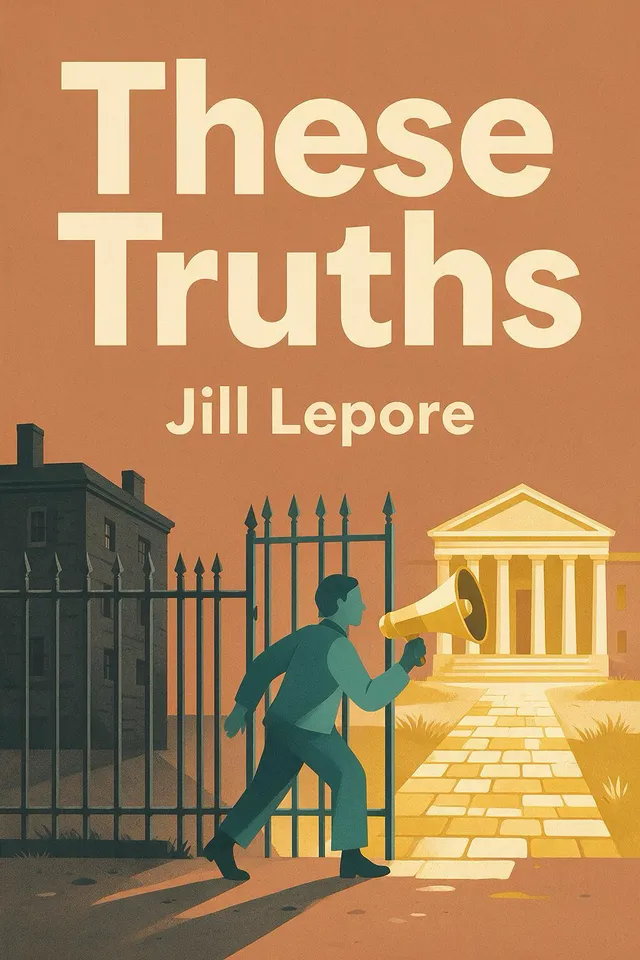
These Truths · Jill Lepore
Jill Lepore organizes a national history around political ideas and the recurring conflicts that expose their contradictions. It supplies a broad frame within which a reader can place more focused accounts. Notice what a narrative of ideals highlights and what its scale must pass over.
- Read it for
- A broad narrative of American political ideals and their contested application.
- Keep in mind
- A single-volume survey necessarily compresses regional, social, and local histories.
Ask who pays for the familiar story
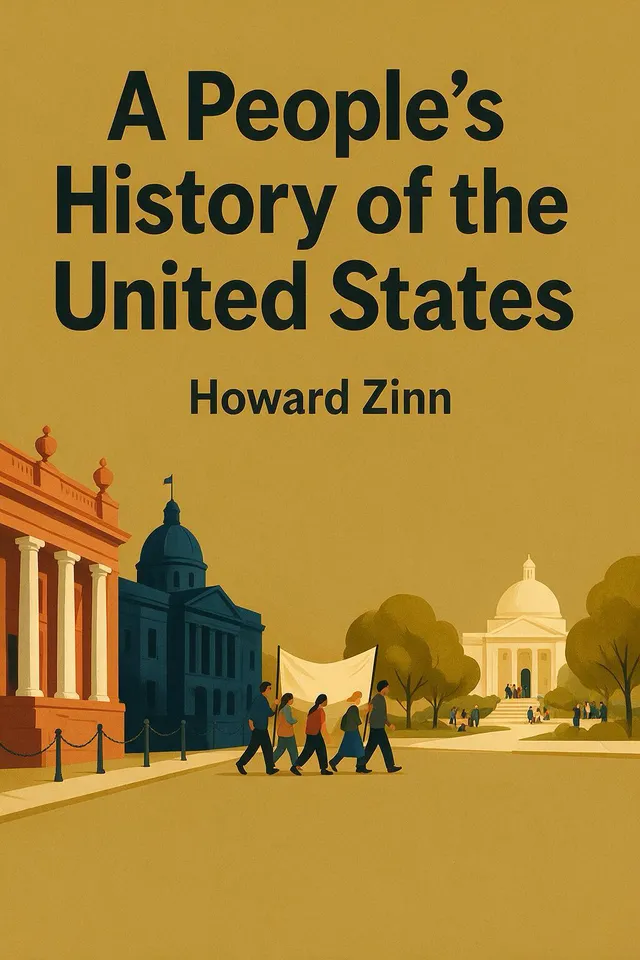
A People's History of the United States · Howard Zinn
Howard Zinn shifts attention toward people marginalized by conventional accounts of national progress and power. Read the book’s declared perspective as part of its method. Its value is not that it removes interpretation, but that it makes a different selection of conflicts central.
- Read it for
- An explicitly critical history centered on power and resistance.
- Keep in mind
- Its interpretive commitments should be examined alongside its evidence and other historical accounts.
Let migration take the time it needs
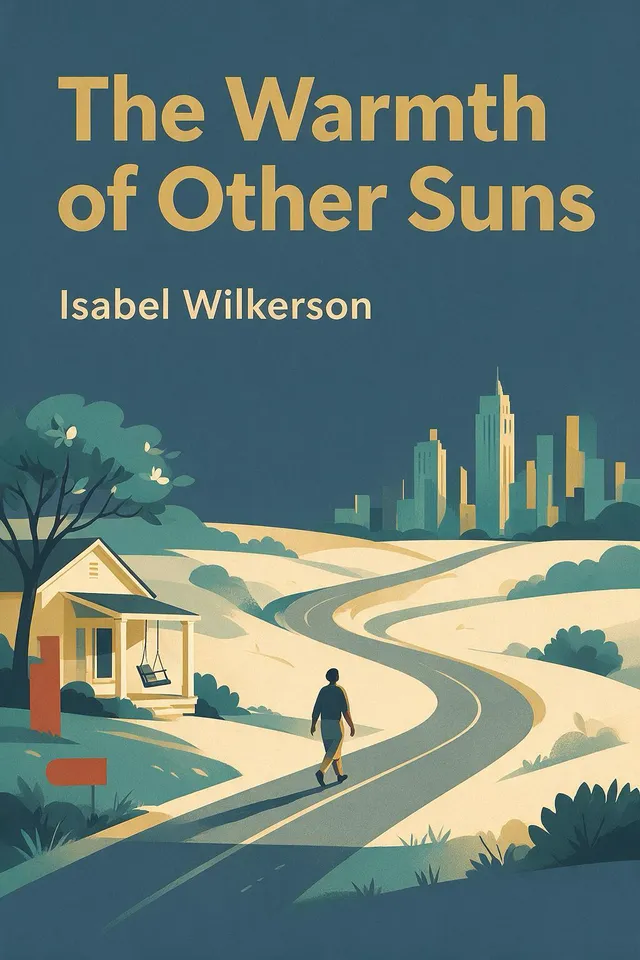
The Warmth of Other Suns · Isabel Wilkerson
Isabel Wilkerson follows the Great Migration through the lives of three people and the larger movement around them. The life stories give movement across a map a social and emotional texture. They do not turn three experiences into every migrant’s experience.
- Read it for
- A sustained account of migration through particular lives and wider history.
- Keep in mind
- The selected life stories illuminate a larger movement without representing all of it.
Change the position from which expansion is narrated
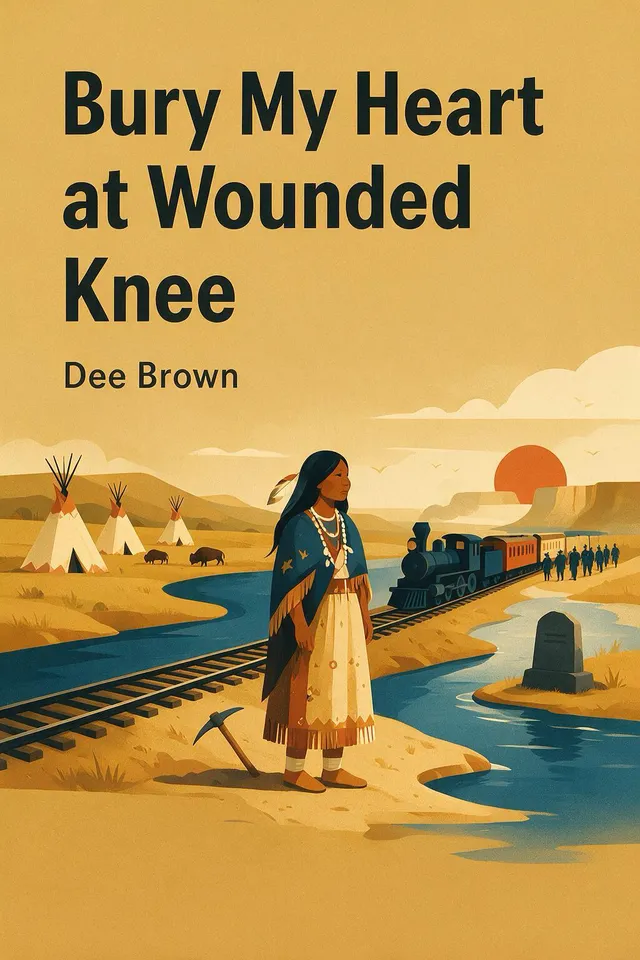
Bury My Heart at Wounded Knee · Dee Brown
Dee Brown recounts the displacement and destruction of Native peoples in the American West. Read with attention to specific nations, places, and events rather than treating Indigenous history as a single undifferentiated story. The book’s historical influence is also part of its context.
- Read it for
- A challenge to celebratory accounts of westward expansion.
- Keep in mind
- An influential older synthesis should be supplemented by nation-specific histories and Indigenous scholarship.
Concentrate on the mechanisms around a crime
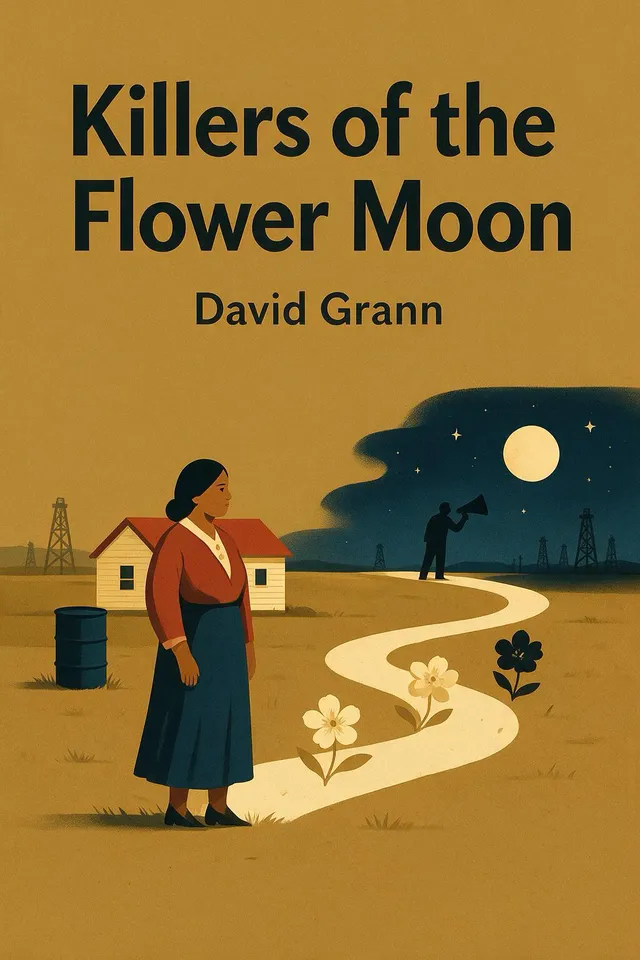
Killers of the Flower Moon · David Grann
David Grann investigates the Osage murders and the institutions, money, and relationships around them. Its focused scale helps show how a crime can depend on a wider social order. Keep the Osage experience in view alongside the investigation.
- Read it for
- A close historical account of violence, wealth, and institutional failure.
- Keep in mind
- One investigation cannot encompass the full history of the Osage Nation.
Move between the broad frame and the close account
Use a survey for orientation, then choose one focused work and return to the survey with new questions. The route below names historical subjects rather than claiming a continuous chronology.
- National frame
Ideals and contested power
Compare the organizing choices of the two broad histories.
Explore These Truths - The nineteenth-century West
Expansion seen from dispossession
Ask whose terms are used to describe a place and an event.
Explore Bury My Heart at Wounded Knee - The Great Migration
Movement through particular lives
Keep the individual story beside the scale of the movement.
Explore The Warmth of Other Suns - The Osage murders
Follow the institutions around the case
Notice which mechanisms a national survey has less space to explain.
Explore Killers of the Flower Moon
Sources and scope
Book ideas are attributed to their authors. External evidence is linked directly when a claim needs more than the source book.
- These Truths: Jill Lepore organizes a national history around political ideas and the recurring conflicts that expose their contradictions. It supplies a broad frame within which a reader can place more focused accounts. Notice what a narrative of ideals highlights and what its scale must pass over. Scope: A single-volume survey necessarily compresses regional, social, and local histories.
- A People's History of the United States: Howard Zinn shifts attention toward people marginalized by conventional accounts of national progress and power. Read the book’s declared perspective as part of its method. Its value is not that it removes interpretation, but that it makes a different selection of conflicts central. Scope: Its interpretive commitments should be examined alongside its evidence and other historical accounts.
- The Warmth of Other Suns: Isabel Wilkerson follows the Great Migration through the lives of three people and the larger movement around them. The life stories give movement across a map a social and emotional texture. They do not turn three experiences into every migrant’s experience. Scope: The selected life stories illuminate a larger movement without representing all of it.
- Bury My Heart at Wounded Knee: Dee Brown recounts the displacement and destruction of Native peoples in the American West. Read with attention to specific nations, places, and events rather than treating Indigenous history as a single undifferentiated story. The book’s historical influence is also part of its context. Scope: An influential older synthesis should be supplemented by nation-specific histories and Indigenous scholarship.
- Killers of the Flower Moon: David Grann investigates the Osage murders and the institutions, money, and relationships around them. Its focused scale helps show how a crime can depend on a wider social order. Keep the Osage experience in view alongside the investigation. Scope: One investigation cannot encompass the full history of the Osage Nation.
To report a factual, attribution, rights, or accessibility concern, email hello@wiseley.app.