What you'll learn
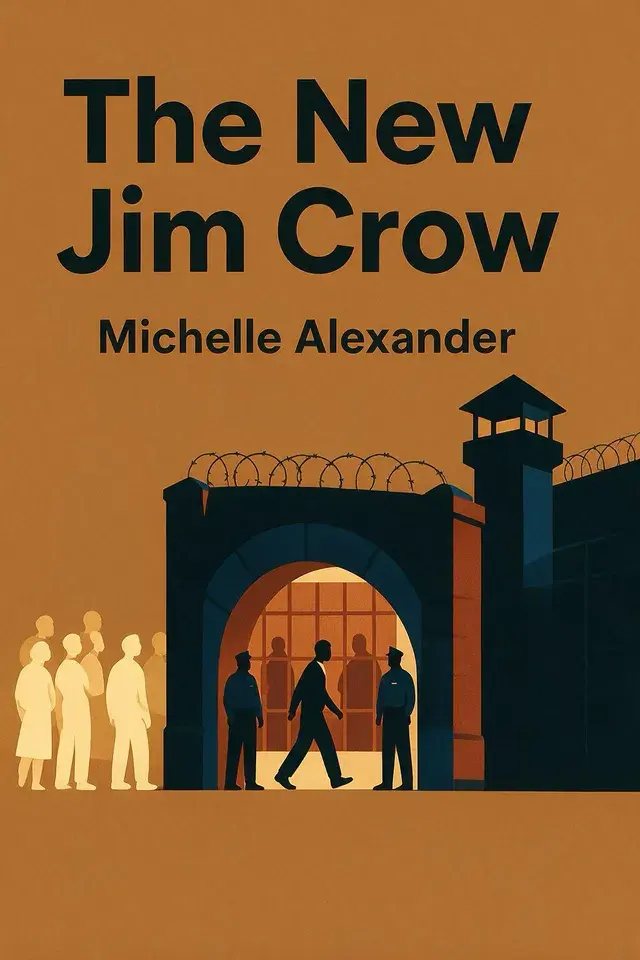
Key ideas from The New Jim Crow
These ideas compress the book's argument without treating the author's view as settled fact. Use them as an orientation before reading the full work or listening in Wiseley.
Mass incarceration is defined as a racial caste system extending beyond prison into law, stigma, and permanent exclusion.
American racial control survives by changing form, moving from slavery to convict leasing, Jim Crow, and the emerging system of mass incarceration.
The drug war turns low-suspicion encounters into high-volume arrests, even though most stops yield no drugs.
Comparable drug-use patterns across races contrast with concentrated enforcement, making discretion a central source of unequal outcomes.
A felony record extends punishment through housing, employment, benefits, voting, and surveillance after prison ends.
Mass incarceration survives through racialized consensus and institutional interests, so isolated reforms can be absorbed without changing the system.
An interracial coalition must replace racial bribes with shared material interests and a human-rights vision.
How The New Jim Crow builds its case
Follow how the book develops its argument. Each note is a brief orientation, not a replacement for the chapter.
The Caste System in Plain Sight
Consider Jarvious Cotton, a man who cannot vote because he is a felon on parole. His family’s history traces a disturbing continuity: ancestors were excluded through slavery, then through Klan violence and intimidation, poll taxes, and literacy tests.
How Racial Control Reinvents Itself
The central lesson of this chapter is that racial control in the United States has survived by changing form. When slavery became untenable, a new system was built.
The Machinery of the Drug War
Television often presents criminal justice as a clean sequence: a dangerous person is identified, arrested, tried, and convicted. The drug war operates differently.
Why the System Looks Colorblind
Why can a system that speaks in neutral terms produce such uneven racial results? Alexander begins with comparative drug evidence.
The Felony Label After Release
Release from prison is not the same as release from punishment. Alexander opens with Frederick Douglass’s description of emancipation: Black people were formally free, yet could still lose voting and legal rights, be presumed enslaved, or be blocked from testifying without white intervention.
From Stigma to a Locked Cage
Earlier chapters traced how formally neutral institutions can move a person from police contact to a felony label, then carry that label beyond prison. This chapter asks what happens when those consequences become a community environment.
Why Reform Keeps Stalling
To understand why reform keeps stalling, begin with Jena 6. More than ten thousand people came to a Louisiana town of roughly three thousand to protest attempted-murder charges against six Black teenagers accused of beating a white classmate.
Freedom Must Be Collective
Once mass incarceration is understood as a racial caste system, ending it cannot be the whole political task. If the racial divisions and dehumanization beneath it remain, another system of control could emerge.