Choose by how deep you want to go
Neuroscience writing ranges from hopeful storytelling to hard philosophical problems. The honest way to choose is to ask what you want from the subject: practical encouragement that change is possible, human stories that make mechanisms memorable, a revised picture of who is running your choices, or the deepest question of all — why there is experience at all.
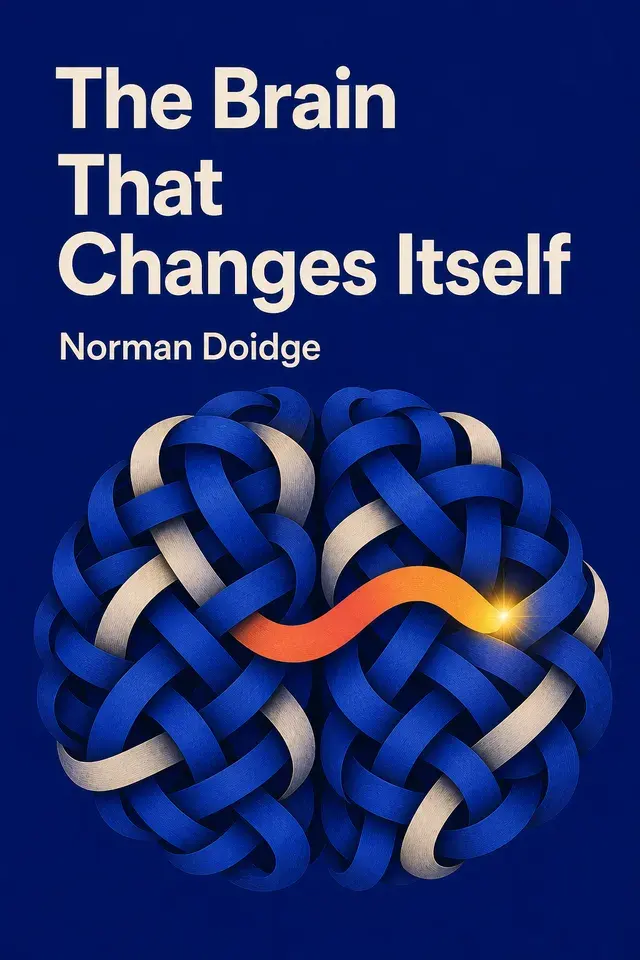
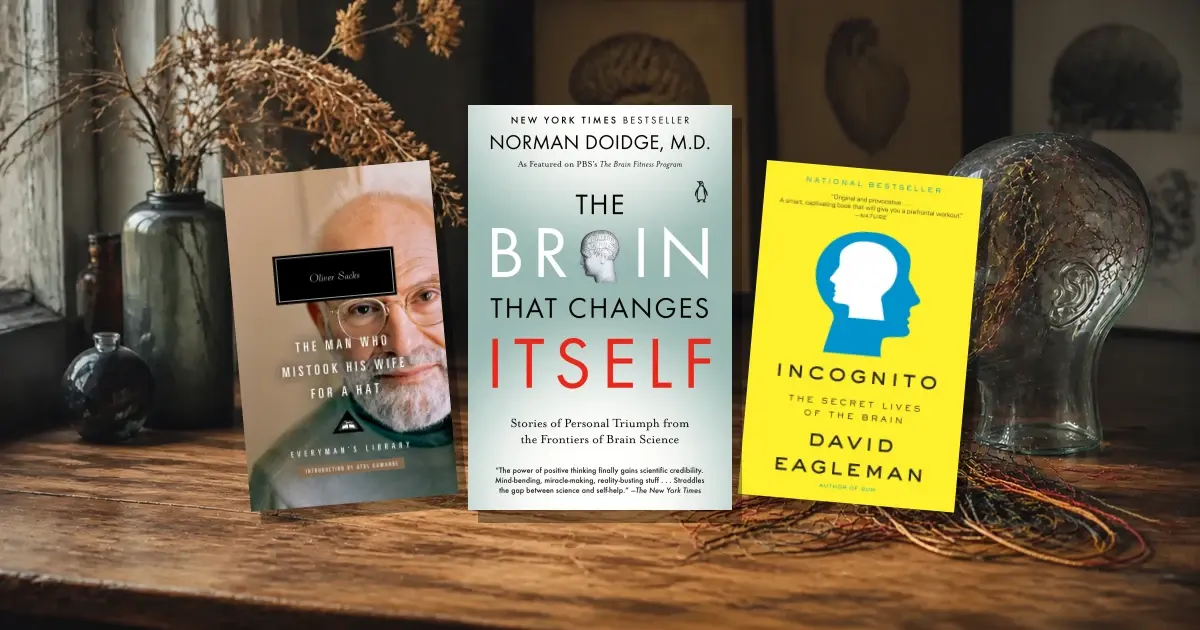
- Want proof brains can rewire at any age: The Brain That Changes Itself.
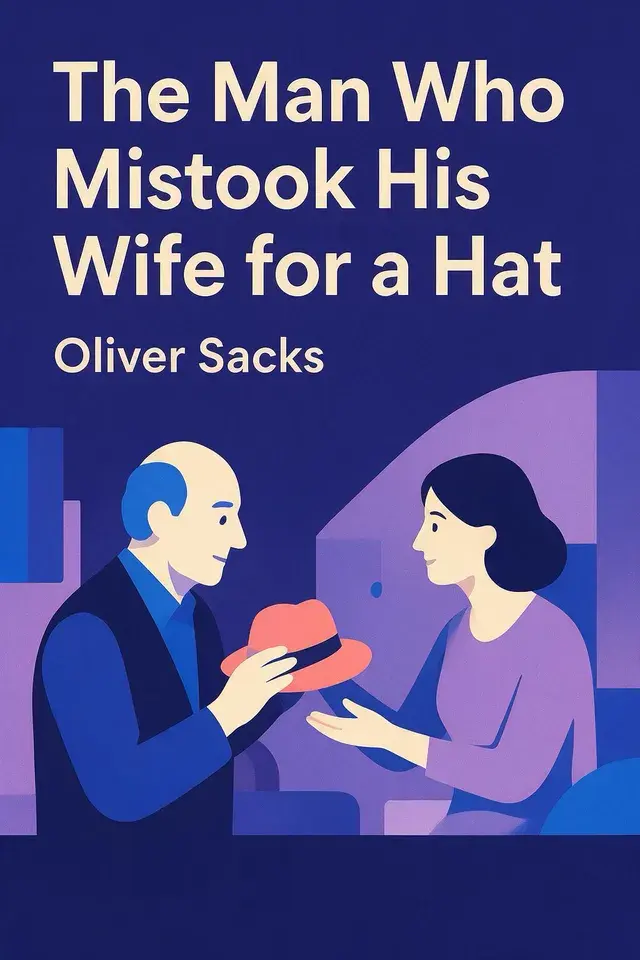
- Prefer unforgettable human cases over theory: The Man Who Mistook His Wife for a Hat.
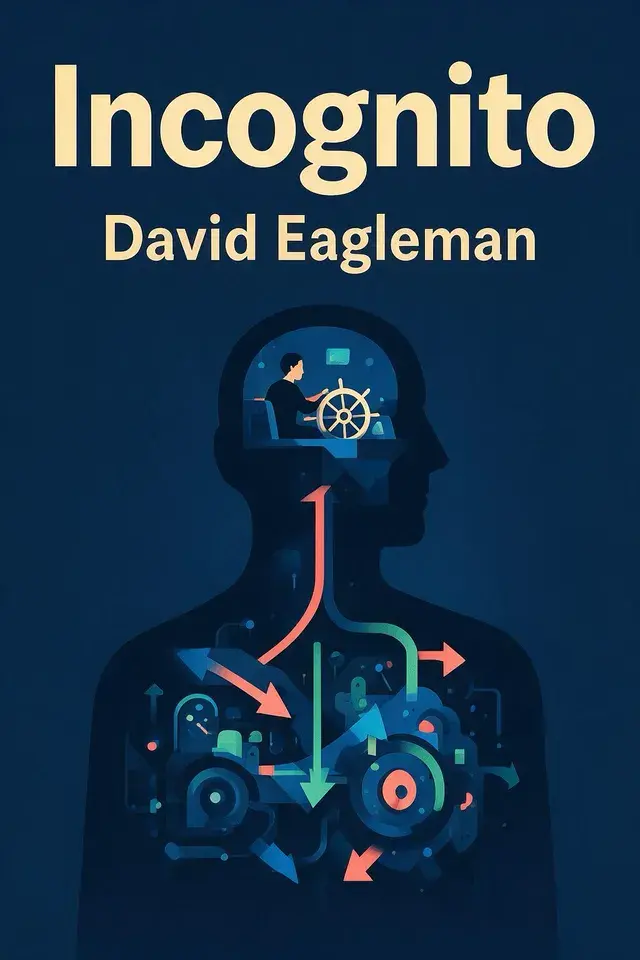
- Curious how much happens without your awareness: Incognito.
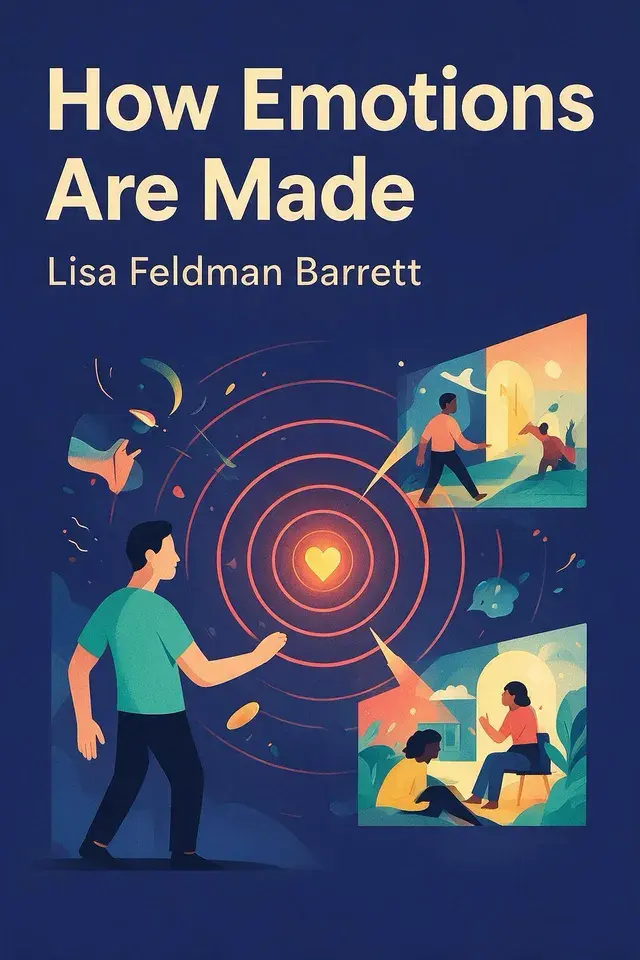
- Ready to rethink what emotions are: How Emotions Are Made.
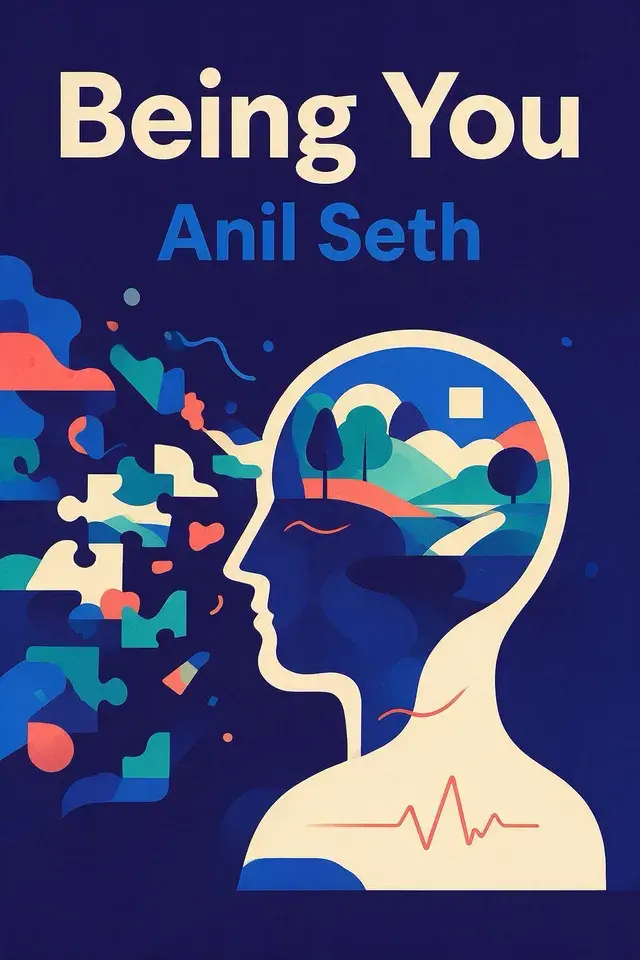
- Want the frontier problem of consciousness itself: Being You.
What each book adds
Doidge documents neuroplasticity through cases — sensory substitution, constraint-induced stroke recovery, learned nonuse, plasticity's dark entrenchment of bad habits — with the caveat that adult brains reorganize when work genuinely demands it. Sacks joins neurology to biography: lost recent memory with intact feeling, the body map gone silent without proprioception, tic and savant syndromes read as whole persons rather than deficits. Eagleman maps the unconscious machinery: perception as construction, learning without awareness, rival neural coalitions, and what all this does to legal responsibility. Barrett replaces the classical emotion fingerprint with prediction: allostasis, interoception, and concepts turning bodily signals into situated feelings. Seth closes the loop with perception as controlled hallucination and the self as layered prediction, from interoceptive body-budgeting up to free will as a perception of desire-aligned action.
- Best first brain book: Incognito, for scope and readability in equal measure.
- Best for empathy alongside mechanism: Sacks's clinical tales.
- Most conceptually demanding: Being You — worth the effort after any other book here.
A reading order from stories to self
Stories first, abstractions later works well. Doidge and Sacks train the imagination with cases; Eagleman then reframes everyday experience using that store of examples; Barrett revises what you thought emotions were; Seth finishes by asking what makes any experience real. Readers going straight for consciousness can start and end with Seth, returning to the others as companions.
- Note one belief each book overturns about your own mind.
- Try Barrett's exercise of coining finer labels for moods.
- Re-read Sacks after Seth: personhood reads differently against prediction.
Sources and scope
Book ideas are attributed to their authors. External evidence is linked directly when a claim needs more than the source book.
- The Brain That Changes Itself: Source for cortical-map reorganization, constraint-induced therapy, learned nonuse, plasticity's downsides, and lifelong change.
- The Man Who Mistook His Wife for a Hat: Source for memory and continuity, proprioception, perception through action, excesses, savant minds, and humane care.
- Incognito: Source for constructed perception, unconscious learning, rival neural coalitions, and responsibility without metaphysical blame.
- How Emotions Are Made: Source for the missing emotion fingerprint, allostasis and interoception, concepts as categorization, and levers for emotional change.
- Being You: Source for controlled hallucination, layered selfhood, interoceptive grounding, volition as perception, and machine-mind uncertainty.
To report a factual, attribution, rights, or accessibility concern, email hello@wiseley.app.
Questions readers ask
Which neuroscience book is best for beginners?
Incognito offers the friendliest entry: every chapter starts from familiar experience — seeing, desiring, choosing — then reveals the unconscious machinery underneath. The Brain That Changes Itself is equally readable and more hopeful if your interest is recovery, learning, or aging rather than the self's illusion of sovereignty.
How do Barrett's and Seth's theories relate?
Both are predictive-processing accounts: the brain constantly anticipates bodily and sensory signals rather than reacting to them. Barrett applies that frame to emotion categories; Seth extends it to selfhood, consciousness level, and free will. Reading them together shows one idea scaling from feelings to the entire experienced self.
Are these books too speculative?
They differ. Doidge's most dramatic cases and some plasticity claims have drawn criticism for optimism, while Barrett explicitly flags her illness chapter as her most speculative material. Sacks stays close to observation, and Seth is careful to separate measured results from interpretation — a good habit is reading each author's own caveats.