What you'll learn
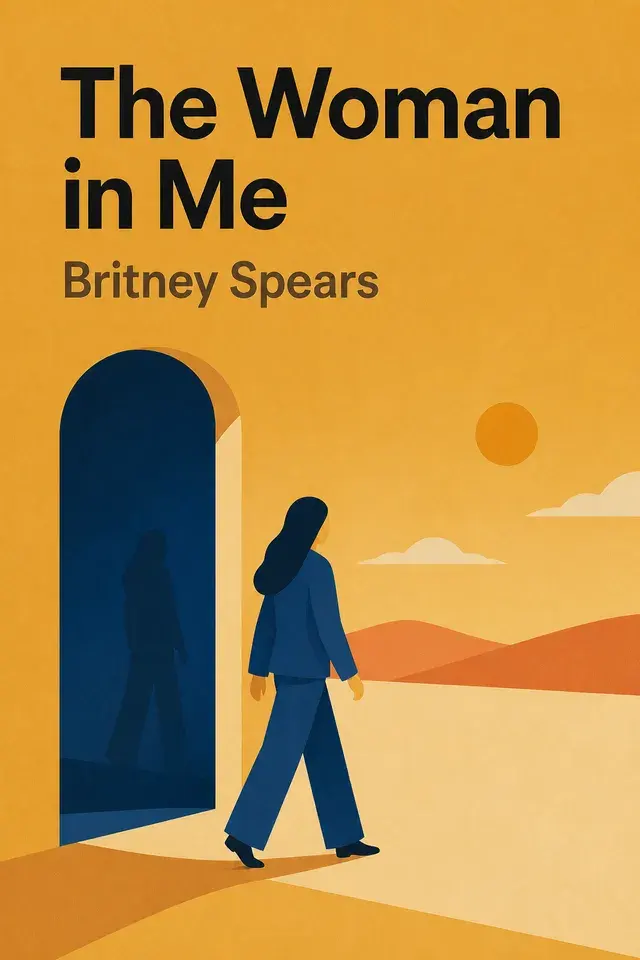
Key ideas from The Woman in Me
These ideas compress the book's argument without treating the author's view as settled fact. Use them as an orientation before reading the full work or listening in Wiseley.
Her childhood imagination turns performance into a bridge between an unsafe present and a self-created future.
The 2000 VMA backlash exposed a gendered demand that Spears be attractive and talented without appearing too sexual, dangerous, or self-defining.
The abortion becomes lasting reproductive grief because secrecy and pressure made the decision feel unlike one Spears would have made alone.
The divorce and custody battle turned Spears’s private family grief into a public argument about blame and maternal fitness.
Spears describes the conservatorship as linked control over her person and estate, imposed despite her objections and sustained beyond a brief recovery period.
Psychiatric judgment creates a no-win test: visible distress confirms incapacity, while performed calm is treated as recovery.
Post-conservatorship freedom grows through ordinary choices, creative play, music, marriage, boundaries, and a self-directed pace.
How The Woman in Me builds its case
Follow how the book develops its argument. Each note is a brief orientation, not a replacement for the chapter.
The Voice Beneath the Noise
The memoir begins not on a stage, but outside. Spears remembers lying on warm rocks near a neighbor’s pool in Louisiana, away from a home filled with parental fighting, fear, and an alcoholic father.
Training the Dream
Once singing had given Spears a private voice, performance began to acquire a schedule, a route, and a price. At five, she won a local dance competition with a top-hat-and-cane routine, then entered contests throughout the region.
The Price of Becoming Famous
Before Britney Spears became a household name, anonymity felt like freedom. She could make mistakes, face crowds who did not know her, and perform without protecting an established image.
Love, Loss, and the Public Story
By the time Justin Timberlake became central to Spears’s life, fame had made her both powerful and exposed. Yet she remembers their relationship as a private world built from shared history.
Learning to Resist the Script
After the breakup, Spears’s world grew smaller before it became freer. Heartbreak left her vulnerable.
Motherhood Under Constant Surveillance
Motherhood does not arrive as a simple refuge. Spears remembers pregnancy as pleasurable in intimate ways, especially through sex and food, but also as a time of irritability, isolation, and fierce protectiveness.
The Crisis Becomes a Custody Case
After her second son, Jayden, was nearly two months old, Spears filed for divorce in November 2006. She says her lawyer urged her to file first because she believed Kevin planned to file anyway, and she hoped to avoid public humiliation.
How Control Became a System
After the bathroom crisis, Spears’s story changes from a custody emergency into an administrative system. She says the SWAT intervention and involuntary hospitalization were followed by papers for a conservatorship.
A Career Inside the Cage
Once the conservatorship became routine, the most deceptive part of Spears’s life was its visible productivity. She kept working, performing, receiving awards, and caring about her sons.
When Saying No Became Possible
After years of doing what was expected, Spears says her Vegas life had become a performance of obedience. She smiled, nodded, and repeated the same show, while decisions about songs, schedules, and travel stayed outside her control.
Freedom, Grief, and Self-Definition
Freedom does not arrive as a clean return to the person Spears was before legal control. When she comes home, seeing her children, dogs, and house brings joy, yet her family’s welcome feels unsafe.