What you'll learn
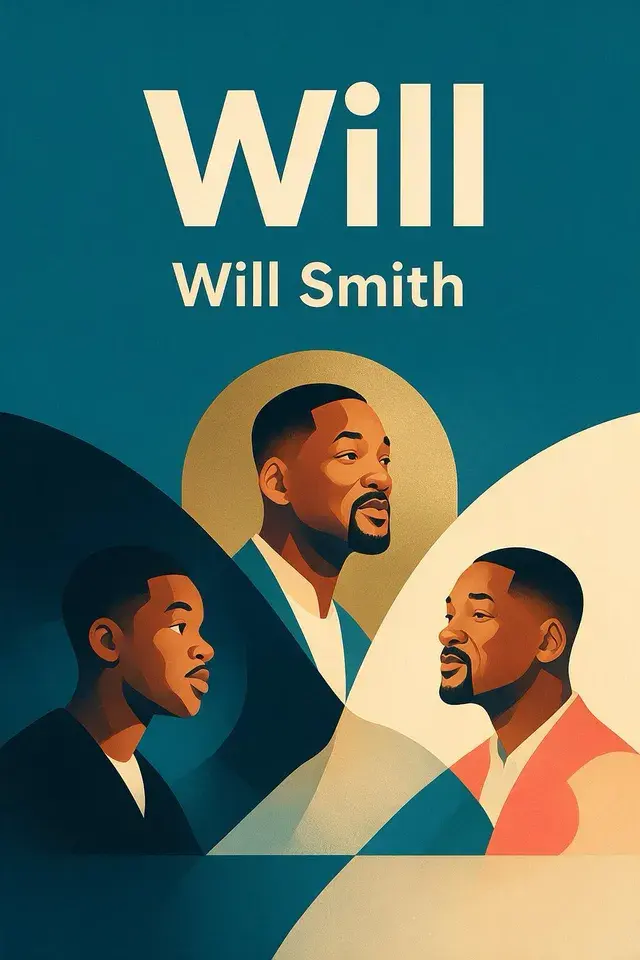
Key ideas from Will
These ideas compress the book's argument without treating the author's view as settled fact. Use them as an orientation before reading the full work or listening in Wiseley.
The brick-wall lesson converts an overwhelming task into one precise action, giving Will a lifelong model of persistence.
Manual promotion, contracts, distribution, and competent management reveal the infrastructure that turns recorded talent into a sustainable opportunity.
External success leaves insecurity untouched when money, sex, possessions, and Grammys become substitutes for emotional repair.
Method immersion earns serious recognition while eroding Will’s identity, sitcom instincts, and marriage, exposing the intimate cost of treating the self as programmable.
Bad Boys reveals stardom as collaborative craft: improvisation, preparation, physical image, and workable compromise turn chemistry into a movie-star breakthrough.
Will’s winning system treats provision and relentless work as love, but repeatedly overrides stability, consent, and separate family needs.
Willow’s protest teaches him that a child’s feelings cannot be subordinated to a parent’s promise or production plan.
Authenticity means honoring real yeses and nos while accepting that truthful boundaries can still disappoint people.
How Will builds its case
Follow how the book develops its argument. Each note is a brief orientation, not a replacement for the chapter.
Fear Builds the Performer
At eleven, Will Smith and his younger brother Harry were assigned a wall to rebuild after their father demolished a crumbling shop wall. They worked after school, on weekends, holidays, and through summer for nearly a year.
Hip-Hop Finds His Voice
Will’s artistic voice starts with a change in the household’s power map. When Paul moves in, he becomes the older brother Will never had and models protective calm.
Dreaming Past Permission
Will Smith and DJ Jazzy Jeff move toward a career by learning to make a room answer them. They perform at parties, dances, proms, fundraisers, and other community events, building a reputation through repetition.
Success Turns Against Itself
At twenty, Will has become what he once imagined: world-famous, Grammy-winning, and rich enough to buy Gigi an apartment and give Melanie a safe home. Yet success has not made him feel safe.
Becoming the Next Thing
After financial and professional collapse, Will’s second beginning starts with a conversation he barely remembers. Backstage at The Arsenio Hall Show, Benny Medina asks whether he can act.
Stardom, Story, and Scale
Will’s next ascent starts in an emotionally untidy place. Five days after receiving divorce papers, and after months without contact, he called Jada.
The Fight Camp and Family
This chapter places two kinds of discipline side by side. The first is embodied, collective, and organized around a purpose larger than personal success.
The Mutiny of Feelings
Will’s family looks most convincing at the moment it becomes least sustainable. In his account, he has built a blended household that seems to defeat ordinary limits.
Stillness, Surrender, and Love
Late in the memoir, Will’s old survival strategy begins to lose its fuel. Fame, work, achievement, and control have kept him moving, but none has made him finally secure.