What you'll learn
Key ideas from Crying in H Mart
These ideas compress the book's argument without treating the author's view as settled fact. Use them as an orientation before reading the full work or listening in Wiseley.
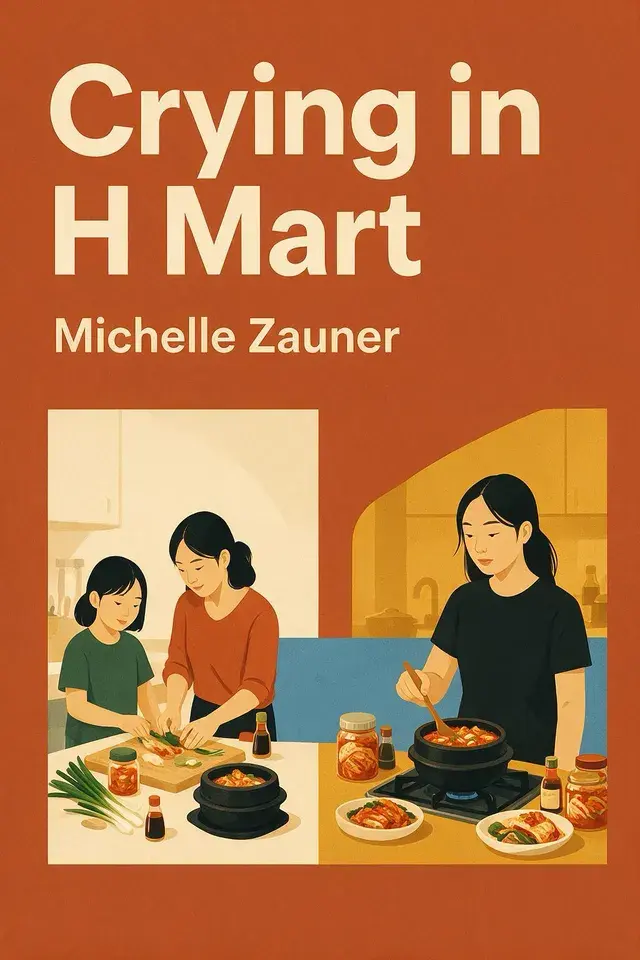
Food gives Zauner emotional cultural fluency and a durable connection to her mother despite limited language.
Music supplies survival, representation, and identity, while DIY labor makes an artistic life materially imaginable without making it secure.
The narrator turns guilt into presence by quitting work, returning to Eugene, and treating food and domestic care as repair.
Cultural knowledge can protect, exclude, and remain contested; shared labor sustains treatment without guaranteeing recovery.
The mother’s skepticism about chemotherapy turns treatment into a contested decision about autonomy, suffering, and living.
The mother’s spirituality, jewelry, and intuitive cooking become forms of inheritance that outlast direct instruction.
Funeral choices become an attempt to interpret the dead, while the “lovely” and “loving” mismatch exposes grief’s loss of control.
Public art and the Seoul reunion fulfill ambition while leaving absence visible and carrying grief forward as culture.
How Crying in H Mart builds its case
Follow how the book develops its argument. Each note is a brief orientation, not a replacement for the chapter.
A Mother Tongue of Food
Zauner opens by crying in H Mart, where ordinary groceries suddenly restore her mother’s presence. The banchan refrigerators recall soy-sauce eggs and cold radish soup.
Rebellion, Music, and Distance
By adolescence, Zauner wants to escape home, even though she does not yet see how much she depends on what she rejects. She remembers herself as reckless and intensely emotional.
Return Home, Return to Care
The diagnosis turns the narrator’s guilt into a project. At twenty-five, she sees the illness not only as danger but as an account coming due.
The Labor of Keeping Alive
After hospitalization, caregiving becomes a household system rather than one emergency. Friends, relatives, and hospital workers arrange a rotation of Korean women, including Kye, LA Kim, and possibly Nami.
Choosing Life, Making Time
Years before her mother became sick, Michelle played a game with Eunmi in which four animals represented competing priorities. She gave up pride, wealth, and career before keeping the monkey, which Eunmi interpreted as a baby or intimate human bond.
A Wedding Against Death
By the time Michelle marries Peter, the question is no longer whether he will stay. His long-distance travel, patient listening, and willingness to enter her family’s crisis have made his presence a form of evidence.
What Grief Leaves Behind
After her mother’s death, Zauner finds that mourning becomes a chain of decisions. Her father handles most arrangements, but her mother left only one clear request: cremation.
Fermenting a Future
After ten months of feeling captive in the house, Michelle Zauner and Peter leave Eugene for New York and ordinary jobs. Before going, Zauner takes exhausting kitchen shifts and wonders whether overwork is self-punishment for failing as a caretaker or a way to avoid what would surface if she slowed down.