The quick answer
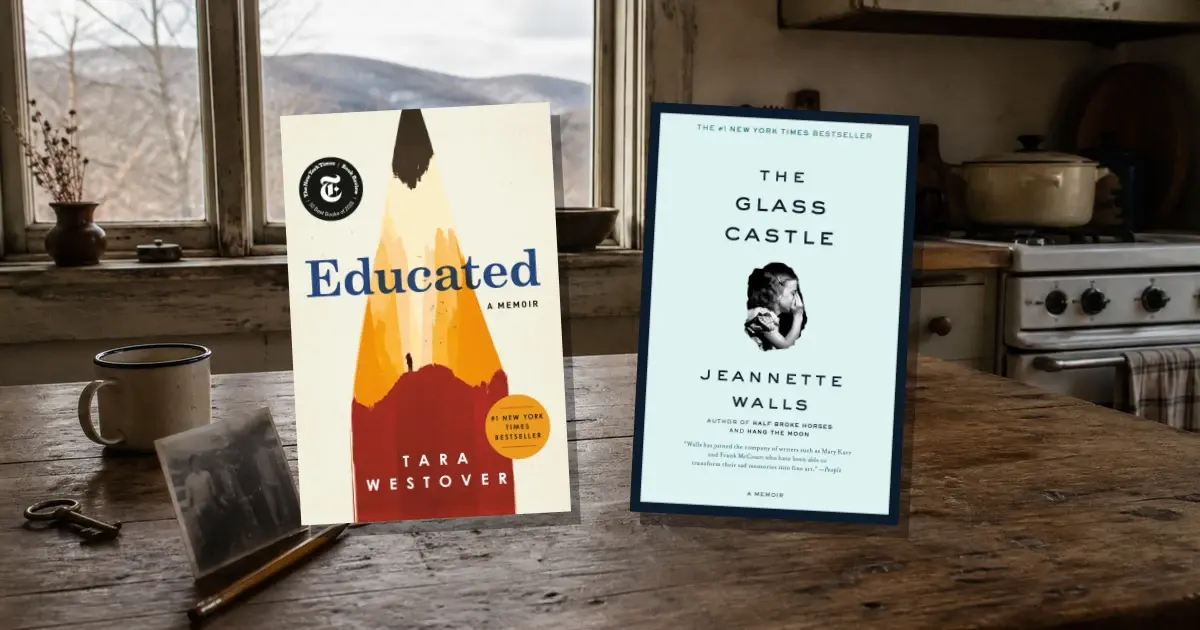
Choose Educated when you want to follow how formal learning gives Tara Westover language for evidence, history, bodily autonomy, and a self that can disagree with family authority. Choose The Glass Castle when you want Jeannette Walls’s close study of resourcefulness inside chronic instability and the long work of loving parents without accepting their family mythology. Both are departure stories, but neither treats leaving as a clean emotional ending.
- Education as an epistemic break: Educated.
- Childhood improvisation becoming adult agency: The Glass Castle.
- Love and harm occupying the same relationship: central to both.
Choose by the question you want to carry
Read Educated for the cost of changing one’s mind when belonging depends on agreement. Read The Glass Castle for the boundary between accepting complicated parents and surrendering an independent life. Whichever you choose, resist converting a singular memoir into a diagnosis of every family like it. Track the narrator’s concrete constraints, the helpers who widen possibility, and the choices that only become visible after material safety improves.
- Distinguish the narrator’s observation from a later interpretation.
- Notice when money, schooling, housing, or relationships change the available choices.
- Let ambiguity remain where the memoir preserves it.
Sources and scope
Book ideas are attributed to their authors. External evidence is linked directly when a claim needs more than the source book.
- Educated: Primary source for Westover’s treatment of education, disputed memory, family authority, and self-authorship.
- The Glass Castle: Primary source for Walls’s account of poverty, neglect, resourcefulness, departure, and continuing attachment.
To report a factual, attribution, rights, or accessibility concern, email hello@wiseley.app.
Questions readers ask
Which memoir should I read first?
Start with Educated if questions of knowledge, schooling, and disputed memory draw you most. Start with The Glass Castle if you want a family chronicle centered on poverty, improvisation, addiction, and enduring attachment.
Are these memoirs mainly stories of resilience?
Resilience is present, but using it as the whole frame can hide neglect, chance, outside help, and structural constraints. Both books are more searching when read as accounts of agency developing under unequal conditions.