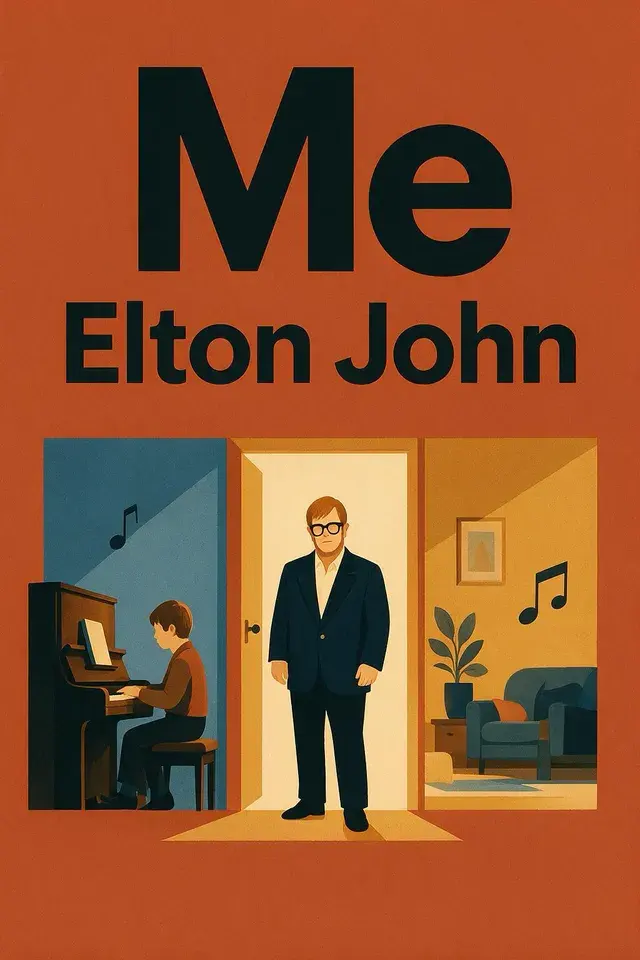
What you'll learn
Key ideas from Me
These ideas compress the book's argument without treating the author's view as settled fact. Use them as an orientation before reading the full work or listening in Wiseley.
Training, a dangerous first pub job, Taupin’s lyrics, and paternal resistance convert fascination into a committed vocation and chosen name.
Bernie Taupin’s complete lyrics gave Elton a repeatable writing method, while rejection and mentorship helped the pair discover an original voice.
Elton’s costumes, props, collecting, and celebrity world turned performance into a total persona while leaving room for loneliness.
The commercial summit exposes a private life already shaped by isolation, drug use, and suicidal communication.
Truth-telling, ordinary routines, meetings, and peer support turn sobriety into a daily practice.
The AIDS Foundation turns recovery’s spare energy into lean, practical care against illness, stigma, and isolation.
Fatherhood turns the touring calendar into a choice between performing everywhere and being present for a childhood that happens only once.
How Me builds its case
Follow how the book develops its argument. Each note is a brief orientation, not a replacement for the chapter.
The Music That Made Him
In the winter of 1967, at the Latino club in South Shields, Reg Dwight recognizes that his musical life has become impossible. He is playing organ in Bluesology, but a hit has pushed Long John Baldry from blues cellars into supper clubs.
Finding Bernie, Finding Direction
Elton’s route out of musical precarity began in places that looked nothing like a breakthrough. At Denmark Street, he packed and posted brass-band sheet music for Mills Music.
Fame, Spectacle, and Excess
Once American audiences responded, success became a system. Elton returned because press praise could not build a career by itself.
Peak Fame, Private Collapse
Elton’s peak fame does not arrive as a clean climax. In 1975, Captain Fantastic became the first album to enter the United States chart at number one, and Rock of the Westies did it again within six months.
Retirement, Russia, and Grief
After the peak, Elton moved the drama indoors. Retirement from live performance was theoretical almost immediately.
Success Without Self-Control
By nineteen eighty-three, Elton had something that looked like a return to control. Bernie Taupin was writing with him again, the old band had been reassembled, and recording in Montserrat brought back the team around Chris Thomas.
Voice, Lies, and Moral Courage
After the comeback and marriage described earlier, Elton’s body challenges the idea that he can perform his way through anything. During an Australian tour, his voice fails strangely: he can sing at Madison Square Garden, yet speak only in a whisper between shows.
The Cost of Not Changing
At this point, the problem is no longer whether Elton can create success. It is whether success has become a way of avoiding responsibility.
Recovery Becomes a Purpose
Recovery begins when Elton admits he needs help. After sixteen years with cocaine, he sees that celebrity and money have not made him free.
Love, Mourning, and Accountability
After sobriety, Elton describes life as if it had begun rewarding him. The One became his biggest-selling album since 1975, and Woodside’s renovation gave him a home he loved and considered more normal.
Artistic Renewal, Public Commitment
Late in his career, Elton John treats renewal not as a retreat into nostalgia but as movement through old influences toward new work. The question emerged after The Big Picture.
Fatherhood and Family Boundaries
Elton’s path to fatherhood begins with Noosa, a boy he met at a South African drop-in centre funded by his AIDS Foundation. Noosa did not know who Elton was.
Choosing Home, Leaving the Road
The memoir closes on a tension fame never solved: Elton still loves the stage, but no longer mistakes loving it for owing it his whole life. The anxiety and adrenaline before a show remain addictive, while travel and promotion can exhaust him.