Choose by your actual obstacle
"I want to write better" covers five different troubles. Sometimes the sentences are the problem. Sometimes it is the size of the project. Sometimes there are no sentences at all because sitting down keeps losing to everything else. Naming the obstacle honestly matters more than any author's fame, because these five books barely overlap.
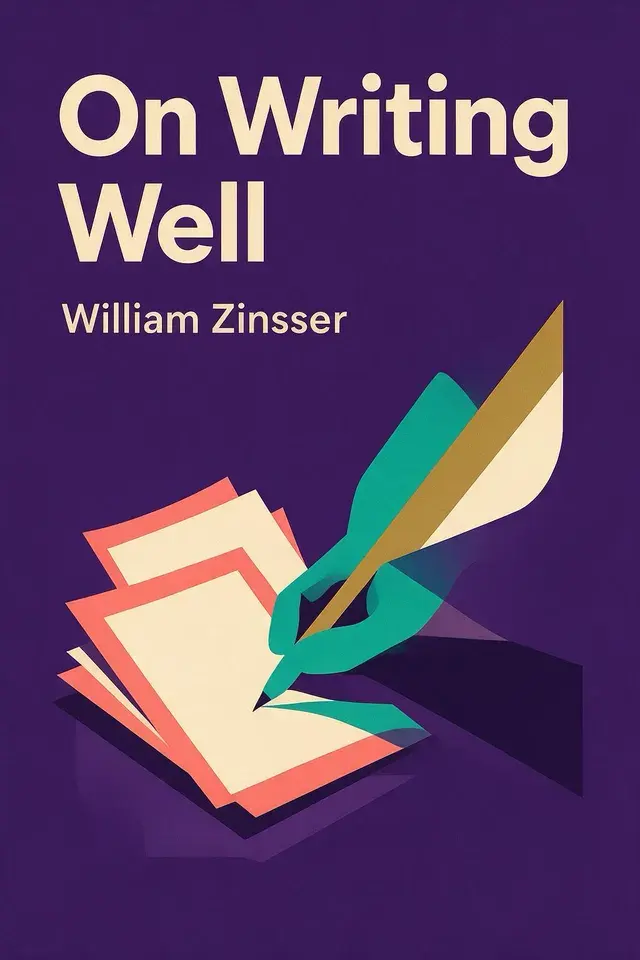
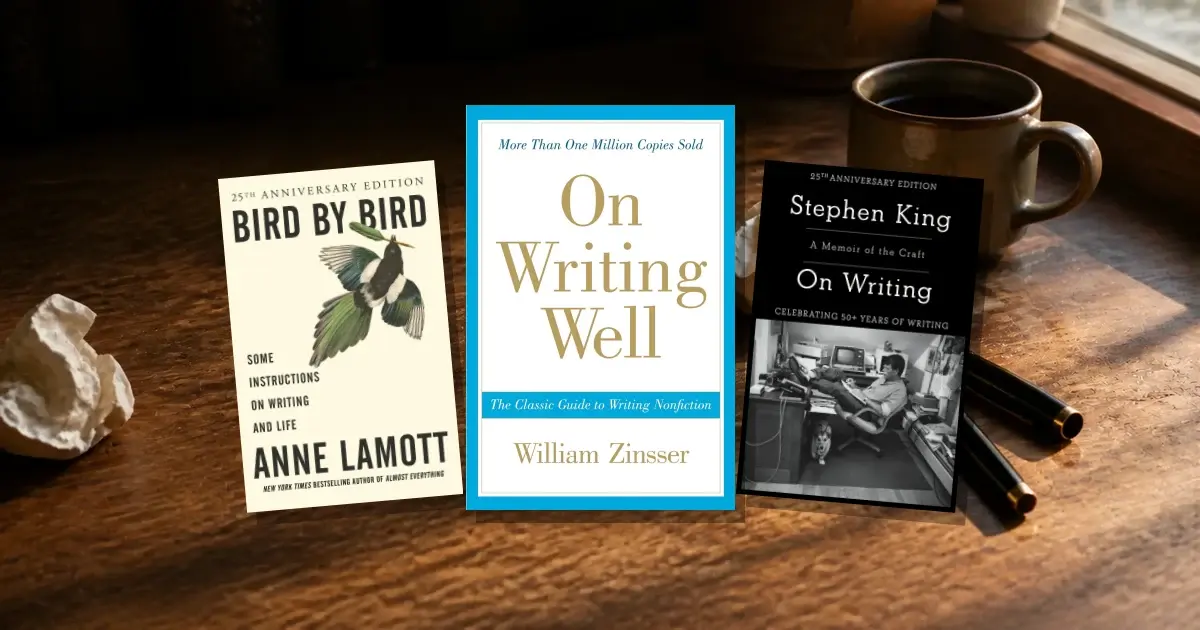
- Drafts exist but read badly: On Writing Well.
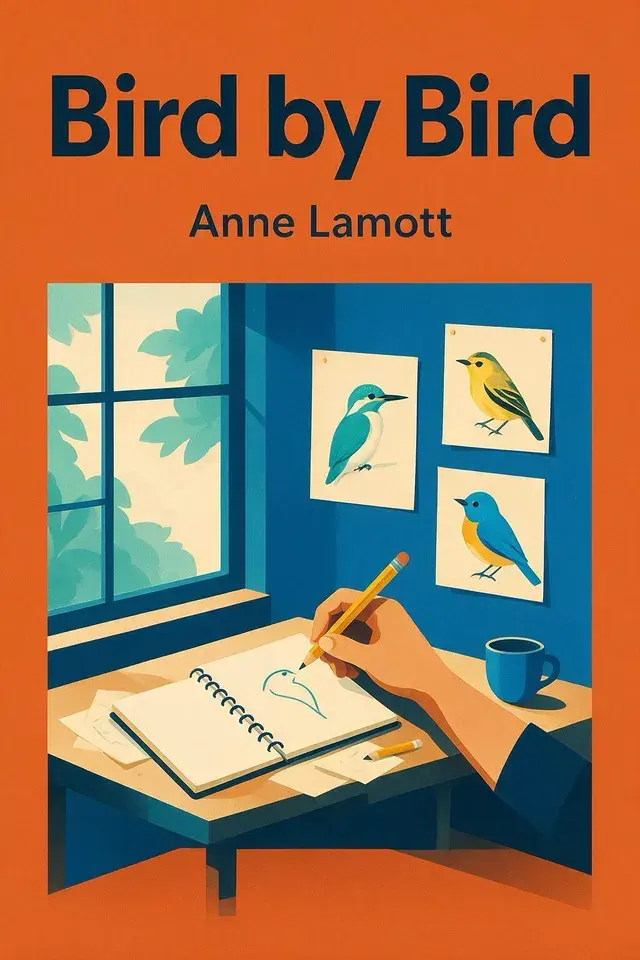
- The project feels like a glacier: Bird by Bird.
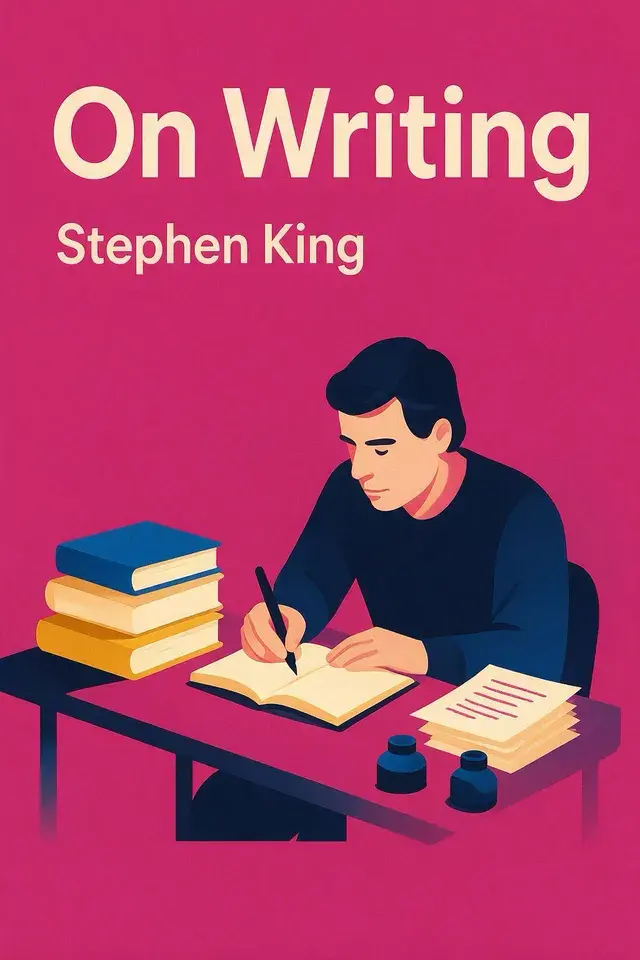
- Want a working writer's whole toolkit: On Writing.
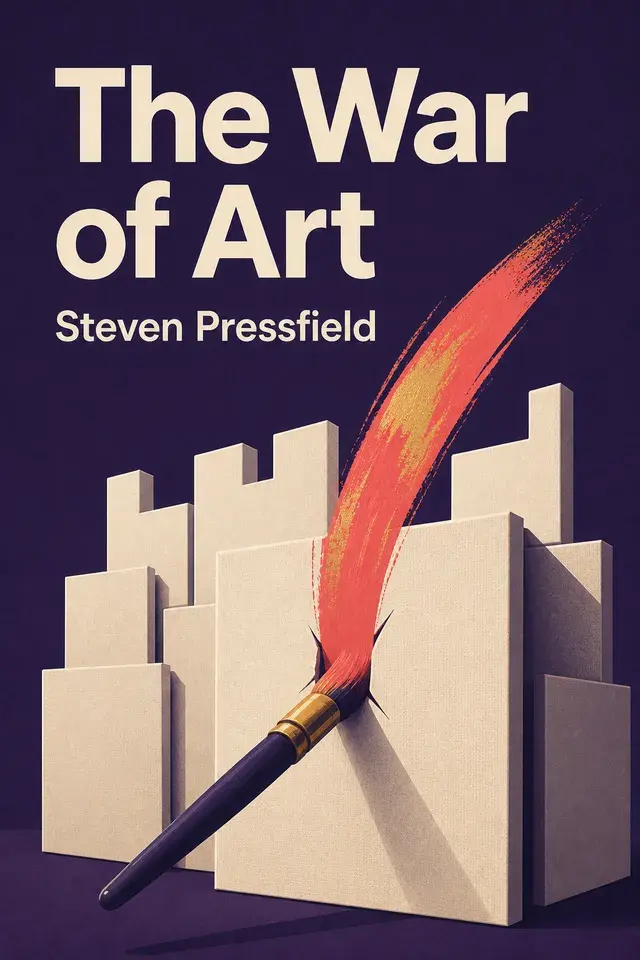
- Know what to do but never start: The War of Art.
- Creativity has become fear and grind: Big Magic.
What each book adds
Zinsser treats nonfiction as a human transaction: strip clutter, prefer exact active verbs, unify each piece around one point, revise by reading aloud, and report fairly. Lamott supplies the psychology of scale — the one-inch picture frame, the three-draft method, characters given an emotional acre — plus writing groups that make persistence social. King contributes the toolbox and the regimen: vocabulary and grammar on the top shelf, active verbs, telepathy through concrete scene, two hundred pages of reading between writing sessions, and second drafts aimed at theme. Pressfield names Resistance — fear disguised as procrastination, drama, and self-medication — and answers it with turning professional, where schedule precedes mood. Gilbert reframes the whole relationship around permission, curiosity over passion, disciplined imperfection, and fierce trust that survives failed projects.
- Best pure craft manual: On Writing Well, still the standard for nonfiction revision.
- Best companion for a stalled big project: Bird by Bird's one-inch frame.
- Best short book for chronic avoidance: The War of Art.
A reading order from habit to craft
If you are not yet writing regularly, start with Pressfield or Gilbert to fix the showing-up problem; craft advice is wasted on empty pages. Once drafts flow, add King for daily structure and Lamott for surviving the middle of long work. Finish with Zinsser, whose sentence-level discipline turns finished drafts into readable ones — and whose revision method improves every book above.
- Adopt one non-negotiable session length before buying more advice.
- Apply Zinsser's read-aloud pass to your last three paragraphs today.
- Keep a resistance log for one week; patterns will name themselves.
Sources and scope
Book ideas are attributed to their authors. External evidence is linked directly when a claim needs more than the source book.
- On Writing Well: Source for clutter removal, unity, active verbs, fair reporting, voice as disciplined ease, and revision by reading aloud.
- Bird by Bird: Source for the one-inch frame, three-draft method, emotional acre, plot from character, and writing-group support.
- On Writing: Source for the toolbox metaphor, telepathy through scene, reading as apprenticeship, closed-door drafts, and theme-guided revision.
- The War of Art: Source for Resistance and its disguises, turning professional, schedules preceding mood, and releasing results.
- Big Magic: Source for permission, curiosity over passion, disciplined imperfection, the submission game, and fierce trust after failure.
To report a factual, attribution, rights, or accessibility concern, email hello@wiseley.app.
Questions readers ask
Which book should a beginning writer read first?
On Writing if you want one book covering formation, tools, habits, and revision in a single voice. Bird by Bird is the better first choice when perfectionism and overwhelm are the real blockers — its assignments shrink writing back to a survivable size before technique matters.
Do these books help nonfiction writers or only novelists?
Zinsser is squarely for nonfiction and remains its canonical craft guide. King writes fiction but his toolbox, reading regimen, and revision pass transfer directly. Lamott, Pressfield, and Gilbert address the inner game — drafts, resistance, permission — which applies to any creative practice, including business and academic writing.
Is The War of Art too macho or mystical?
Its military framing divides readers, and Book Three's muse language is explicitly spiritual rather than empirical. But its diagnosis of Resistance — how fear recruits procrastination, rationalization, and even loved ones — is precise and useful. Readers who bounce off its tone usually find the same medicine warmer in Gilbert's Big Magic.