What you'll learn
Key ideas from Educated
These ideas compress the book's argument without treating the author's view as settled fact. Use them as an orientation before reading the full work or listening in Wiseley.
Buck's Peak turns isolation, seasonal rhythms, and family stories into a moral geography where self-reliance appears safer than institutional contact.
Tara and Richard show that curiosity survives through private study, secret reading, and patience with difficult texts.
Family silence and humiliation make coercion resemble discipline, while Tara’s numbness shows how abuse can become an identity of being unbreakable.
Tara's first steps toward college become moral choices because her family treats independent study, exposed skin, and hospital care as disobedience.
Financial aid, medical treatment, and academic opportunity become acts of agency when Tara separates support from obedience.
Cambridge turns education into an apprenticeship in judging arguments, revising inherited beliefs, and trusting independent interpretation.
Education cannot make denial disappear; memory, tenderness, and responsive relationships become Tara’s grounds for leaving.
Estrangement protects Westover’s mind while preserving grief for family, home, and shared history.
How Educated builds its case
Follow how the book develops its argument. Each note is a brief orientation, not a replacement for the chapter.
A Mountain Made Moral
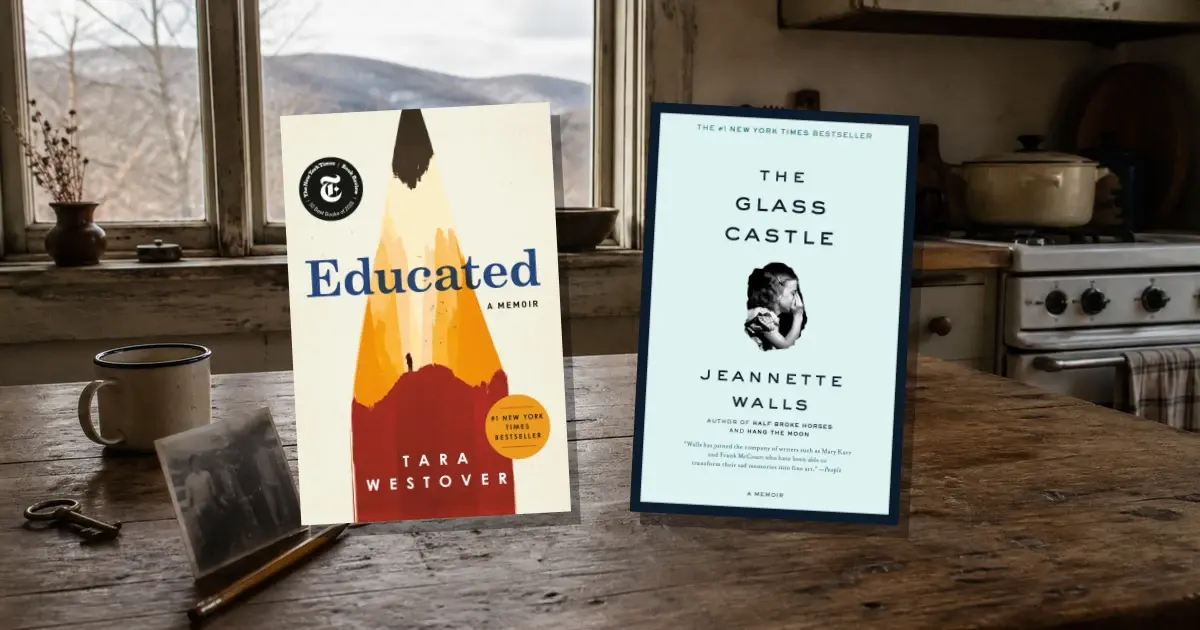
Educated opens with a problem of knowing the past. Its epigraphs present education as the work of reconstructing experience, and Tara's first world is Buck's Peak.
Learning Beneath Labor
Tyler’s departure does not end learning in the household; it changes what learning costs. He has shown Tara that school can be worth leaving the mountain for, even though neither of them can explain where that choice will lead.
Art, Collapse, and Trust
Tara’s first move toward an outside life is paid work, not formal schooling. At eleven, she wants time away from the junkyard and Dad’s crews, so she bikes to the village and asks Myrna Moyle to post a babysitting notice.
What Power Does to a Body
On a truck journey with Shawn, Tara enters a harsher version of the family’s ideal of self-reliance. Tony’s wife is ill and on bed rest, so Shawn agrees to drive Tony’s financed truck for a week or two, but only if Tara comes.
The Door Outward
Before Tara has a school to attend, leaving becomes a question of whether she may become an adult with a mind of her own. Her father presents college as spiritual betrayal.
Learning the World Again
After arriving at BYU, Tara discovers that admission has not given her the habits that make university legible. Her first semester is less a test of raw intelligence than a collision with invisible conventions.
Evidence Against Certainty
At this stage, education does more than keep Tara at BYU. It gives her ways to test explanations that once felt self-evident.
Freedom Needs a New Mind
Cambridge changes the question Tara is trying to answer. Earlier, education meant getting through a door.
When Family Denies Reality
By the time Tara is living at Cambridge, she has built a life that seems to prove she can belong elsewhere. Audrey’s message breaks that stability.
Love Without Surrender
Once the family’s version of events hardens into the only acceptable version, the separation becomes more than a disagreement. Shawn sends a hostile biblical message, then threatens to kill Westover or hire someone to do it.