What you'll learn
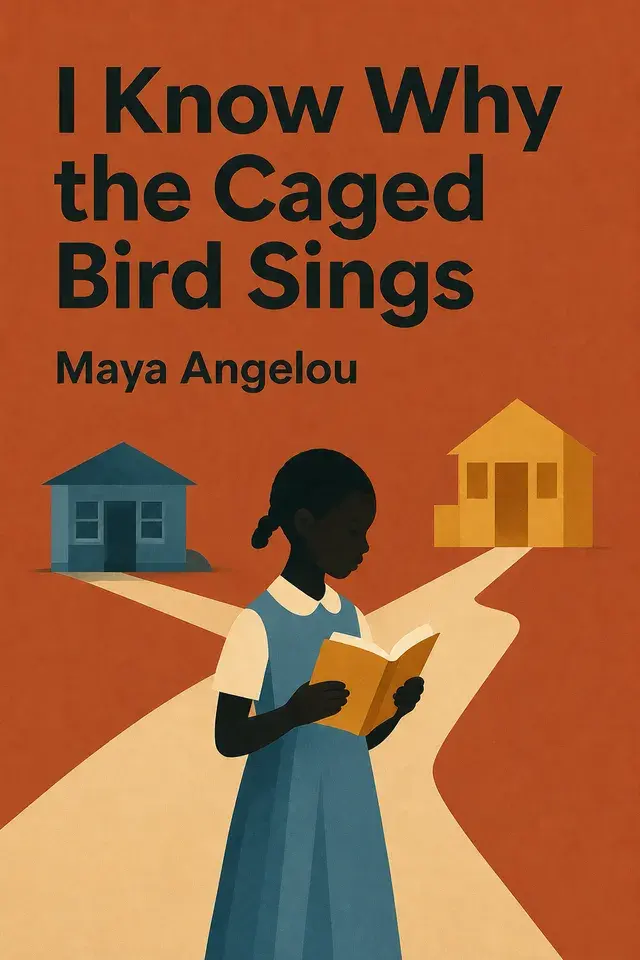
Key ideas from I Know Why the Caged Bird Sings
These ideas compress the book's argument without treating the author's view as settled fact. Use them as an orientation before reading the full work or listening in Wiseley.
Stamps offers Black children a durable world of kinship, commerce, faith, and routine, even while poverty and racial danger remain present.
Freeman’s abuse turns a child’s need for protection into secrecy, threats, dissociation, and a fractured understanding of love.
Mrs. Flowers makes recovery possible by treating Maya as an intelligent speaker whose voice can carry feeling and meaning.
Poetry, preaching, music, and ceremony sustain a collective future beyond what institutions recognize.
Miss Kirwin and the arts turn knowledge, movement, and disciplined expression into practical forms of Maya’s agency.
Maya’s streetcar campaign transforms racial exclusion into earned employment, wider mobility, and a new claim to public space.
Birth brings love, pride, possession, awe, and fear together instead of producing instant confidence.
How I Know Why the Caged Bird Sings builds its case
Follow how the book develops its argument. Each note is a brief orientation, not a replacement for the chapter.
Stamps, Store, and Racial Power
At the beginning of Maya Angelou’s memoir, childhood is held between protection and exposure. Segregated Stamps gives Maya and Bailey a Black world with its own rhythms, rules, and forms of care.
Ritual, Survival, and Family Rupture
Before parental reunion, Maya and Bailey make instability bearable by turning it into rules, jokes, exchanges, and stories. These devices cannot remove danger, but they give children structure when adults and family ties remain uncertain.
Displacement, Abuse, and Silence
After the earlier family rupture, Maya and Bailey move from Stamps to St. Louis to live with their mother.
A Voice, a Name, a Witness
After the abuse and return to Stamps, Maya does not simply choose to speak again. For nearly a year, she drifts among the Store, home, school, and church, emotionally withdrawn.
Faith, Pride, and Communal Refuge
Here, communal life does more than soften hardship. Workers, worshipers, listeners, picnickers, friends, and young lovers create brief spaces where Black dignity feels shared and oppression is named.
Grief, Graduation, and Cultural Memory
After the communal refuge of earlier episodes, a stormy night places the Store and Henderson household against darkness, train noise, and death. Maya, Bailey, Momma, and Uncle Willie read together, creating a pocket of order.
Migration, Learning, and Belonging
An unbearable toothache makes racialized medical exclusion impossible to ignore. Maya’s candy eating has left two severely decayed teeth; painkillers and prayer fail.
Strength, Danger, and Departure
After moving to San Francisco, Marguerite enters an adult world that teaches through exposure as much as instruction. The rooming house gathers different accents, personalities, foods, and occupations.
Adolescence, Work, and Belonging
Adolescence gives Maya no simple arrival. After returning home, her room feels too small, so she decides that work may offer change.
Pregnancy and First Motherhood
Pregnancy first appears to Maya as a private apocalypse. She feels the world has ended while everyone else continues in an ordinary world.