
A close relationship can contain more than one need
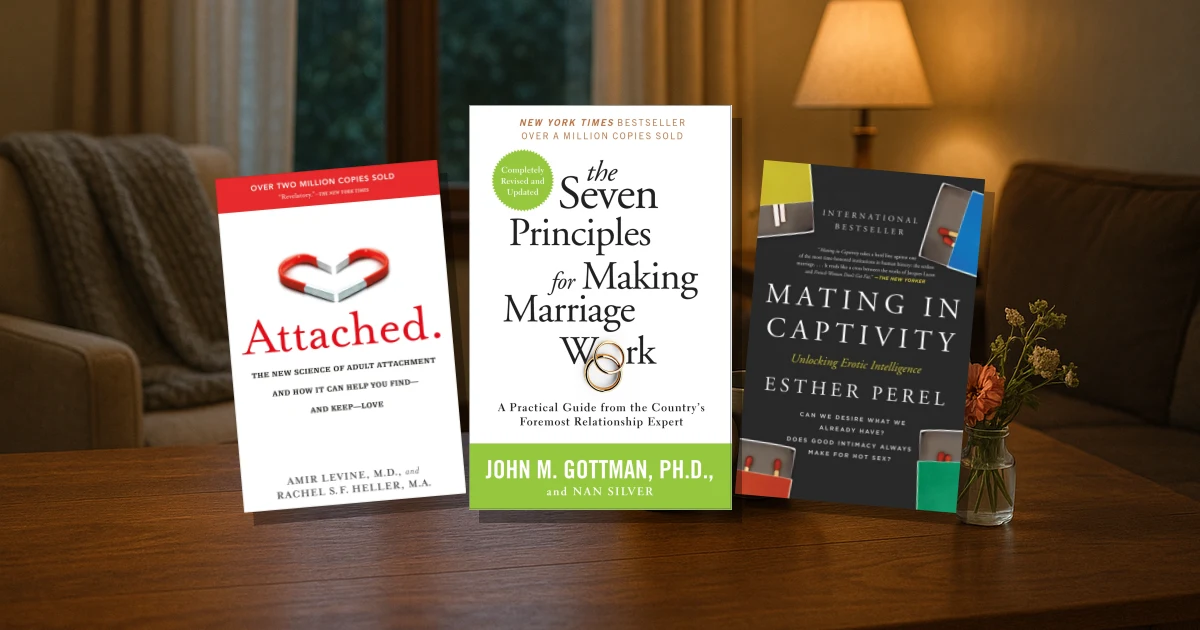
Mating in Captivity begins with a tension: the affection and continuity valued in committed love can coexist with a wish for autonomy, novelty, and distance. Perel is not simply opposing intimacy to desire. She is examining how particular meanings of closeness can shape a couple’s erotic life. This page concentrates on that book because Wiseley’s current catalog does not support a broad, specialist list of books about sex.
The book at the center of the question
Read Perel’s examples as interpretations of particular relationships. They can make a tension easier to describe without establishing that every couple shares it.

Security and desire need not tell the same story
Mating in Captivity · Esther Perel
Esther Perel explores autonomy, imagination, domestic routines, parenthood, and the meanings partners bring to erotic life. Her account challenges the assumption that greater familiarity necessarily produces greater desire. The more useful reading follows how she interprets each situation, rather than extracting a rule that distance always helps.
- Read it for
- A vocabulary for examining the relationship between closeness, autonomy, and desire.
- Keep in mind
- Clinical stories and a therapist’s interpretation are not controlled evidence or a diagnosis of your relationship.
Three distinctions worth carrying through the book
First, separate a description of a tension from a proposed response to it. Second, distinguish voluntary personal space from unwanted withdrawal. Third, keep erotic imagination separate from assumptions about what a partner wants. A reading guide can clarify these distinctions; decisions in a relationship depend on the actual people and their circumstances.
What another relationship book would need to add
A book about attachment, communication, or conflict may answer a neighboring question. It should not be relabeled as a specialist book about sex simply to lengthen this shelf. Use the relationship guide when your question concerns those neighboring subjects; stay with the full text when you want the nuance of Perel’s argument.
Sources and scope
Book ideas are attributed to their authors. External evidence is linked directly when a claim needs more than the source book.
- Mating in Captivity: Esther Perel explores autonomy, imagination, domestic routines, parenthood, and the meanings partners bring to erotic life. Her account challenges the assumption that greater familiarity necessarily produces greater desire. The more useful reading follows how she interprets each situation, rather than extracting a rule that distance always helps. Scope: Clinical stories and a therapist’s interpretation are not controlled evidence or a diagnosis of your relationship.
To report a factual, attribution, rights, or accessibility concern, email hello@wiseley.app.