What The Let Them Theory is about
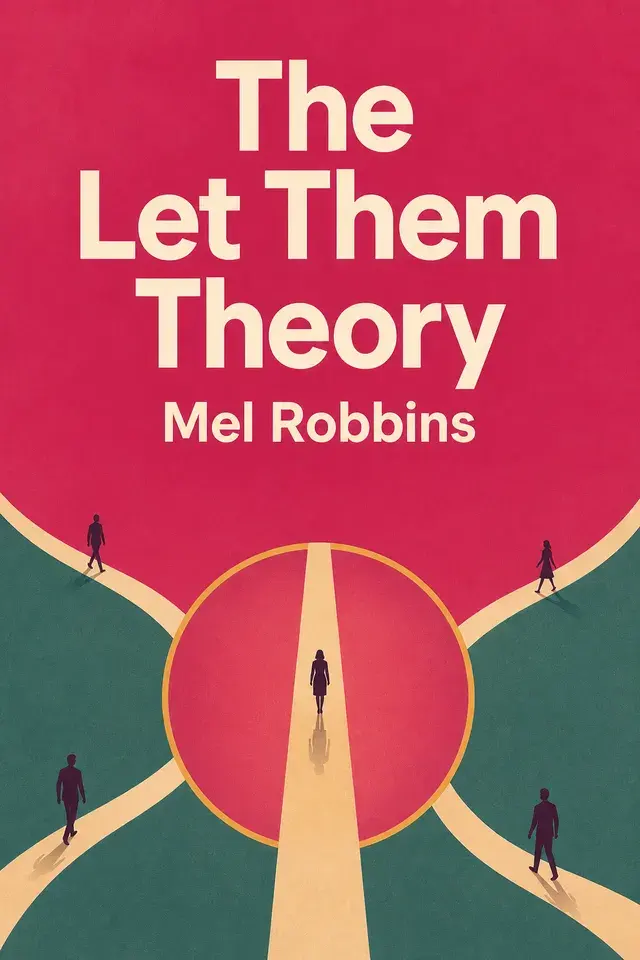
The Let Them Theory is Mel Robbins’s two-part framework for the energy people lose to other adults’ choices, moods and opinions. Let Them releases the attempt to control what is not yours; Let Me directs attention back to your own response, values, boundaries and next action. Wiseley’s summary follows the chapter notes that apply the pair to judgment, friendship, influence, dating and self-respect.
Robbins begins from a limit: other adults are not extensions of your will. Their opinions, decisions and outcomes belong to them, and trying to control them answers fear without changing the situation. Her claim is that the attempt itself is the expense, because the energy spent resisting what other people do is energy taken from work, health, creativity and the relationships you actually want.
The release is only half of the framework, and Robbins is explicit that acceptance is not suppression, resignation, or permission to tolerate harm. Let Me is the second movement: weigh what matters, then choose a proportionate response, which may be a direct conversation, a boundary, distance, or intervention when someone is in danger. She also marks where the pair does not apply, noting that children need acknowledgment and co-regulation rather than release, and that accepting what others control at work or in public life does not make an unfair situation fair.
What you'll learn
Key ideas from The Let Them Theory
These ideas compress the book's argument without treating the author's view as settled fact. Use them as an orientation before reading the full work or listening in Wiseley.
Let Them releases attempts to control other people, while Let Me directs attention toward one’s own response, values, boundaries, and next action.
Let Me weighs importance, values, energy, time, and consequences to select a proportionate response, from disengagement to action.
Fear of judgment can turn other people’s opinions into a roadmap that displaces personal goals and values.
Adult community grows through going first, weak ties, shared activities, repeated invitations, and patience over a sustained time horizon.
Natural consequences and conditional support preserve an adult’s responsibility, whereas rescuing and enabling can prolong dependence and delay healing.
Dating functions as selection: behavior reveals compatibility, while authenticity and high standards reduce the temptation to chase potential.
Self-love is defined as self-respect in action: honoring needs, boundaries, standards, compassion, and chosen happiness.
A Wiseley example: two columns before a hard reply
Wiseley editors wrote this example to show one way to use Mel Robbins’s argument. It is not taken from the book.
A message arrives that annoys you, and a reply starts drafting itself in your head. Draw two columns. In the left one, write only what belongs to the other person: their tone, their timing, their opinion of a decision you already made. Name it and leave it there.
In the right column, write what is yours: whether this matters enough to answer today, what you want to be true afterwards, and one sentence you would be willing to say out loud. Then either send that sentence or close the app. The columns do not make the message pleasant. They stop an evening from going to the half that was never yours.
How The Let Them Theory builds its case
Follow how the book develops its argument. Each note is a brief orientation, not a replacement for the chapter.
Release Control, Recover Agency
The Let Them Theory begins with a boundary: other people are not extensions of your will. Their thoughts, moods, opinions, preferences, decisions, and outcomes belong to them.
Pause, Feel, Then Choose
The theory works in two movements. Let Them releases the attempt to control another person or outcome.
Opinions, Frames, and Comparison
Once you stop trying to control other people, a subtler trap remains: imagining what they might think and arranging your life around it. Robbins argues that fear of judgment turns opinions into a roadmap.
Friendship Requires Initiative
Adult friendship often feels confusing because many people carry childhood expectations into adult life. When you are young, school, teams, clubs, dorms, routines, and shared milestones place you near the same people repeatedly.
Influence Without Control
Influence begins with a hard limit: no one can make another adult change, even when the reasons are compelling and the consequences are large. Wanting someone you love to be healthier, happier, more successful, or more engaged is normal.
Love People as They Are
Romantic relationships show why Let Them and Let Me work together. Love can bring joy and meaning, yet wanting to be chosen can make people compromise standards or chase potential.
Make Yourself the Anchor
The final movement of The Let Them Theory is a shift in identity: your life is not defined by the weather around you, but by how you navigate it. Other people’s moods, opinions, choices, and reactions will keep changing.
Read it with these limits in mind
- The framework is aimed at adult relationships. Robbins says plainly that it does not describe how to respond to a child’s distress, which needs acknowledgment and co-regulation instead.
- Let Them is not a response to abuse, coercion or danger. The book pairs acceptance with action so that release does not become tolerance of harm.
- This is a self-help framework built from experience and stories, not a clinical method. It is not therapy, and it is not a treatment for anxiety, grief or a relationship in crisis.
- Accepting what you cannot control at work or in civic life does not address the unfairness itself. Robbins redirects that energy toward strategic action rather than resolving the underlying problem.
Who it helps, and when to read the whole book
The Let Them Theory tends to be most useful to:
- Readers who replay conversations and lose hours to other people’s reactions.
- Anyone deciding where a boundary belongs in a friendship or a family relationship.
- People supporting an adult who is not ready to change, who want to stop rescuing without withdrawing care.
Read the complete book when:
- You want the chapter-length treatment of friendship, dating and family that a summary can only outline.
- You want Robbins’s step-by-step account of the ABC loop for influence rather than the idea of it.
- You are working through heartbreak or a family conflict and want the longer, more careful version of the argument.