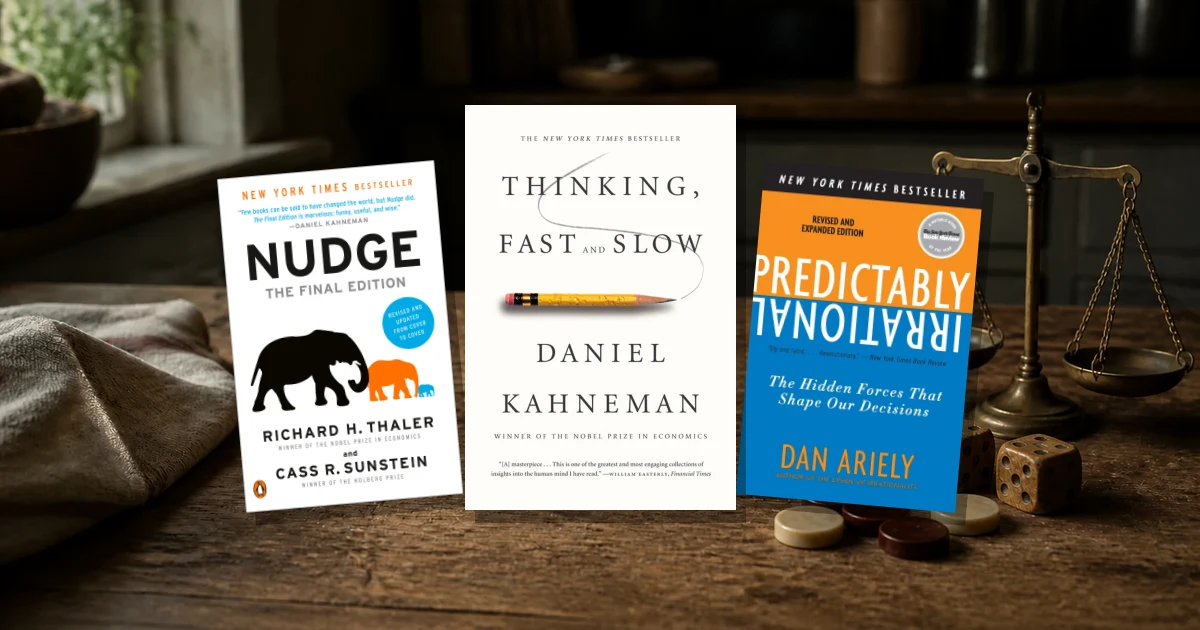

What social psychology studies
Social psychology asks how other people, present, imagined, or implied by a situation, change what an individual notices, believes, and does. Each book below follows one mechanism in depth and reports research selectively in support of an argument, so read them as guided tours rather than a survey of the field.
| The question | Book | What to notice |
|---|---|---|
| Why do we defend a decision we should revisit? | Mistakes Were Made (But Not by Me) | How dissonance rewrites memory and motive |
| Why do we say yes before thinking it through? | Influence | Which social cue is carrying the request |
| Why do moral arguments rarely change minds? | The Righteous Mind | Intuition arriving before reasoning |
| Why do we misjudge people we have just met? | Talking to Strangers | Default trust and misleading demeanor |
| Does helping others pay off or wear us out? | Give and Take | The boundaries that keep giving sustainable |
Five books, five mechanisms
Read each book for the mechanism it explains, and notice where its evidence comes from: experiments, field observation, case histories, or the author’s reading of other researchers’ work. A persuasive story and a replicated finding are not the same kind of support.

Watch a choice harden into a conviction
Mistakes Were Made (But Not by Me) · Carol Tavris & Elliot Aronson
Carol Tavris and Elliot Aronson build their account on cognitive dissonance, the pressure people feel when behavior, belief, and self-image do not fit together. Self-justification relieves that pressure, usually by reshaping interpretation and memory rather than by open lying. They trace it from small decisions that harden in stages through prejudice, false memories, wrongful convictions, marital blame, and conflict between nations, then show how accountability and independent checks can turn error into learning.
- Read it for
- Understanding why people, yourself included, keep defending a decision after the evidence has turned.
- Keep in mind
- The authors are clear that knowing about self-justification does not make anyone immune to it; the book diagnoses more than it prescribes.
Name the shortcut before you answer
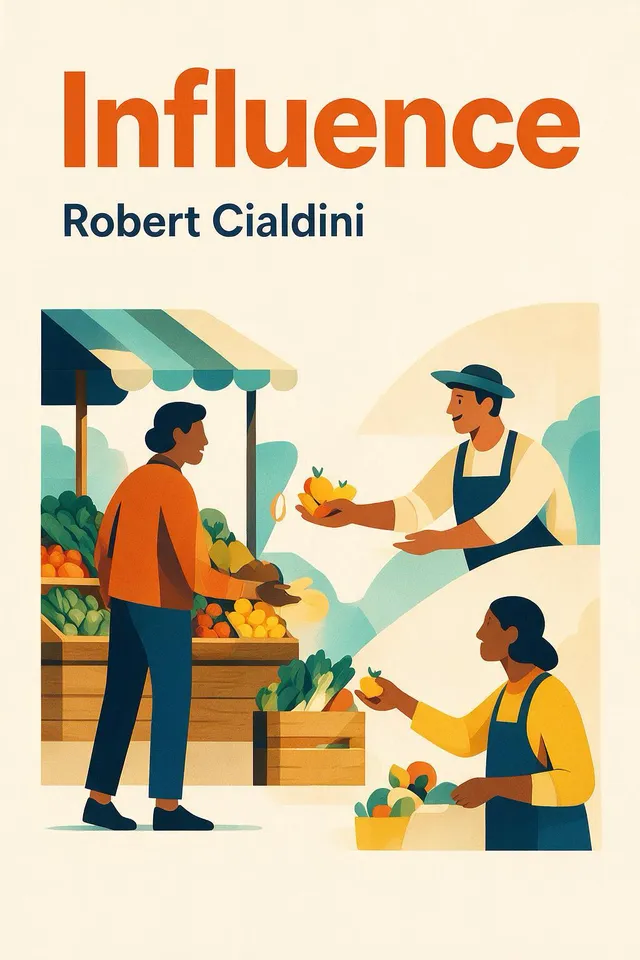
Influence · Robert Cialdini
Robert Cialdini examines why people say yes through six shortcuts: reciprocity, commitment and consistency, social proof, liking, authority, and scarcity. Each usually serves judgment well. His treatment of social proof reaches the bystander problem, where each onlooker reads the group’s calm as evidence that nothing is wrong, and his authority chapter draws on Milgram’s obedience research. Cialdini closes by arguing that the shortcuts are not the problem; counterfeit cues are.
- Read it for
- Recognizing which social cue is carrying a request, and separating the requester’s appeal from the request’s merits.
- Keep in mind
- Many examples come from selling and fundraising; knowing a principle explains why a request works, not whether it deserves agreement.

Notice the intuition before the argument
The Righteous Mind · Jonathan Haidt
Jonathan Haidt argues that moral judgments usually arrive as fast intuitions, with reasoning following to explain and defend them: the elephant leads and the rider narrates. He maps six recurring moral concerns, Care, Liberty, Fairness, Loyalty, Authority, and Sanctity, onto political differences, then argues that humans are groupish, capable of intense cooperation inside a moral community and of blindness toward rivals.
- Read it for
- Understanding why moral and political disagreement so rarely yields to evidence alone.
- Keep in mind
- The political typology and the evolutionary argument are debated, and Haidt himself treats the case for group selection as unresolved.
Question how well you read a stranger
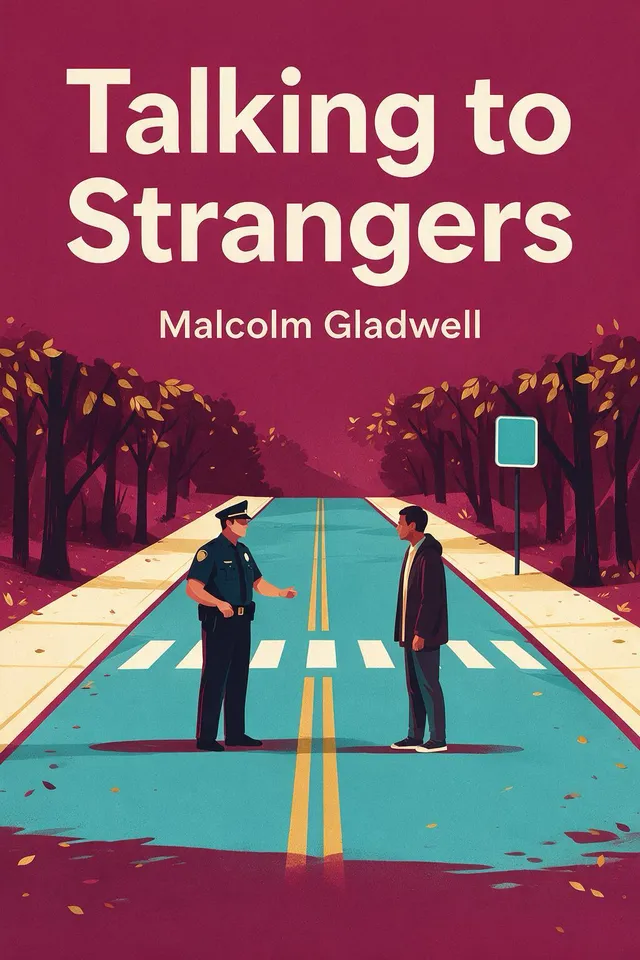
Talking to Strangers · Malcolm Gladwell
Malcolm Gladwell examines why people and institutions misjudge unfamiliar others. He draws on Truth-Default Theory, which holds that people begin by believing others and abandon that belief only when doubts pile up past a high threshold, and on research showing that demeanor is a poor window into inner feeling, especially when someone’s expression does not match their honesty. He closes by arguing that behavior is coupled to particular places and circumstances, not to character alone.
- Read it for
- Seeing why face-to-face contact can raise confidence without raising accuracy.
- Keep in mind
- Gladwell argues through high-profile and sometimes disputed cases; treat each story as an illustration of the research, not proof of it.

Test whether generosity can last
Give and Take · Adam Grant
Adam Grant sorts people into givers, takers, and matchers by how they approach exchange, and observes that givers cluster at both the bottom and the top of success. What separates the two groups, he argues, is otherish giving, which joins concern for others with enough self-interest to protect health and priorities, along with systems that make asking for and offering help visible.
- Read it for
- Deciding how much to help colleagues and networks without being exhausted or exploited.
- Keep in mind
- Its settings are mostly workplaces and professional networks, and the three styles describe patterns of exchange rather than fixed personality types.
Why some books filed under social psychology are not here
Wiseley’s catalog also files The 48 Laws of Power, The Laws of Human Nature, and Games People Play under social psychology. They do different work. Robert Greene’s two books are a strategist’s frameworks for reading power and human nature, and Eric Berne’s describes everyday exchanges as games through a model of ego states. Read them as interpretive frameworks, not as introductions to the research the five books above report.
A reading path from one mind to many
The order below moves from a single person’s reasoning outward to groups. Keep one question in view as you read: in the situation you care about, which mechanism is actually doing the work?
- Read 1
Start inside one mind
Self-justification is the most personal mechanism here and the easiest to test against a decision of your own.
Explore Mistakes Were Made (But Not by Me) - Read 2
Add the person making the request
Reciprocity, social proof, and authority show how other people’s cues enter that reasoning before you notice them.
Explore Influence - Read 3
Meet the stranger
Default trust and misleading demeanor explain why a face-to-face impression can feel more reliable than it is.
Explore Talking to Strangers - Read 4
Widen to the group
Moral intuition and group loyalty explain why whole communities can read the same evidence in opposite ways.
Explore The Righteous Mind - Read 5
Decide how you take part
End with a practical question: how to contribute to your groups without being used up by them.
Explore Give and Take
Sources and scope
Book ideas are attributed to their authors. External evidence is linked directly when a claim needs more than the source book.
- Mistakes Were Made (But Not by Me): Source for cognitive dissonance, self-justification through interpretation and memory, the staged hardening of decisions, prejudice, false memory, wrongful conviction, marital blame, national conflict, accountability, and the limits of awareness.
- Influence: Source for the six shortcuts of compliance, pluralistic ignorance among bystanders, Milgram’s obedience research as discussed in the authority chapter, examples from selling and fundraising, and the closing argument about counterfeit cues.
- The Righteous Mind: Source for intuition preceding moral reasoning, the elephant and rider, the six moral foundations and their political mapping, groupishness and parochial cooperation, and the author’s treatment of group selection as unresolved.
- Talking to Strangers: Source for Truth-Default Theory, transparency and mismatched demeanor, the disputed high-profile cases the book examines, and coupling between behavior and context.
- Give and Take: Source for givers, takers, and matchers, givers at both ends of success, otherish giving, generous systems that make requests visible, and the workplace and network settings of the examples.
To report a factual, attribution, rights, or accessibility concern, email hello@wiseley.app.
Questions readers ask
What is social psychology?
It is the study of how other people, present or imagined, shape what individuals think, feel, and do.
Which social psychology book should I read first?
Mistakes Were Made (But Not by Me) is the most direct introduction to a single, well-studied mechanism. If persuasion and requests interest you more, start with Influence.
Are these books about human psychology in general?
They cover its social side: how people behave around, toward, and because of others. They are general-reader books rather than textbooks or clinical guidance. For the brain, decision-making, or self-esteem, the other psychology lists are a better start.