Choose by failure mode
"I make bad decisions" is too vague to fix. Sometimes the machinery of intuition substitutes an easy question for a hard one. Sometimes the decision itself is fine but the environment was designed against you. Sometimes price, ownership, or social pressure quietly rewrites what you want. And sometimes the real problem is judging decisions by their outcomes in a world full of luck.
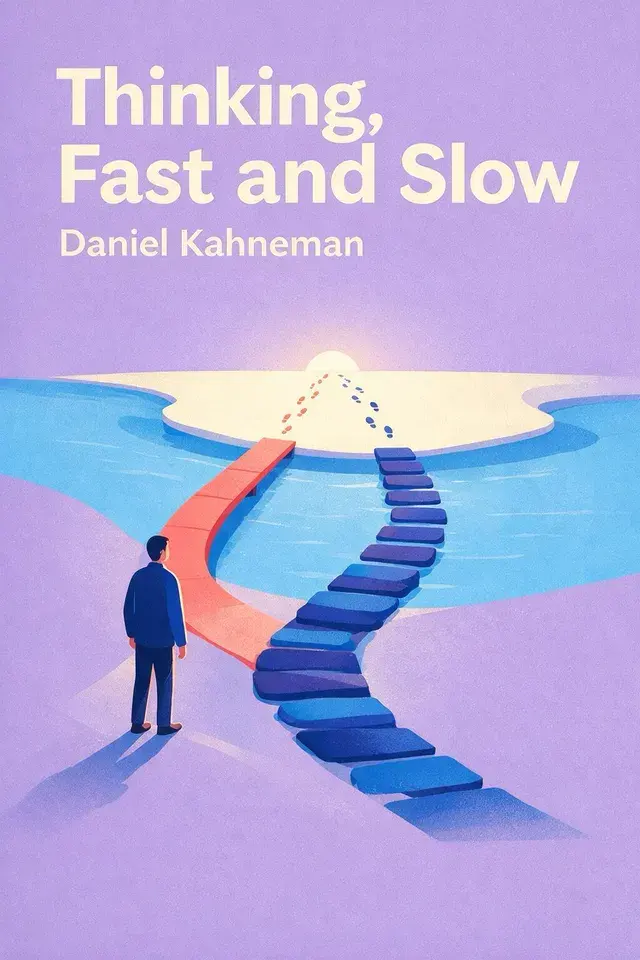
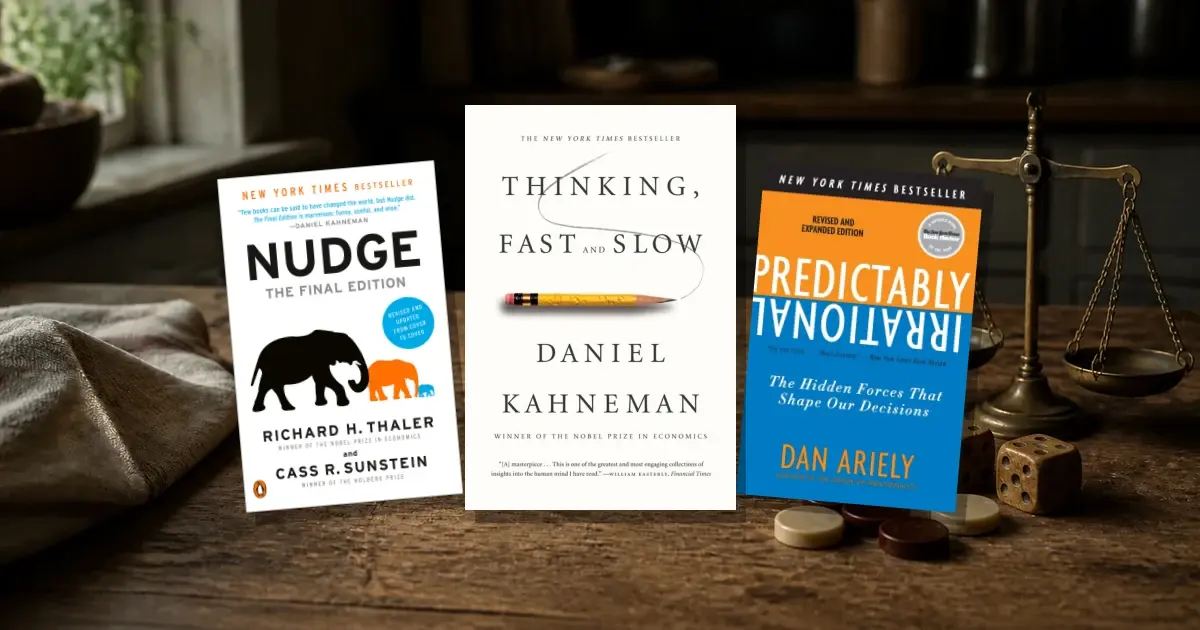
- Confident first impressions keep proving wrong: Thinking, Fast and Slow.
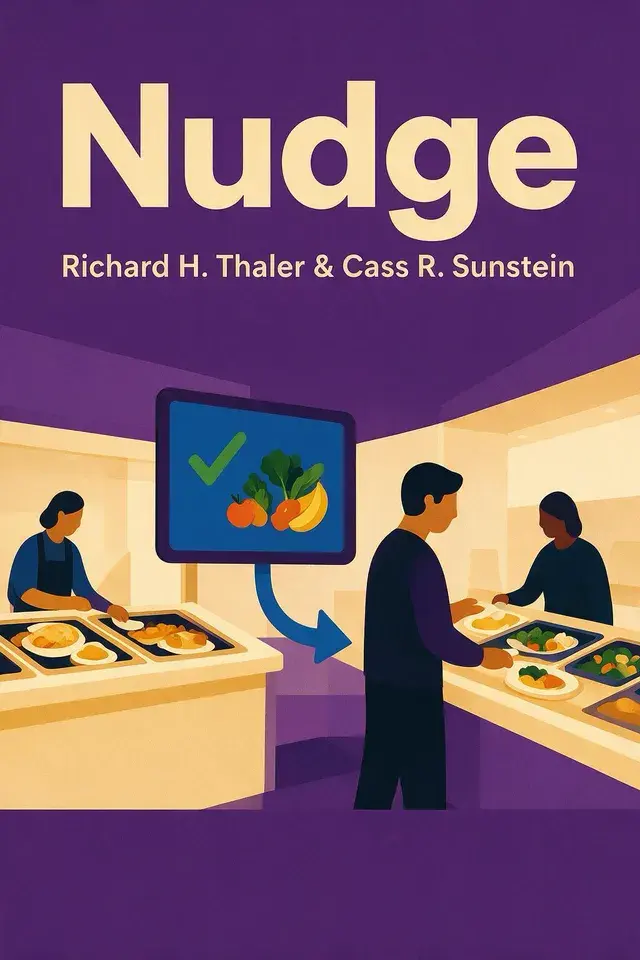
- You want to redesign the environment, not just willpower: Nudge.
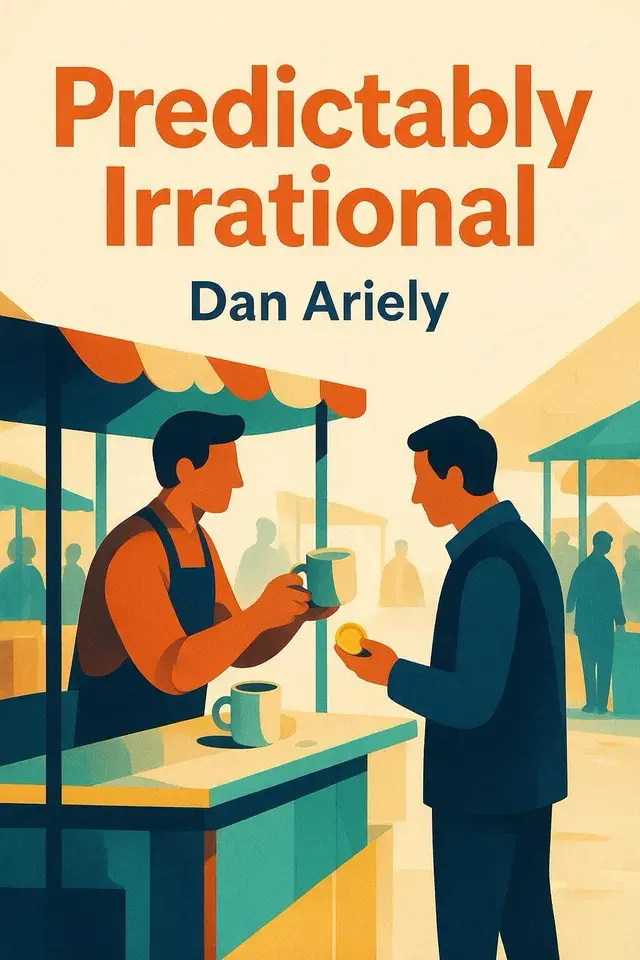
- Spending and value judgments feel hijacked: Predictably Irrational.
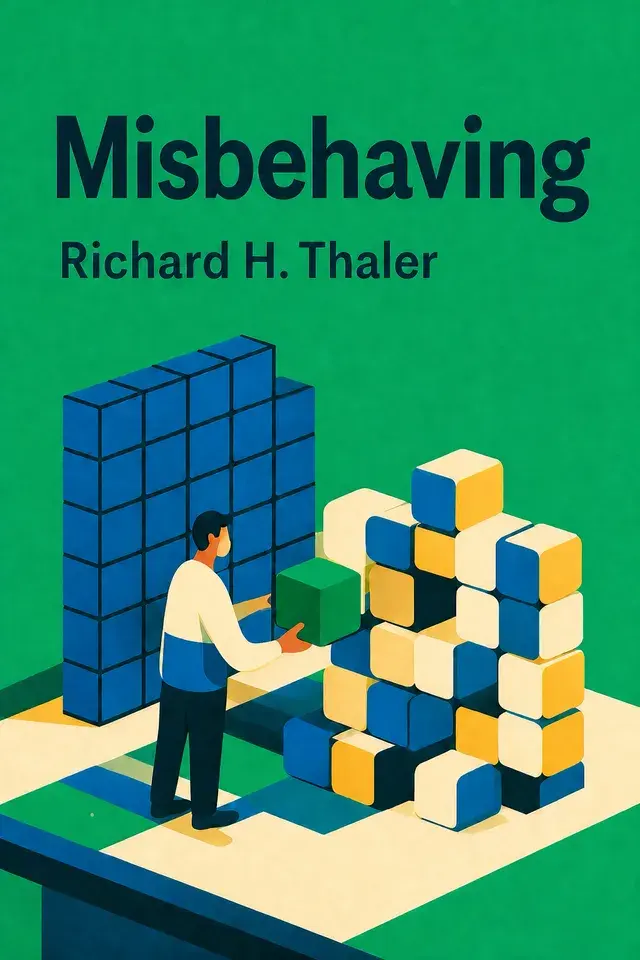
- Curious where these ideas came from: Misbehaving.
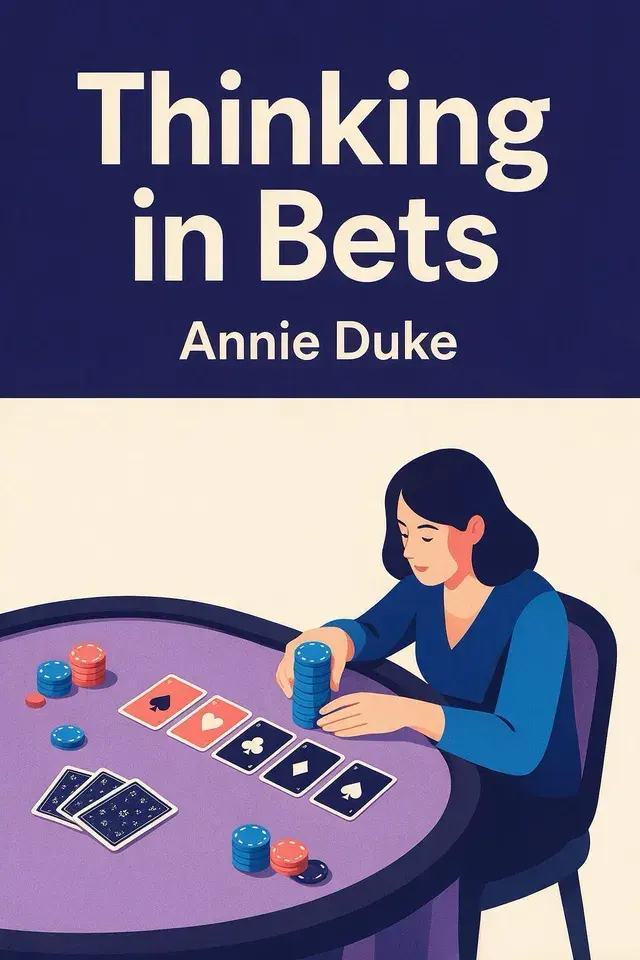
- Good choices keep getting punished by luck: Thinking in Bets.
What each book adds
Kahneman supplies the foundation: System 1's associative shortcuts, question substitution, representativeness overriding base rates, regression to the mean, loss aversion, framing, and the split between experiencing and remembering selves. Thaler and Sunstein turn fallibility into design: every choice has architecture, defaults steer without forbidding, and Save More Tomorrow shows precommitment beating present bias. Ariely demonstrates the errors experimentally — anchors, free as an emotional discontinuity, social-versus-market norms, the endowment effect, and ethical fading. Thaler's Misbehaving tells the discipline's own story while adding mental accounting, fairness games, and market anomalies. Duke closes with practice: separate process from outcome, treat beliefs as bets, build truth-seeking pods, and run premortems before committing.
- Best theoretical foundation: Thinking, Fast and Slow — everything else cites it.
- Most immediately applicable at work: Thinking in Bets and its premortem routine.
- Best lens on institutions and policy: Nudge's choice-architecture toolkit.
A reading order that compounds
Read Kahneman first even though it is the longest; later books borrow its vocabulary wholesale. Ariely then makes the biases feel personal through experiments you can picture yourself failing, and Misbehaving explains why economics needed correcting. From there the paths split: designers and managers should read Nudge, while anyone making repeated calls under uncertainty should train with Duke.
- Log three decisions per week and which bias each might express.
- Run a premortem on your next plan before announcing it.
- Audit one default in your life — enrollment, renewal, or layout — this month.
Sources and scope
Book ideas are attributed to their authors. External evidence is linked directly when a claim needs more than the source book.
- Thinking, Fast and Slow: Source for System 1/System 2, question substitution, representativeness, regression, loss aversion, framing, and the two selves.
- Nudge: Source for choice architecture, libertarian paternalism, defaults, Save More Tomorrow, and ethical limits of nudging.
- Predictably Irrational: Source for anchors, free as discontinuity, social versus market norms, hot-cold empathy gaps, endowment effect, and ethical fading.
- Misbehaving: Source for Humans versus Econs, prospect theory's arrival, mental accounting, fairness games, and market anomaly debates.
- Thinking in Bets: Source for process-versus-outcome separation, betting as calibration, truth-seeking pods, premortems, and backcasting.
To report a factual, attribution, rights, or accessibility concern, email hello@wiseley.app.
Questions readers ask
Is Thinking, Fast and Slow still reliable after the replication debates?
Its two-system framework and core phenomena — loss aversion, anchoring, framing, substitution — remain influential and broadly supported. Some priming studies cited in earlier editions have not replicated cleanly, so read its demonstrations as vivid illustrations of method as much as settled findings, and pair it with Duke for calibration habits.
What is the difference between Nudge and Predictably Irrational?
Both apply behavioral science to real choices, but Nudge addresses designers of environments — employers, governments, product teams — asking how defaults and feedback can help people decide better while keeping freedom intact. Ariely addresses individuals directly, explaining why our own value judgments bend and what precommitments defend them.
Why include both Misbehaving and the books it overlaps?
Misbehaving is partly memoir: it shows how anomalies like mental accounting and the endowment effect forced economics to absorb psychology. Readers who want working tools can skip it; readers who want to understand where Kahneman, Thaler, and Sunstein fit together — and why ideas won Nobel recognition — get the connective tissue.