What you'll learn
Key ideas from The 5 Second Rule
These ideas compress the book's argument without treating the author's view as settled fact. Use them as an orientation before reading the full work or listening in Wiseley.
Hesitation gives fear, doubt, and excuses time to overtake an initial impulse to act.
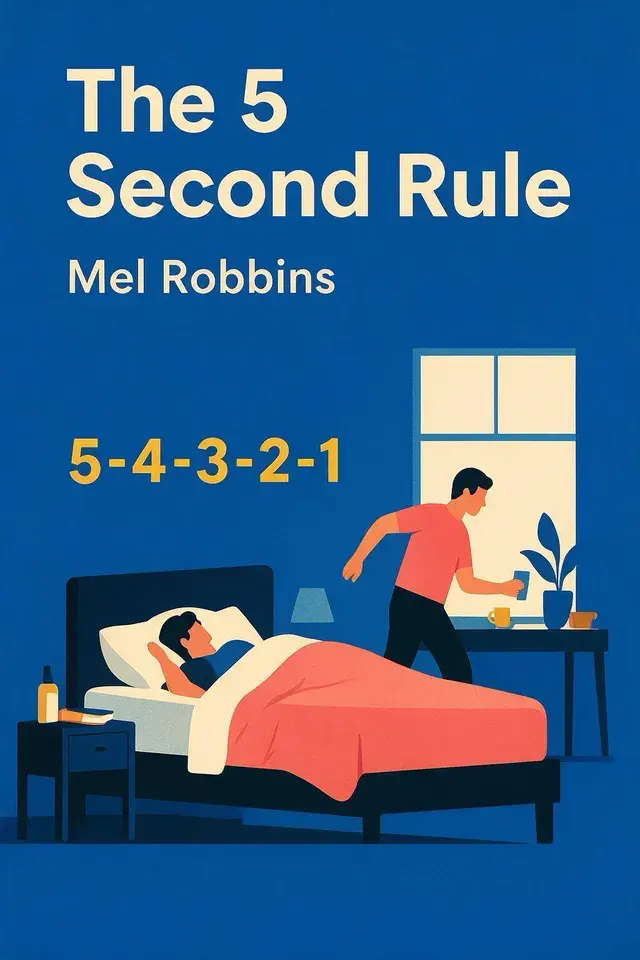
The Rule interrupts hesitation by counting backward from five and moving immediately at one.
The anti-procrastination sequence joins self-forgiveness, a future-self perspective, and a short starting interval.
Counting creates a pause for gratitude, presence, and a constructive thought before worry becomes avoidance or escalates into panic.
Confidence is presented as learned self-trust, built by repeated actions that show a person can rely on themselves.
Passion is portrayed as something discovered through curiosity, experiments, conversations, and sustained commitment rather than private reflection alone.
How The 5 Second Rule builds its case
Follow how the book develops its argument. Each note is a brief orientation, not a replacement for the chapter.
The Five Seconds Before Action
Most moments of inaction begin with a brief pause, not a firm decision to refuse. You notice an idea, commitment, or next step, then wait.
Starting Changes the Pattern
With the basic five-second interruption in place, Robbins turns to what happens after the first decision. Her application is broad: health, work, focus, and procrastination all become tests of whether a person begins before reluctance takes over.
Redirecting Worry, Anxiety, and Fear
The countdown introduced earlier as a way to interrupt hesitation can also be aimed at the mind itself. In Robbins’s account, worry is a default mental setting.
Courage Expands a Life
The Rule’s larger value appears when the thing at stake is not a task but a life choice. Earlier applications show how a brief interruption can help someone begin; here, Robbins follows that action into confidence, purpose, connection, and change.