What you'll learn
Key ideas from A Long Way Gone
These ideas compress the book's argument without treating the author's view as settled fact. Use them as an orientation before reading the full work or listening in Wiseley.
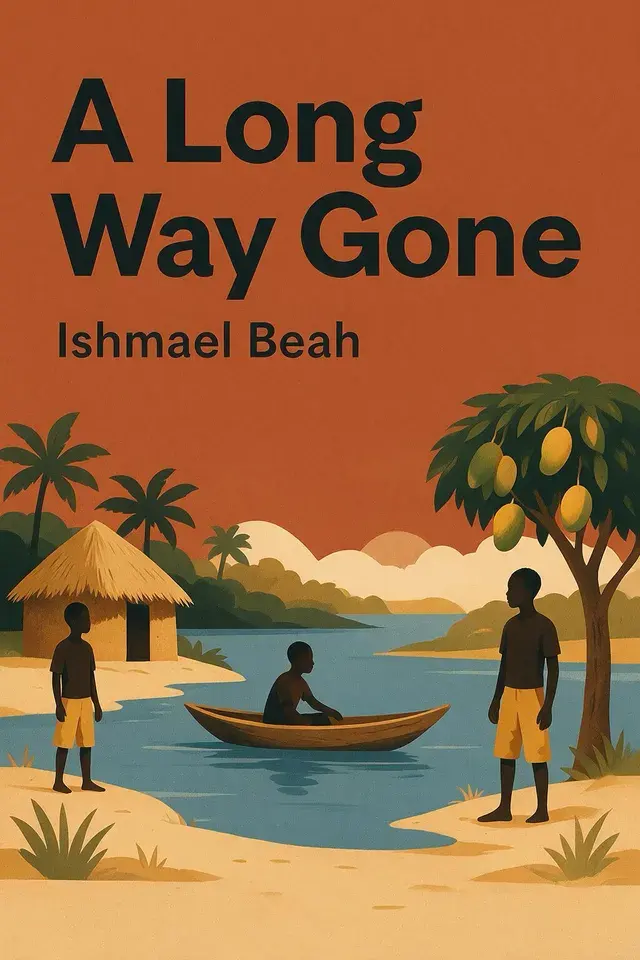
Family, school, friendship, music, and youthful plans establish the ordinary belonging that war later disrupts.
Forced recruitment treats trembling as weakness and witnessing bloodshed as initiation, until gunfire interrupts the conversion of displaced children into fighters.
Drugs, war films, raids, and patriotic rhetoric suppress reflection while making killing routine and legitimate.
Withdrawal and learned military authority make civilian rehabilitation immediately volatile, so changed surroundings do not erase combat conditioning.
Esther’s personal, patient attention turns institutional care into the first relationship in which Ishmael can risk conversation.
An uncle’s patient welcome and ordinary family life create belonging through time, conversation, and shared routines.
Ishmael’s unscripted testimony presents recruitment as a response to loss and revenge as a cycle that creates more bereaved families.
How A Long Way Gone builds its case
Follow how the book develops its argument. Each note is a brief orientation, not a replacement for the chapter.
Childhood Before the Fire
The memoir begins from a distance. In its present-day scenes, Ishmael is caught between violent nightmares and painful waking memories.
Flight, Hunger, and Capture
As the attack on Mattru Jong approaches, escape becomes a chain of choices made with incomplete information. The boys do not know where their families are, which villages are safe, or what route lies ahead.
No Safe Place to Hide
The six boys learn that company does not guarantee protection. Villagers have heard of children forced to kill civilians, so the boys’ age and number make them look dangerous.
Beauty Amid Unending Loss
After the forest, Ishmael and six boys continue toward Yele, which they have heard is safe. Strange engine-like thunder leads them to the Atlantic.
Homecoming Interrupted by War
After the losses of the journey, the boys allow themselves only brief mourning and keep moving. Survival leaves little room for grief.
How a Child Becomes a Soldier
Training did more than teach Ishmael Beah to fire a gun. It reorganized fear, belonging, and achievement until a frightened child could experience a soldier’s life as normal.
Rehabilitation Begins in Violence
Once Ishmael and the other boys arrive at Benin Home, their surroundings change, but their conditioning does not. Their weapons and military authority are gone; civilian staff now control meals, treatment, and routine.
Learning to Trust Again
At first, rehabilitation gives Ishmael a safer setting, not a reason to trust anyone inside it. Solitude is his protection.
Family, Testimony, and Fragile Return
At Benin Home, rehabilitation opens a new question for Ishmael: how to belong when the institution is no longer his whole world. Esther makes that question personal.
A Public Case Against Revenge
By the time Ishmael travels to New York, his recovery has raised a public question: what happens to children when war removes ordinary alternatives? He arrives for the United Nations First International Children’s Parliament with an image of New York shaped by rap music: shootings, fast cars, nightclubs, and danger.
When War Follows You Home
After rehabilitation, when Beah and Mohamed return to St. Edward’s Secondary School in Freetown, ordinary life seems possible but not restored.