
Choose by method, not only by subject
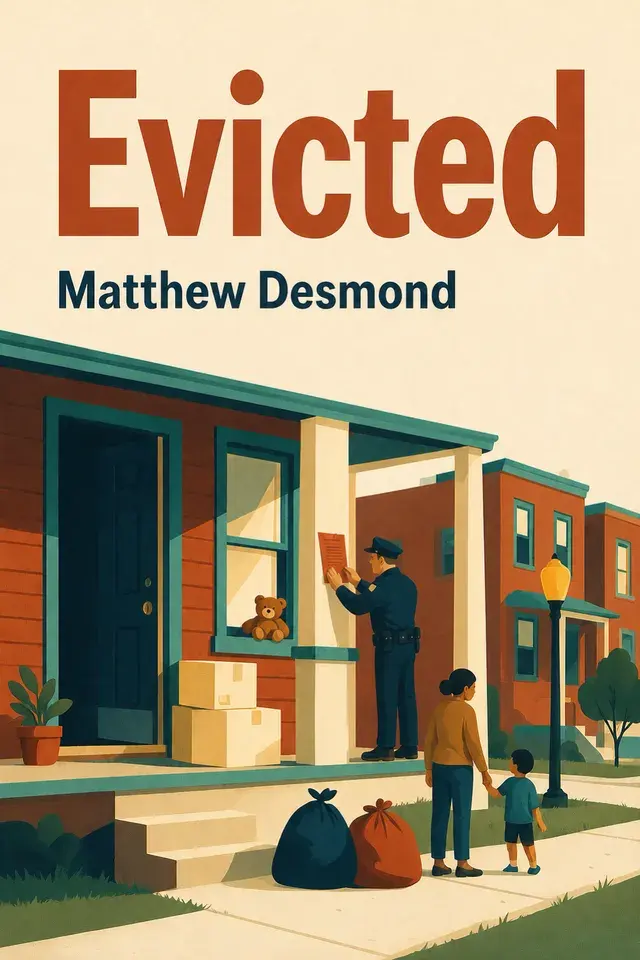
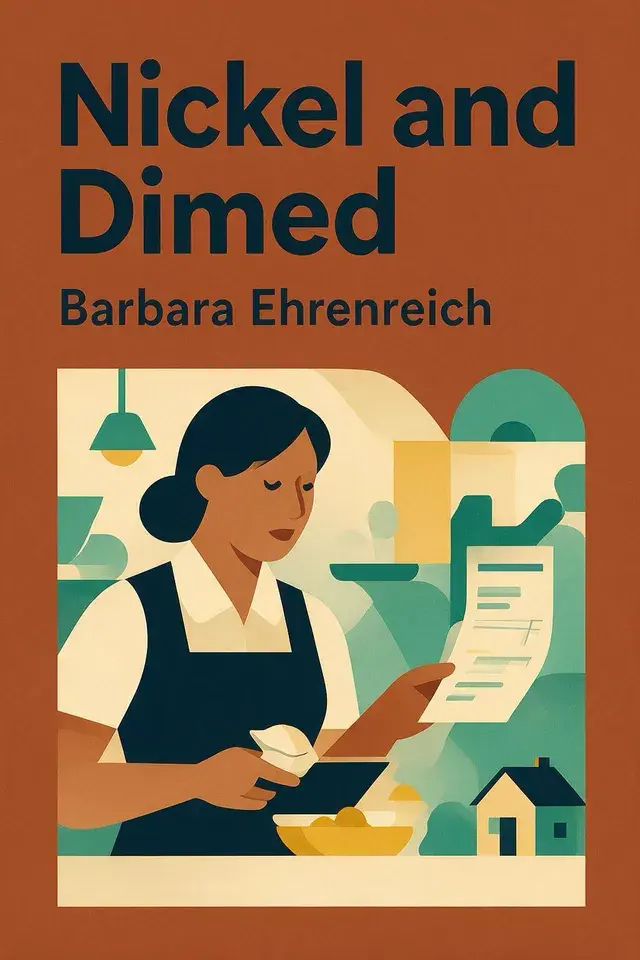
Sociology here means the close study of how ordinary life is organized: who keeps a home, what a paycheck buys, who shows up for whom, and how belonging shapes politics. These five books reach those questions by different routes, and the route matters as much as the subject. Evicted links fieldwork with Milwaukee families and landlords to surveys and court records. Nickel and Dimed is immersion journalism: Barbara Ehrenreich takes low-wage jobs to test what the wages actually buy. Bowling Alone assembles participation, membership, and generational evidence on American civic life across decades. Strangers in Their Own Land is interview-based fieldwork across a political divide in Louisiana. The Spirit Level compares affluent countries and US states to relate the size of income gaps to health and social problems.
- Fieldwork joined to records, on housing and poverty: Evicted.
- Immersion reporting from inside low-wage work: Nickel and Dimed.
- Decades of participation data on trust and community: Bowling Alone.
- Listening across a political divide: Strangers in Their Own Land.
- Comparison across rich societies, on inequality: The Spirit Level.
What each book adds, and where it stops
Desmond treats eviction as a mechanism that produces poverty, not only a consequence of it, following rent debt, rapid court judgments, and the worse housing that often comes next. He also cautions that Milwaukee’s patterns need care before they are generalized. Ehrenreich shows rent, deposits, transport, and exhaustion outrunning a full-time wage, and she names the advantages, including a car, savings, health coverage, and an exit, that made her experiment a best case rather than a controlled trial.
Putnam defines social capital as the networks, trust, and reciprocity that make cooperation possible, then tests suspects from sprawl to television and gives generational change the largest share of the decline. Hochschild describes a felt deep story behind distrust of distant government and argues that empathy can support clear analysis without requiring agreement. Wilkinson and Pickett associate larger income gaps with a broad burden of problems in affluent societies; they present the causal case as cumulative and observational, so read their comparisons as association first.
- Note the setting: four books study the United States, and The Spirit Level compares affluent countries and US states.
- Ask what the method can see: a household’s month, a worker’s shift, a national trend, a community’s feelings, or a pattern across countries.
- Keep each author’s diagnosis separate from the remedy the book proposes.
How this list differs from the wider Society shelf
Wiseley’s Society topic also holds political theory, economics, and big-idea histories that ask why whole nations or civilizations diverge. The books here ask narrower, closer questions: what happens in an eviction court, in a house cleaned against the clock, in a bowling league that quietly disappears, or in a town that distrusts the regulators it depends on. For sweeping explanations, start with the big-idea list. Before repeating any conclusion from either list, run it through the claim-testing guide.
- Long-run divergence between societies: the big-idea list.
- Everyday institutions observed up close: this list.
- Parties, norms, and public authority: the democracy and power list.
A reading path from one household to whole societies
Begin with Evicted, where one housing market shows how rules, prices, and discretion become lived hardship. Read Nickel and Dimed next to meet the same pressures from inside the workday, keeping its best-case limits in view. Move to Bowling Alone for the wider question of what binds people to one another and what is lost when those ties thin. Read Strangers in Their Own Land to see how economic strain and local loyalty turn into political feeling. Finish with The Spirit Level, which asks whether the gaps the earlier books observe up close have society-wide consequences, and treat it as an argument to test rather than a settled law.
- Write down the unit each book studies: a household, a job, a community, a region, or a country.
- For every pattern, ask what evidence would count against it.
- Pair a statistical claim with a close account, and a close account with a wider measure.
Sources and scope
Book ideas are attributed to their authors. External evidence is linked directly when a claim needs more than the source book.
- Evicted: Source for eviction as a mechanism of poverty, rent debt, court procedure, displacement, Milwaukee fieldwork linked to surveys and records, and housing-policy remedies.
- Nickel and Dimed: Source for the low-wage work experiment, its best-case advantages and limits, hidden costs of housing and transport, employer control, and living-wage organizing.
- Bowling Alone: Source for social capital, bonding and bridging ties, American civic decline, the structural suspects, television, and generational change.
- Strangers in Their Own Land: Source for the empathy wall, Louisiana fieldwork, the Great Paradox, the deep story, and selective distrust of federal government.
- The Spirit Level: Source for income inequality across affluent countries and US states, status anxiety, trust, workplace remedies, and the authors’ qualified observational causal case; presented as a contested argument.
To report a factual, attribution, rights, or accessibility concern, email hello@wiseley.app.
Questions readers ask
How is sociology different from the Society topic?
The Society topic is broader: it includes political theory, economics, and big-idea histories. This list keeps to books that study how everyday life is organized through fieldwork, reporting, or social data. Not every Society title is sociology, and these five are not an academic syllabus.
Which sociology book should I read first?
Evicted is the most concrete start: one city, real households, and a clear argument about how eviction produces poverty. If trust and community interest you more than poverty, start with Bowling Alone.
Are these books neutral?
No. Each author argues for a diagnosis, and several propose remedies, from housing policy to living wages to workplace ownership. Read them for their evidence and method, weigh the remedies separately, and test how far a mostly American pattern travels.