What you'll learn
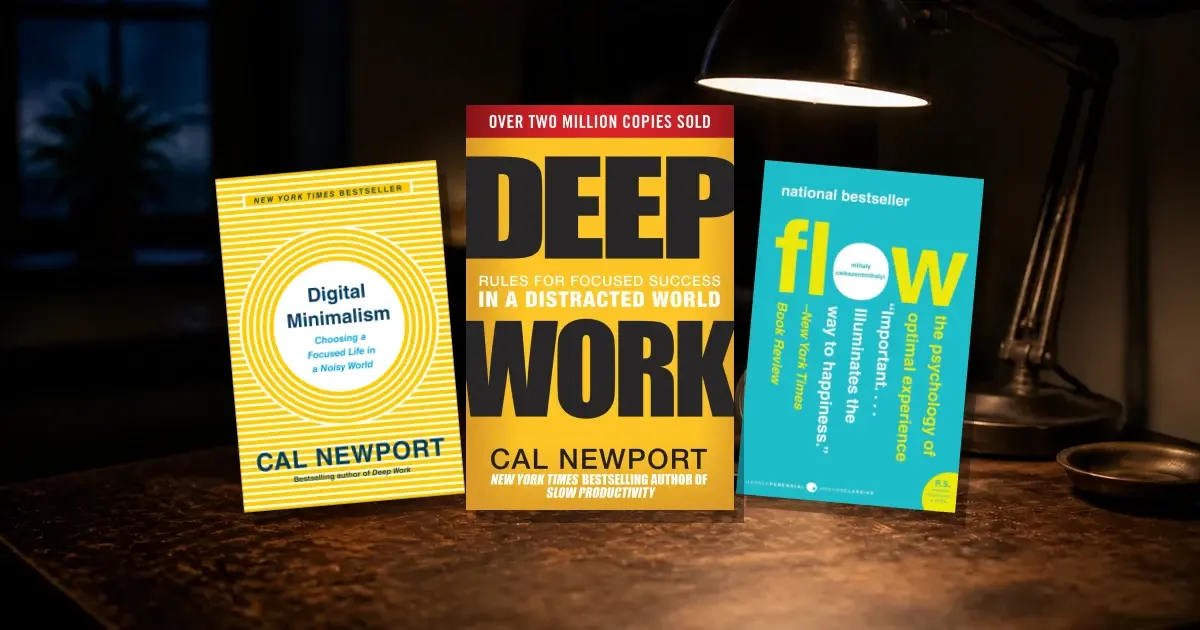
Key ideas from Flow
These ideas compress the book's argument without treating the author's view as settled fact. Use them as an orientation before reading the full work or listening in Wiseley.
Happiness is presented as an indirect outcome of full involvement in chosen activity or commitment to a larger purpose.
The self both directs attention and is reshaped by repeated attentional investment, so deliberate concentration can support autonomy and growth.
Flow is most likely when perceived challenges and skills are both above usual levels and closely matched.
Lifelong learning begins when education becomes self-directed exploration that organizes experience and develops the mind.
Work can become flow-rich when challenge, skill, clear goals, feedback, variety, experimentation, and control organize attention.
Flow conditions scale into social life through shared goals, reciprocal feedback, communication, flexibility, and mutual growth.
Transformational coping examines loss and redirects attention toward constructive action, while regressive coping avoids, denies, attacks, or numbs distress.
A life theme links subordinate goals to an ultimate purpose, giving effort, setbacks, and experience a durable direction.
How Flow builds its case
Follow how the book develops its argument. Each note is a brief orientation, not a replacement for the chapter.
Why Happiness Must Be Made
Flow opens with a puzzle: people have gained more wealth, comfort, scientific knowledge, and power, yet these gains have not taught them what happiness is or how to hold on to it. Anxiety, boredom, and the sense of a wasted life can survive prosperity.
Attention and Psychic Entropy
To understand how people can shape experience, Csikszentmihalyi begins with consciousness. It is rooted in the nervous system, yet complex enough to influence its own states and partly override biological programming and circumstances.
The Flow Channel
Flow gives the idea of conscious control an operational form. It names an optimal experience in which attention is fully absorbed in what a person is doing.
Training Body and Mind
Flow does not begin with equipment, fashionable routines, or intense sensation. It begins when a person learns to use body and mind as instruments of attention.
Work as Designed Experience
The theory becomes especially revealing when applied to employment and leisure. Every society must devote time to food, shelter, clothing, tools, and other necessities, but societies differ greatly in the time required.
Relationships, Solitude, and Community
Flow is not limited to solitary tasks or personal skills. Once attention is organized in an activity, the same logic can shape family life, friendship, and public participation.
Turning Adversity into Order
Adversity is the hardest test of the theory of optimal experience. It raises an uncomfortable objection: perhaps distinctions between pleasure and enjoyment matter only to people who are healthy, secure, and materially comfortable.
Forging a Life Theme
Earlier chapters have shown how flow can organize attention in a demanding activity and how adversity can sometimes become a manageable challenge. The larger question is how such local achievements become a life that holds together.